3FXI | pdb_00003fxi

Crystal structure of the human TLR4-human MD-2-E.coli LPS Ra complex


Experimental Data Snapshot

  • Method: X-RAY DIFFRACTION
  • Resolution: 3.10 Å
  • R-Value Free: 
    0.281 (Depositor), 0.284 (DCC) 
  • R-Value Work: 
    0.241 (Depositor), 0.252 (DCC) 

Starting Models: experimental
View more details

wwPDB Validation 3D Report Full Report

Validation slider image for 3FXI

Ligand Structure Quality Assessment 


This is version 2.2 of the entry. See complete history

Literature

The structural basis of lipopolysaccharide recognition by the TLR4-MD-2 complex

Park, B.S.Song, D.H.Kim, H.M.Choi, B.-S.Lee, H.Lee, J.-O.

(2009) Nature 458: 1191-1195

  • DOI: https://doi.org/10.1038/nature07830
  • Primary Citation Related Structures: 
    3FXI

  • PubMed Abstract: 

    The lipopolysaccharide (LPS) of Gram negative bacteria is a well-known inducer of the innate immune response. Toll-like receptor (TLR) 4 and myeloid differentiation factor 2 (MD-2) form a heterodimer that recognizes a common 'pattern' in structurally diverse LPS molecules. To understand the ligand specificity and receptor activation mechanism of the TLR4-MD-2-LPS complex we determined its crystal structure. LPS binding induced the formation of an m-shaped receptor multimer composed of two copies of the TLR4-MD-2-LPS complex arranged symmetrically. LPS interacts with a large hydrophobic pocket in MD-2 and directly bridges the two components of the multimer. Five of the six lipid chains of LPS are buried deep inside the pocket and the remaining chain is exposed to the surface of MD-2, forming a hydrophobic interaction with the conserved phenylalanines of TLR4. The F126 loop of MD-2 undergoes localized structural change and supports this core hydrophobic interface by making hydrophilic interactions with TLR4. Comparison with the structures of tetra-acylated antagonists bound to MD-2 indicates that two other lipid chains in LPS displace the phosphorylated glucosamine backbone by approximately 5 A towards the solvent area. This structural shift allows phosphate groups of LPS to contribute to receptor multimerization by forming ionic interactions with a cluster of positively charged residues in TLR4 and MD-2. The TLR4-MD-2-LPS structure illustrates the remarkable versatility of the ligand recognition mechanisms employed by the TLR family, which is essential for defence against diverse microbial infection.


  • Organizational Affiliation
    • Department of Chemistry, KAIST, Daejeon, 305-701, Korea.

Macromolecule Content 

  • Total Structure Weight: 180.25 kDa 
  • Atom Count: 12,500 
  • Modeled Residue Count: 1,482 
  • Deposited Residue Count: 1,494 
  • Unique protein chains: 2

Macromolecules

Find similar proteins by:|  3D Structure
Entity ID: 1
MoleculeChains  Sequence LengthOrganismDetailsImage
Toll-like receptor 4
A, B
605Homo sapiensMutation(s): 0 
Gene Names: TLR4
UniProt & NIH Common Fund Data Resources
Find proteins for O00206 (Homo sapiens)
Explore O00206 
Go to UniProtKB:  O00206
PHAROS:  O00206
GTEx:  ENSG00000136869 
Entity Groups
Sequence Clusters30% Identity50% Identity70% Identity90% Identity95% Identity100% Identity
UniProt GroupO00206
Glycosylation
Glycosylation Sites: 5Go to GlyGen: O00206-1
Sequence Annotations
Expand
Reference Sequence
Find similar proteins by:|  3D Structure
Entity ID: 2
MoleculeChains  Sequence LengthOrganismDetailsImage
Lymphocyte antigen 96
C, D
142Homo sapiensMutation(s): 0 
Gene Names: ESOP1LY96MD-2MD2
UniProt & NIH Common Fund Data Resources
Find proteins for Q9Y6Y9 (Homo sapiens)
Explore Q9Y6Y9 
Go to UniProtKB:  Q9Y6Y9
PHAROS:  Q9Y6Y9
GTEx:  ENSG00000154589 
Entity Groups
Sequence Clusters30% Identity50% Identity70% Identity90% Identity95% Identity100% Identity
UniProt GroupQ9Y6Y9
Glycosylation
Glycosylation Sites: 1Go to GlyGen: Q9Y6Y9-1
Sequence Annotations
Expand
Reference Sequence

Oligosaccharides

Help  
Entity ID: 3
MoleculeChains Length2D Diagram GlycosylationD Interactions
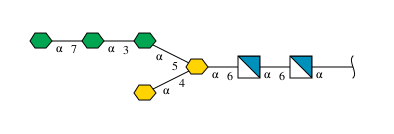
L-glycero-alpha-D-manno-heptopyranose-(1-7)-L-glycero-alpha-D-manno-heptopyranose-(1-3)-L-glycero-alpha-D-manno-heptopyranose-(1-5)-[3-deoxy-alpha-D-manno-oct-2-ulopyranosonic acid-(2-4)]3-deoxy-alpha-D-manno-oct-2-ulopyranosonic acid-(2-6)-2-amino-2-deoxy-alpha-D-glucopyranose-(1-6)-2-amino-2-deoxy-alpha-D-glucopyranose
E
7N/A
Glycosylation Resources
GlyTouCan: G75876QI
GlyCosmos: G75876QI
Entity ID: 4
MoleculeChains Length2D Diagram GlycosylationD Interactions
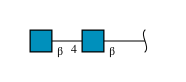
2-acetamido-2-deoxy-beta-D-glucopyranose-(1-4)-2-acetamido-2-deoxy-beta-D-glucopyranose
F, G, I, J
2N-Glycosylation
Glycosylation Resources
GlyTouCan: G42666HT
GlyCosmos: G42666HT
GlyGen: G42666HT
Entity ID: 5
MoleculeChains Length2D Diagram GlycosylationD Interactions
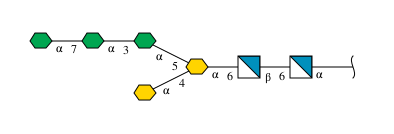
L-glycero-alpha-D-manno-heptopyranose-(1-7)-L-glycero-alpha-D-manno-heptopyranose-(1-3)-L-glycero-alpha-D-manno-heptopyranose-(1-5)-[3-deoxy-alpha-D-manno-oct-2-ulopyranosonic acid-(2-4)]3-deoxy-alpha-D-manno-oct-2-ulopyranosonic acid-(2-6)-2-amino-2-deoxy-beta-D-glucopyranose-(1-6)-2-amino-2-deoxy-alpha-D-glucopyranose
H
7N/A
Glycosylation Resources
GlyTouCan: G02042LC
GlyCosmos: G02042LC

Small Molecules

Ligands 6 Unique
IDChains Name / Formula / InChI Key2D Diagram3D Interactions
FTT

Query on FTT


Download:Ideal Coordinates CCD File
AA [auth B]
BA [auth B]
K [auth A]
L [auth A]
M [auth A]
AA [auth B],
BA [auth B],
K [auth A],
L [auth A],
M [auth A],
N [auth A],
Y [auth B],
Z [auth B]
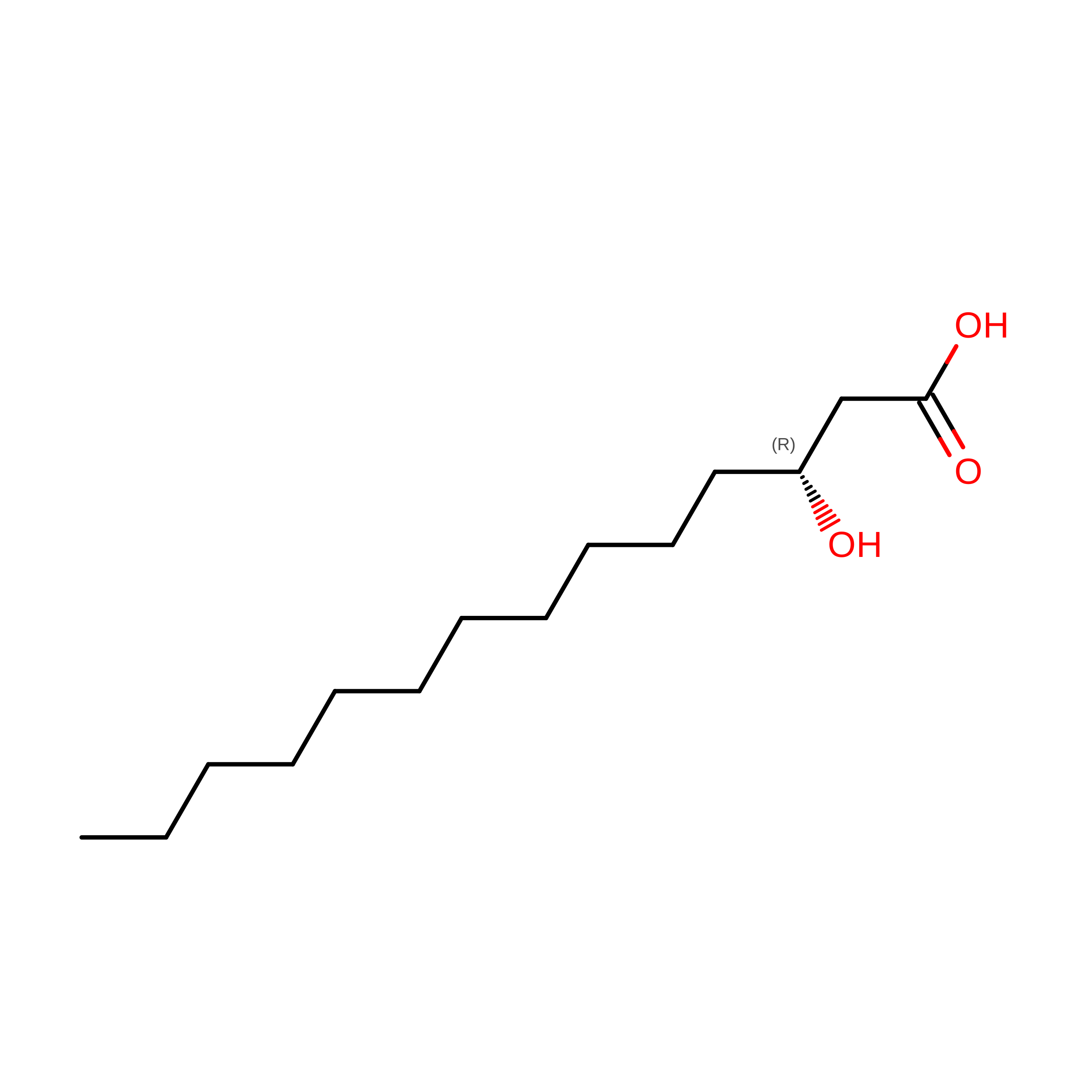
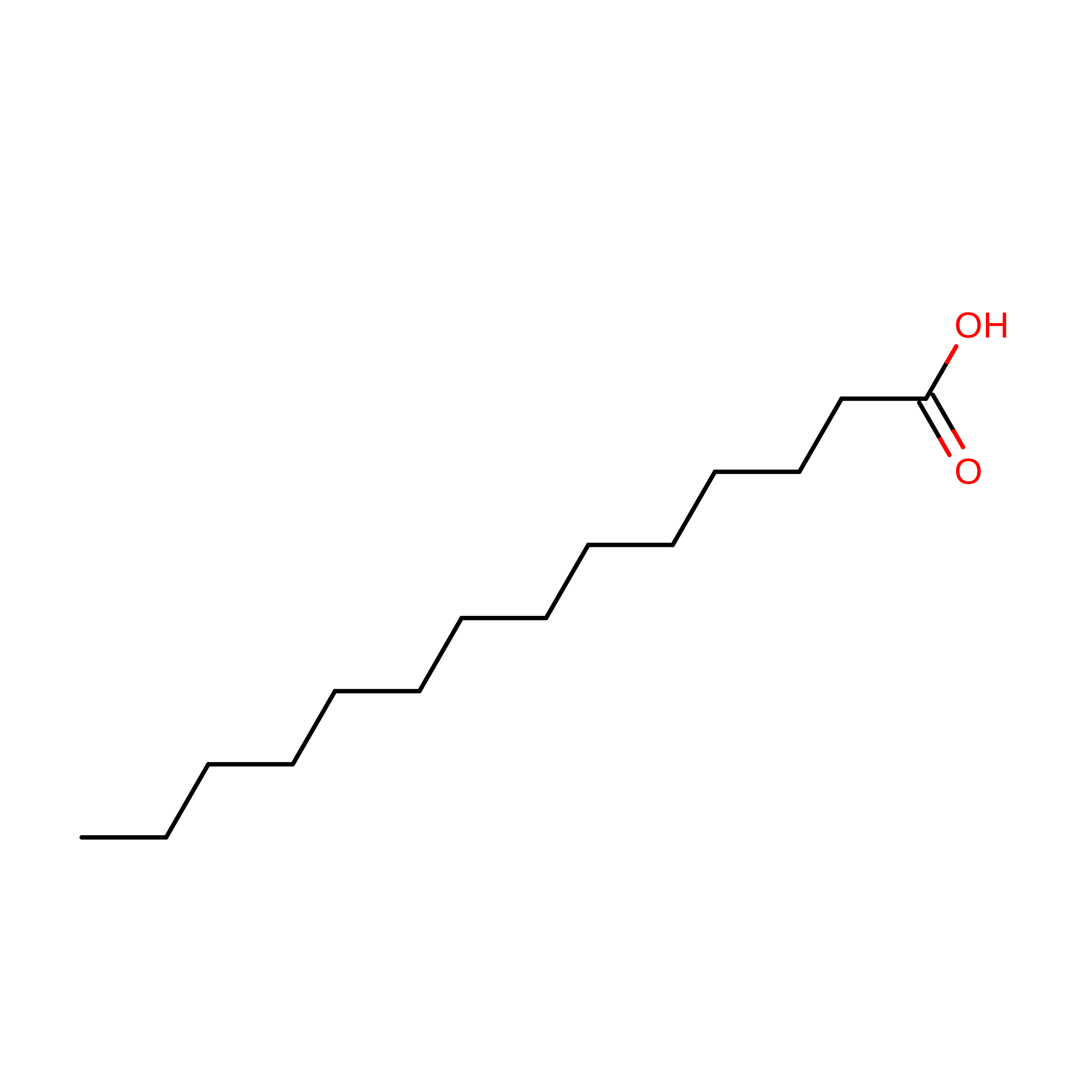
3-HYDROXY-TETRADECANOIC ACID
C14 H28 O3
ATRNZOYKSNPPBF-CYBMUJFWSA-N
MYR

Query on MYR


Download:Ideal Coordinates CCD File
DA [auth B],
P [auth A]
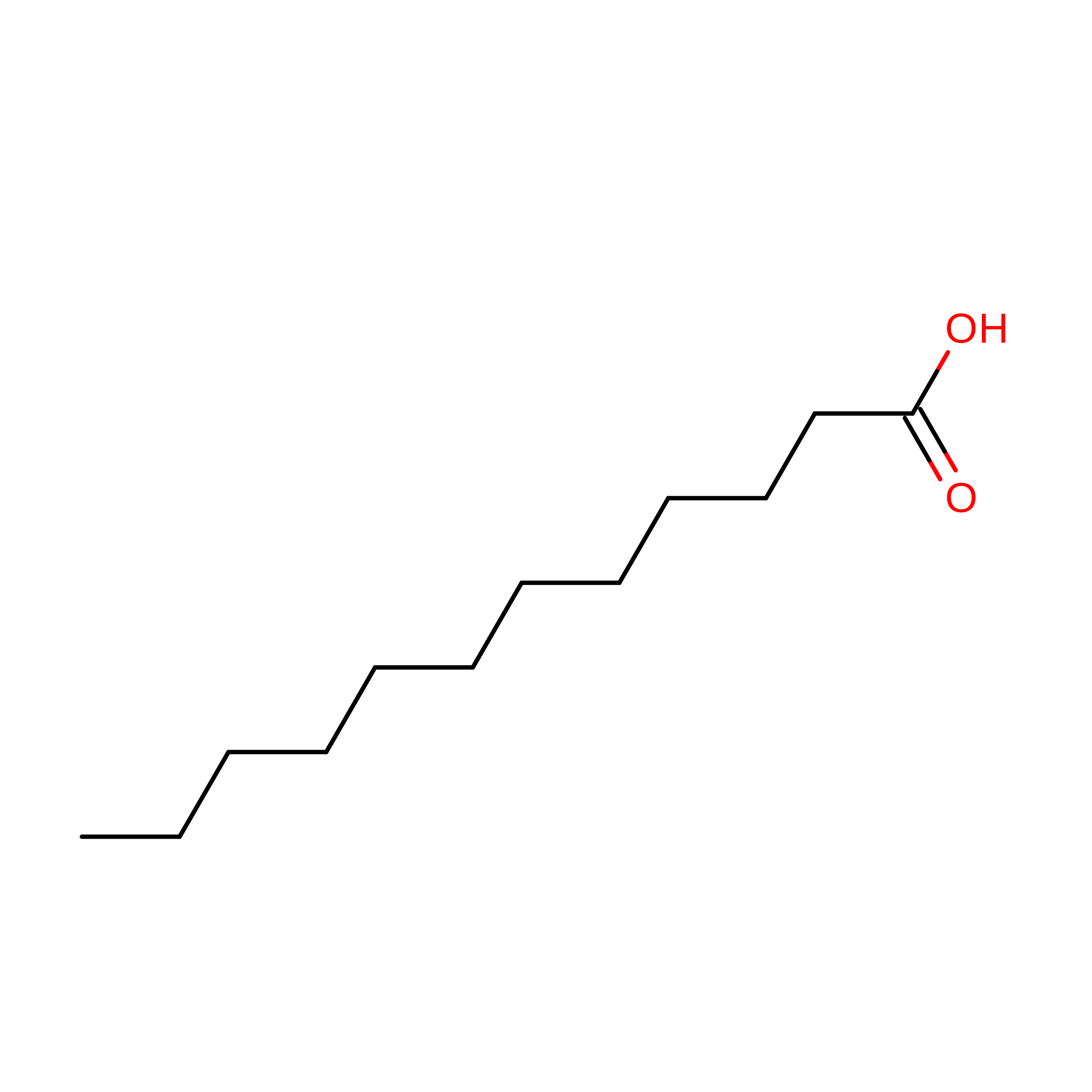
MYRISTIC ACID
C14 H28 O2
TUNFSRHWOTWDNC-UHFFFAOYSA-N
NAG

Query on NAG


Download:Ideal Coordinates CCD File
IA [auth B]
JA [auth B]
KA [auth B]
MA [auth C]
NA [auth D]
IA [auth B],
JA [auth B],
KA [auth B],
MA [auth C],
NA [auth D],
U [auth A],
V [auth A],
W [auth A]
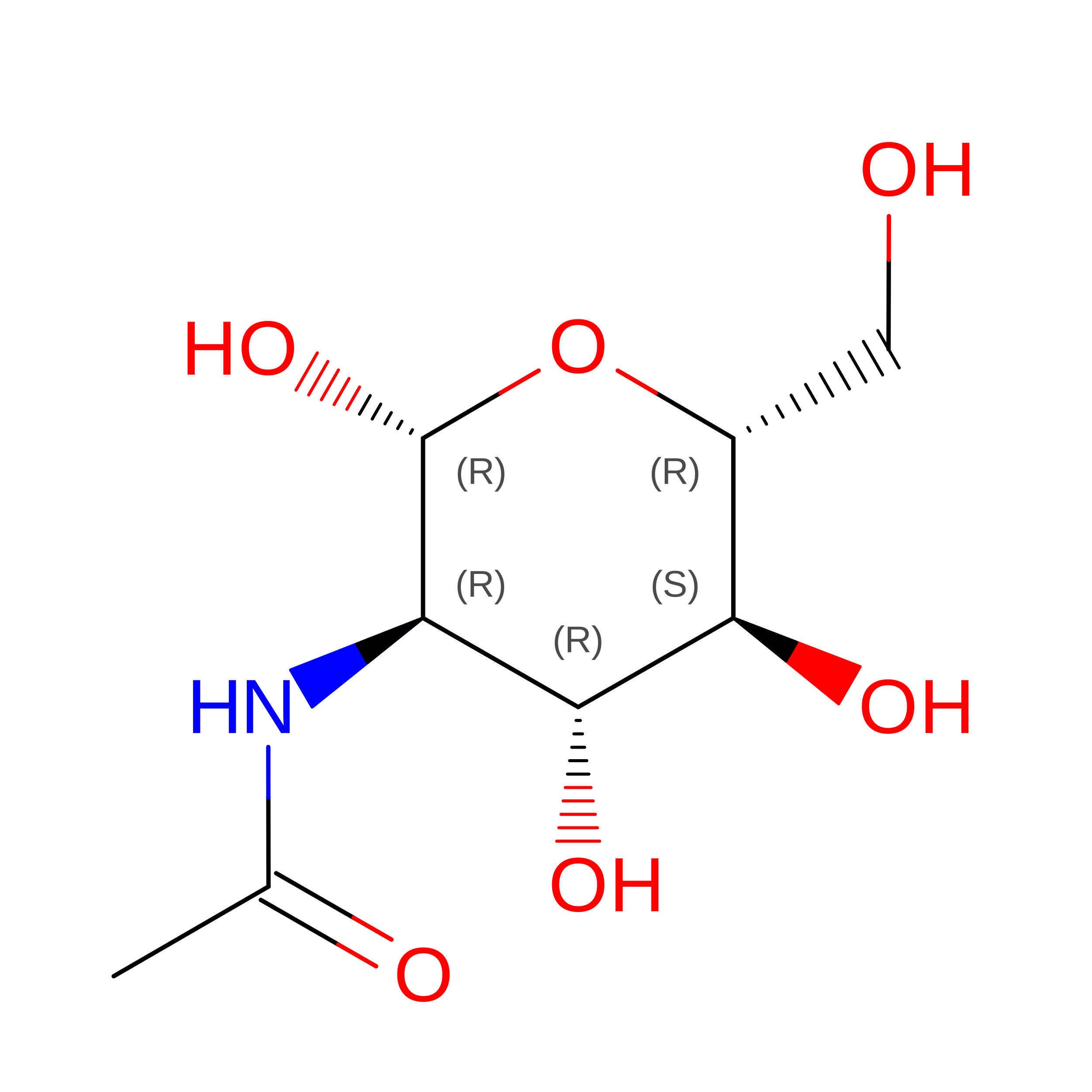
2-acetamido-2-deoxy-beta-D-glucopyranose
C8 H15 N O6
OVRNDRQMDRJTHS-FMDGEEDCSA-N
DAO

Query on DAO


Download:Ideal Coordinates CCD File
CA [auth B],
O [auth A]
LAURIC ACID
C12 H24 O2
POULHZVOKOAJMA-UHFFFAOYSA-N
PO4

Query on PO4


Download:Ideal Coordinates CCD File
EA [auth B]
FA [auth B]
GA [auth B]
HA [auth B]
Q [auth A]
EA [auth B],
FA [auth B],
GA [auth B],
HA [auth B],
Q [auth A],
R [auth A],
S [auth A],
T [auth A]
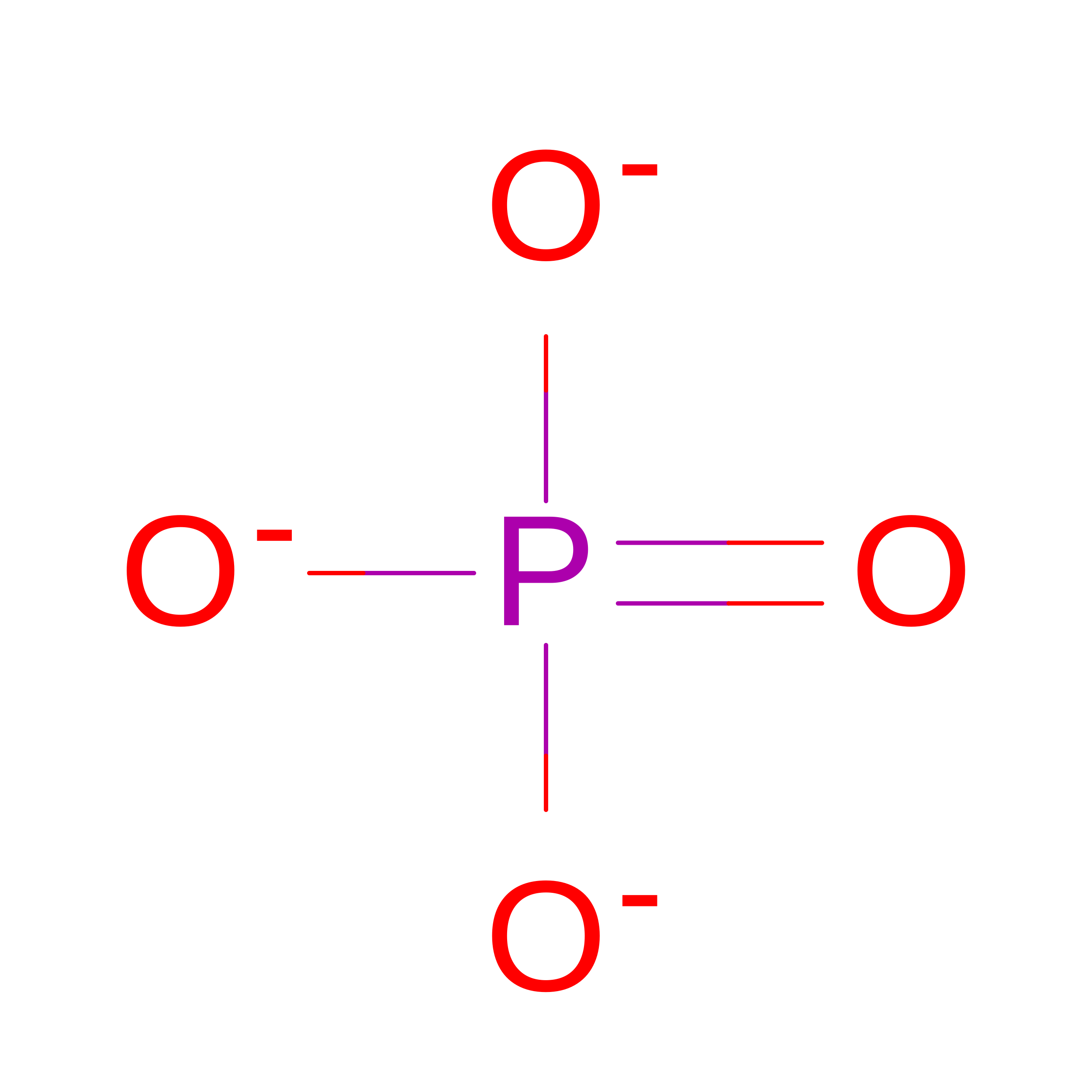
PHOSPHATE ION
O4 P
NBIIXXVUZAFLBC-UHFFFAOYSA-K
MG

Query on MG


Download:Ideal Coordinates CCD File
LA [auth B],
X [auth A]
MAGNESIUM ION
Mg
JLVVSXFLKOJNIY-UHFFFAOYSA-N

Experimental Data & Validation

Experimental Data

  • Method: X-RAY DIFFRACTION
  • Resolution: 3.10 Å
  • R-Value Free:  0.281 (Depositor), 0.284 (DCC) 
  • R-Value Work:  0.241 (Depositor), 0.252 (DCC) 
Space Group: P 21 21 21
Unit Cell:
Length ( Å )Angle ( ˚ )
a = 91.16α = 90
b = 103.5β = 90
c = 251.81γ = 90
Software Package:
Software NamePurpose
CNSrefinement
PDB_EXTRACTdata extraction
DNAdata collection
XDSdata reduction
XDSdata scaling
PHASERphasing

Structure Validation

View Full Validation Report


Ligand Structure Quality Assessment 


Entry History 

Deposition Data

Revision History  (Full details and data files)

  • Version 1.0: 2009-03-03
    Type: Initial release
  • Version 1.1: 2011-07-13
    Changes: Non-polymer description, Version format compliance
  • Version 1.2: 2012-06-20
    Changes: Non-polymer description
  • Version 1.3: 2020-07-01
    Changes: Advisory, Data collection, Derived calculations
  • Version 2.0: 2020-07-29
    Type: Remediation
    Reason: Carbohydrate remediation
    Changes: Advisory, Atomic model, Data collection, Derived calculations, Structure summary
  • Version 2.1: 2023-11-01
    Changes: Data collection, Database references, Refinement description, Structure summary
  • Version 2.2: 2024-11-06
    Changes: Structure summary