Download Mendeley
Structural basis of bis-quinolinium ligands binding to quadruplex-duplex hybrids from PIM1 oncogene.
Ghosh, A., Harnos, J., Stadlbauer, P., Sponer, J., Lenarcic Zivkovic, M., Trantirek, L.(2025) Nucleic Acids Res 53
- PubMed: 40966494 Search on PubMedSearch on PubMed Central
- DOI: https://doi.org/10.1093/nar/gkaf894
- Primary Citation Related Structures:
9GVI, 9GVV - PubMed Abstract:
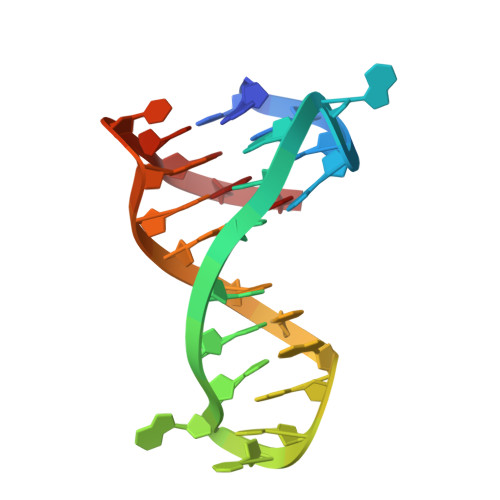
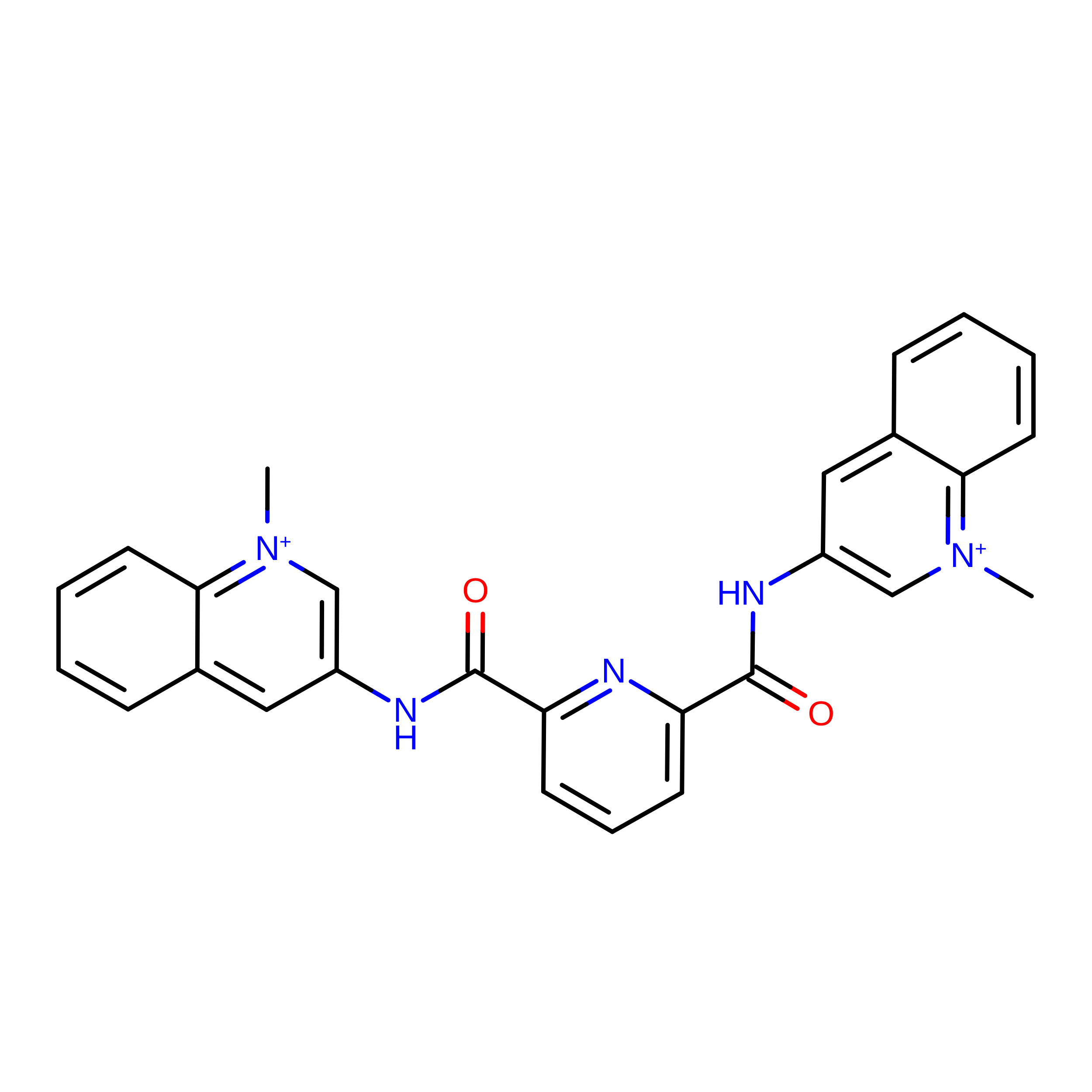
Our study investigates the interaction of two bis-quinolinium ligands, Phen-DC3 and 360A, with the quadruplex-duplex hybrid (QDH) derived from the promoter region of the PIM1 oncogene. While the QDH is polymorphic in vitro, with a hybrid and antiparallel conformation, we demonstrate that it predominantly adopts the antiparallel conformation within the intracellular environment of Xenopus laevis oocytes (eukaryotic model system). Notably, both ligands selectively bind to the hybrid QDH conformation in vitro and in a cellular context. High-resolution nuclear magnetic resonance (NMR) structures of the complexes between the hybrid QDH and the ligands reveal distinct binding modes at the quadruplex-duplex (Q-D) junction. Specifically, Phen-DC3 binds rigidly, while 360A dynamically reorients between two positions. Our findings provide a crucial paradigm highlighting the differences in structural equilibria involving QDH in vitro compared to its behavior in the intracellular space. They also underscore the potential to modulate these equilibria under native-like conditions through ligand interactions. The observed differences in the binding of Phen-DC3 and 360A lay the groundwork for designing next-generation bis-quinolinium compounds with enhanced selectivity for the Q-D junction. Methodologically, our study illustrates the potential of 19F-detected in-cell NMR methodology for screening interactions between DNA targets and drug-like molecules under physiological conditions.
- Central European Institute of Technology (CEITEC), Masaryk University, Brno 62500, Czech Republic.
Organizational Affiliation: