Download Mendeley
Benzoic and salicylic acids inhibit beta-substituted alanine synthase 4;1 in common bean.
Lu, Z., Witek, W., Ruszkowski, M., Imiolczyk, B., Paulish, N., Joshi, J., Jaskolski, M., Marsolais, F.(2025) Plant Physiol 199
- PubMed: 41051304 Search on PubMedSearch on PubMed Central
- DOI: https://doi.org/10.1093/plphys/kiaf485
- Primary Citation Related Structures:
9RJ1 - PubMed Abstract:
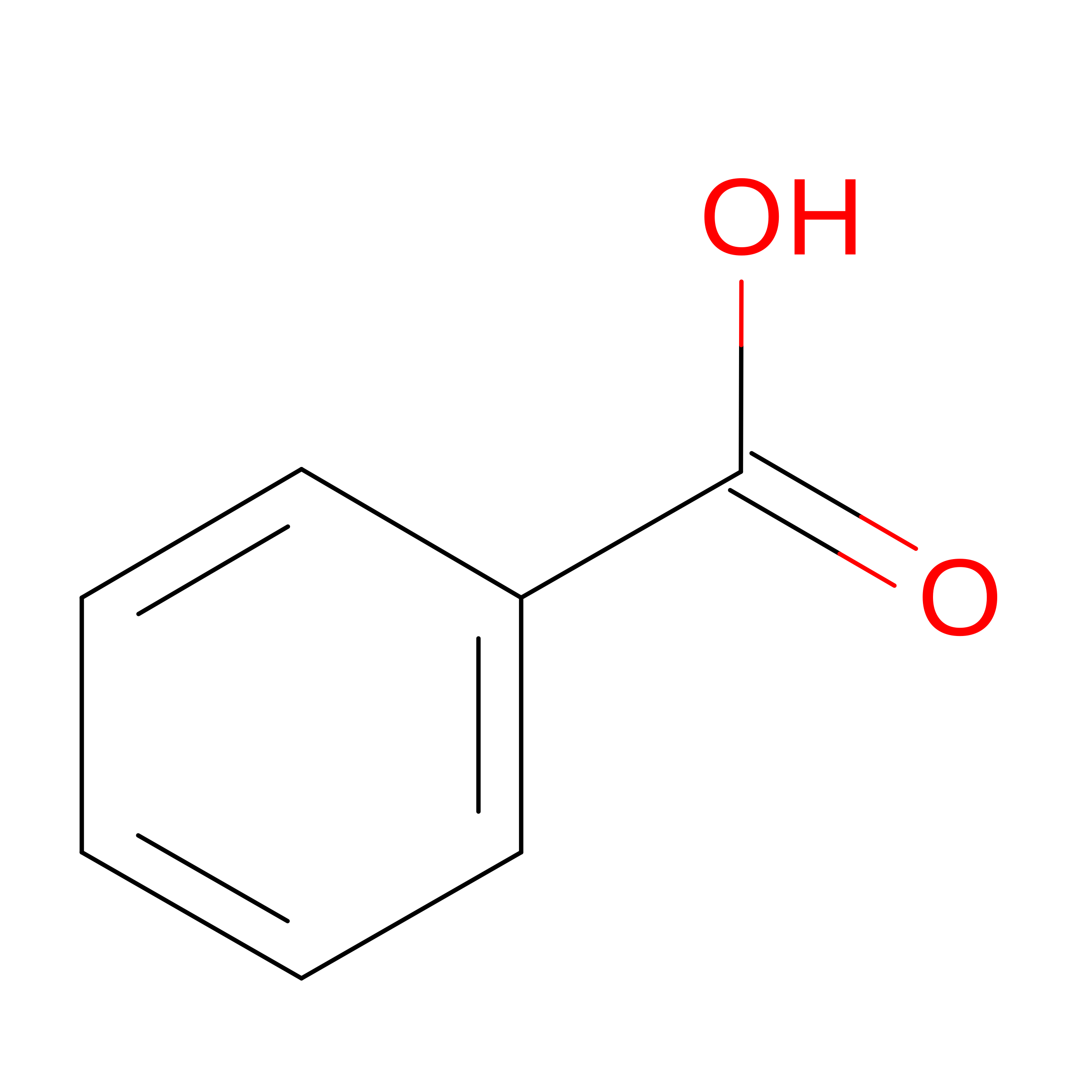
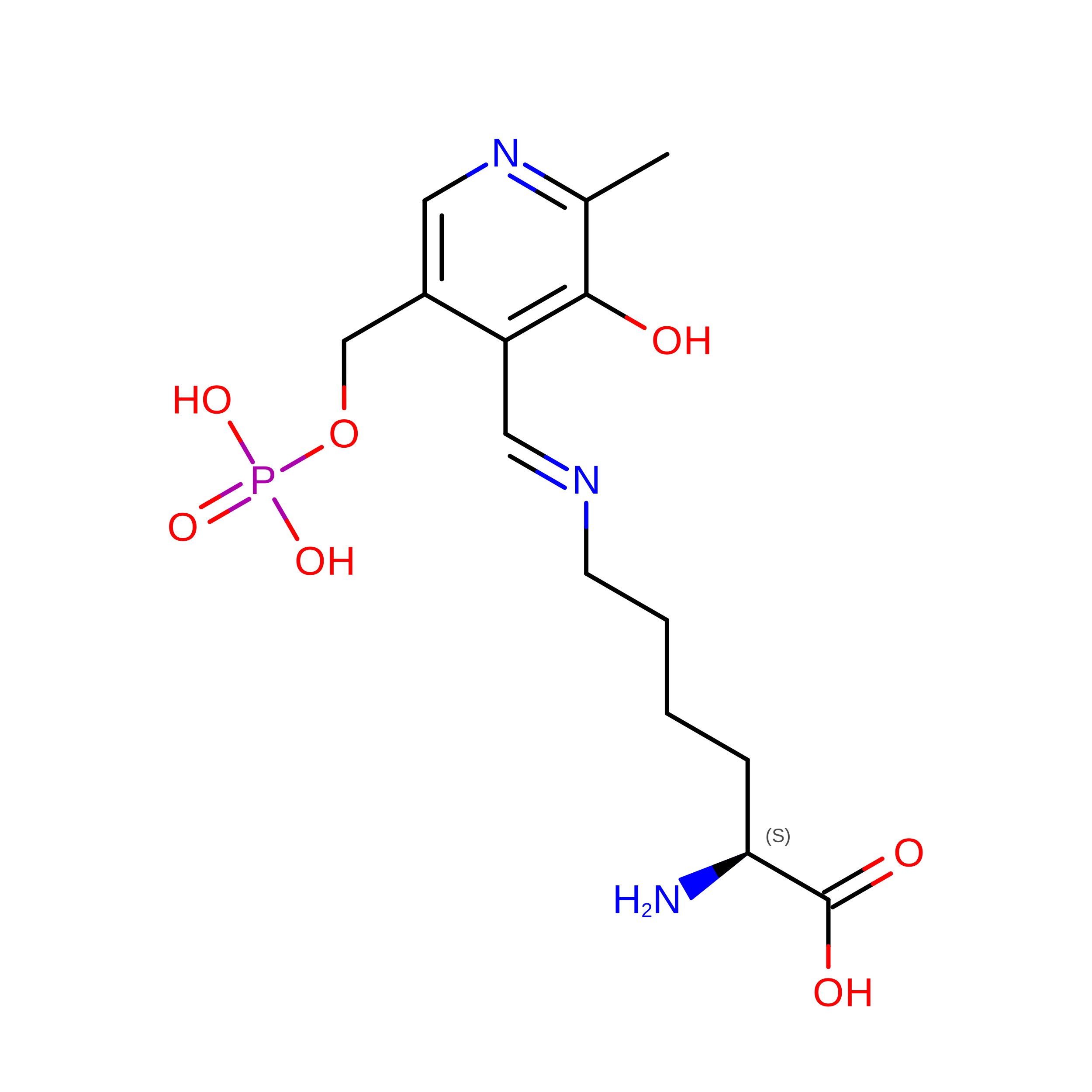
The nutritionally essential sulfur amino acids, methionine and cysteine, are present at suboptimal levels in legumes, such as common bean (Phaseolus vulgaris L.). β-Substituted alanine synthase 4;1 (BSAS4;1) is the major isoform of cytosolic cysteine synthase present in the developing seeds of common bean. There is evidence that in addition to cysteine, this enzyme is also involved in the biosynthesis of the non-proteinogenic amino acid S-methylcysteine, which accumulates in the form of a γ-glutamyl dipeptide. Here, we report the high-resolution structure of recombinant BSAS4;1. Unexpectedly, the crystal structure showed the presence of a molecule of benzoic acid near the active site, which appeared to have been co-purified from Escherichia coli. Kinetic analysis indicated that benzoic acid acts as a competitive inhibitor of BSAS4;1 with respect to O-acetylserine. IC50 values for benzoic acid and the structurally related salicylic acid were both equal to 0.6 mm. Using developing cotyledons grown in vitro, quantification of the incorporation of 13C3- and 15N-labeled serine into cysteine and downstream metabolites indicated that benzoic acid effectively inhibited cysteine biosynthesis in vivo at a concentration of 1.2 mm. The results of experiments tracking the incorporation of 13C-labeled sodium thiomethoxide provided further evidence that BSAS4;1 may be involved in the formation of free S-methylcysteine, through the condensation of O-acetylserine with methanethiol.
- Agriculture and Agri-Food Canada, London Research and Development Centre, London, Ontario, Canada, N5V 4T3.
Organizational Affiliation: