9VEO | pdb_00009veo

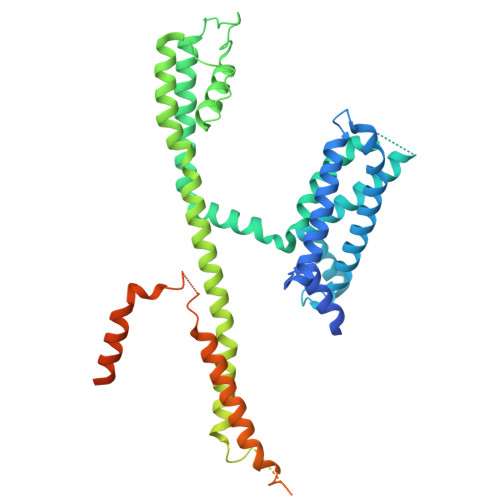
structure of human KCNQ1-CaM-PIP2 complex with straight conformation

  • Classification: MEMBRANE PROTEIN
  • Organism(s): Homo sapiens
  • Expression System: Homo sapiens
  • Mutation(s): No 
  • Membrane Protein: Yes  mpstruc

  • Deposited: 2025-06-09 Released: 2025-08-20 
  • Deposition Author(s): Cui, C., Kermani, A., Cui, J., Sun, J.
  • Funding Organization(s): National Institutes of Health/National Heart, Lung, and Blood Institute (NIH/NHLBI), United States - Israel Binational Science Foundation (BSF), Swedish Research Council

Experimental Data Snapshot

  • Method: ELECTRON MICROSCOPY
  • Resolution: 3.70 Å
  • Aggregation State: PARTICLE 
  • Reconstruction Method: SINGLE PARTICLE 

wwPDB Validation 3D Report Full Report

Validation slider image for 9VEO

This is version 1.1 of the entry. See complete history

Literature

Mechanisms of KCNQ1 gating modulation by KCNE1/3 for cell-specific function.

Cui, C.Zhao, L.Kermani, A.A.Du, S.Pipatpolkai, T.Jiang, M.Chittori, S.Tan, Y.Z.Shi, J.Delemotte, L.Cui, J.Sun, J.

(2025) Cell Res 35: 876-886

  • DOI: https://doi.org/10.1038/s41422-025-01152-1
  • Primary Citation Related Structures: 
    9VEC, 9VEI, 9VEN, 9VEO, 9WD8

  • PubMed Abstract: 

    KCNQ1 potassium channels are essential for physiological processes such as cardiac rhythm and intestinal chloride secretion. KCNE family subunits (KCNE1-5) associate with KCNQ1, conferring distinct properties across various tissues. KCNQ1 activation requires membrane depolarization and phosphatidylinositol 4,5-bisphosphate (PIP2) whose cellular levels are controlled by Gαq-coupled GPCR activation. While modulation of KCNQ1's voltage-dependent activation by KCNE1/3 is well-characterized, their effects on PIP2-dependent gating of KCNQ1 via GPCR signaling remain less understood. Here we resolved structures of KCNQ1-KCNE1 and reassessed the reported KCNQ1-KCNE3 structures with and without PIP2. We revealed that KCNQ1-KCNE1/3 complexes feature two PIP2-binding sites, with KCNE1/3 contributing to a previously overlooked, uncharacterized site involving residues critical for coupling voltage sensor and pore domains. Via this site, KCNE1 and KCNE3 distinctly modulate the PIP2-dependent gating, in addition to the voltage sensitivity, of KCNQ1. Consequently, KCNE3 converts KCNQ1 into a voltage-insensitive PIP2-gated channel governed by GPCR signaling to maintain ion homeostasis in non-excitable cells. KCNE1, by significantly enhancing KCNQ1's PIP2 affinity and resistance to GPCR regulation, forms predominantly voltage-gated channels with KCNQ1 for conducting the slow-delayed rectifier current in excitable cardiac cells. Our study highlights how KCNE1/3 modulates KCNQ1 gating in different cellular contexts, providing insights into tissue-specifically targeting multi-functional channels.


  • Organizational Affiliation
    • Department of Biological Sciences, National University of Singapore, Singapore, Singapore.

Macromolecule Content 

  • Total Structure Weight: 324.45 kDa 
  • Atom Count: 13,228 
  • Modeled Residue Count: 1,900 
  • Deposited Residue Count: 2,780 
  • Unique protein chains: 2

Macromolecules

Find similar proteins by:|  3D Structure
Entity ID: 1
MoleculeChains  Sequence LengthOrganismDetailsImage
Potassium voltage-gated channel subfamily KQT member 1A,
F [auth C],
G [auth E],
H [auth G]
546Homo sapiensMutation(s): 0 
Gene Names: KCNQ1KCNA8KCNA9KVLQT1
Membrane Entity: Yes 
UniProt & NIH Common Fund Data Resources
Find proteins for P51787 (Homo sapiens)
Explore P51787 
Go to UniProtKB:  P51787
PHAROS:  P51787
GTEx:  ENSG00000053918 
Entity Groups
Sequence Clusters30% Identity50% Identity70% Identity90% Identity95% Identity100% Identity
UniProt GroupP51787
Sequence Annotations
Expand
Reference Sequence
Find similar proteins by:|  3D Structure
Entity ID: 2
MoleculeChains  Sequence LengthOrganismDetailsImage
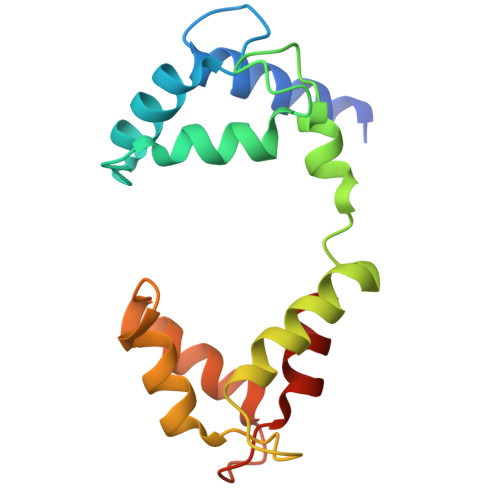
Calmodulin-1B,
C [auth H],
D,
E [auth F]
149Homo sapiensMutation(s): 0 
Gene Names: CALM1CALMCAMCAM1
UniProt & NIH Common Fund Data Resources
Find proteins for P0DP23 (Homo sapiens)
Explore P0DP23 
Go to UniProtKB:  P0DP23
PHAROS:  P0DP23
GTEx:  ENSG00000198668 
Entity Groups
Sequence Clusters30% Identity50% Identity70% Identity90% Identity95% Identity100% Identity
UniProt GroupP0DP23
Sequence Annotations
Expand
Reference Sequence

Small Molecules

Ligands 2 Unique
IDChains Name / Formula / InChI Key2D Diagram3D Interactions
PT5
(Subject of Investigation/LOI)

Query on PT5


Download:Ideal Coordinates CCD File
I [auth A]
J [auth A]
S [auth C]
T [auth C]
U [auth E]
I [auth A],
J [auth A],
S [auth C],
T [auth C],
U [auth E],
V [auth E],
W [auth G],
X [auth G]
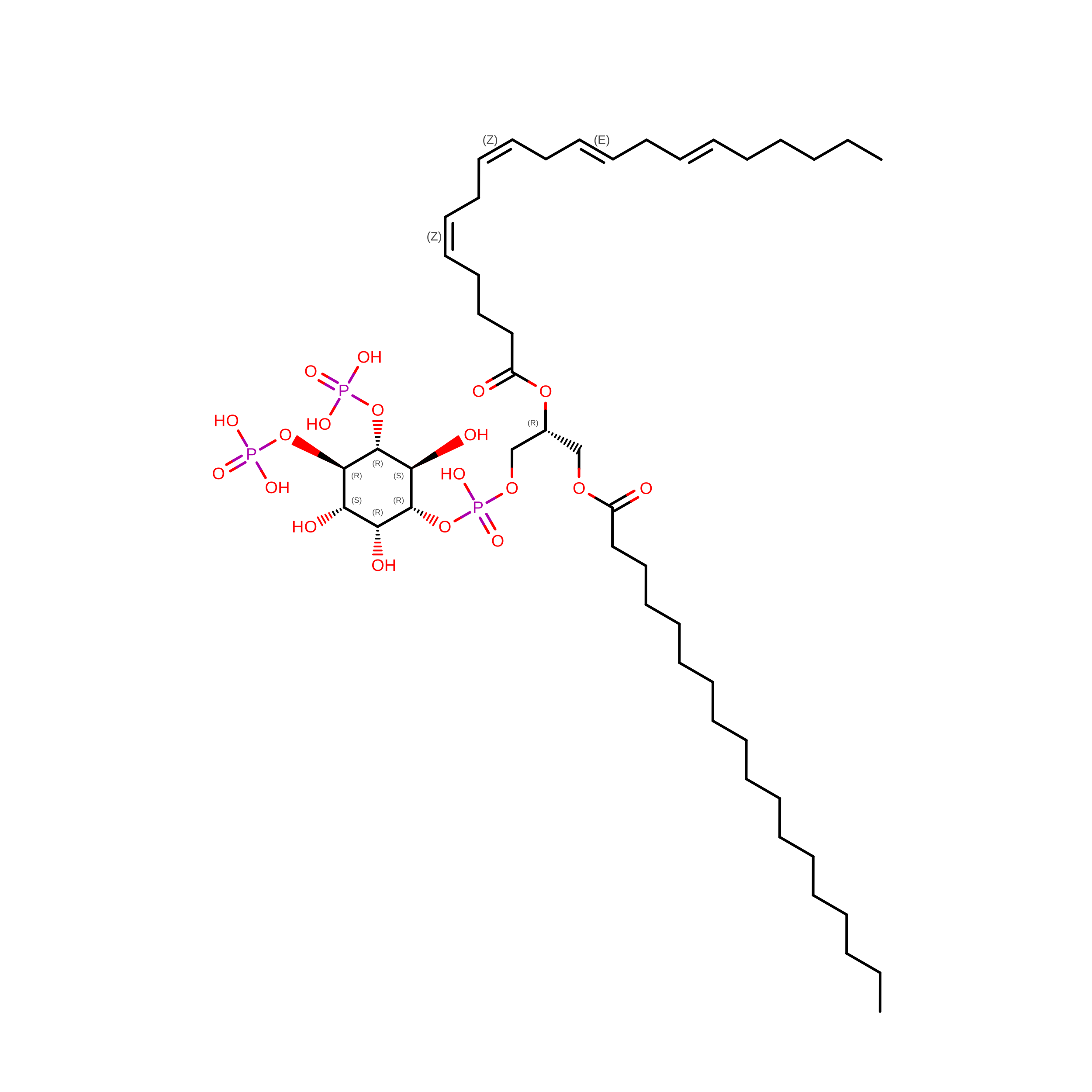
[(2R)-1-octadecanoyloxy-3-[oxidanyl-[(1R,2R,3S,4R,5R,6S)-2,3,6-tris(oxidanyl)-4,5-diphosphonooxy-cyclohexyl]oxy-phospho ryl]oxy-propan-2-yl] (8Z)-icosa-5,8,11,14-tetraenoate
C47 H85 O19 P3
CNWINRVXAYPOMW-HJBQCNPJSA-N
CA
(Subject of Investigation/LOI)

Query on CA


Download:Ideal Coordinates CCD File
K [auth B]
L [auth B]
M [auth H]
N [auth H]
O [auth D]
K [auth B],
L [auth B],
M [auth H],
N [auth H],
O [auth D],
P [auth D],
Q [auth F],
R [auth F]
CALCIUM ION
Ca
BHPQYMZQTOCNFJ-UHFFFAOYSA-N

Experimental Data & Validation

Experimental Data

  • Method: ELECTRON MICROSCOPY
  • Resolution: 3.70 Å
  • Aggregation State: PARTICLE 
  • Reconstruction Method: SINGLE PARTICLE 
EM Software:
TaskSoftware PackageVersion
MODEL REFINEMENTPHENIX1.21.2-5419-000
RECONSTRUCTIONcryoSPARC

Structure Validation

View Full Validation Report


Entry History 

& Funding Information

Deposition Data


Funding OrganizationLocationGrant Number
National Institutes of Health/National Heart, Lung, and Blood Institute (NIH/NHLBI)United StatesR00HL143037
United States - Israel Binational Science Foundation (BSF)United States2019159
National Institutes of Health/National Heart, Lung, and Blood Institute (NIH/NHLBI)United StatesR01 HL155398
National Institutes of Health/National Heart, Lung, and Blood Institute (NIH/NHLBI)United StatesR01 HL166628
Swedish Research CouncilSweden2022-04305
Swedish Research CouncilSwedenno. 2022-06725

Revision History  (Full details and data files)

  • Version 1.0: 2025-08-20
    Type: Initial release
  • Version 1.1: 2025-11-19
    Changes: Data collection, Database references