Download Mendeley
Structure and Mechanism of PhdC, a Prenylated-Flavin Maturase.
Whittall, D.R., Box, H.G., Payne, K.A.P., Marshall, S.A., Leys, D.(2026) Proteins 94: 1019-1029
- PubMed: 41363046 Search on PubMed
- DOI: https://doi.org/10.1002/prot.70096
- Primary Citation Related Structures:
9SRG, 9SRJ - PubMed Abstract:
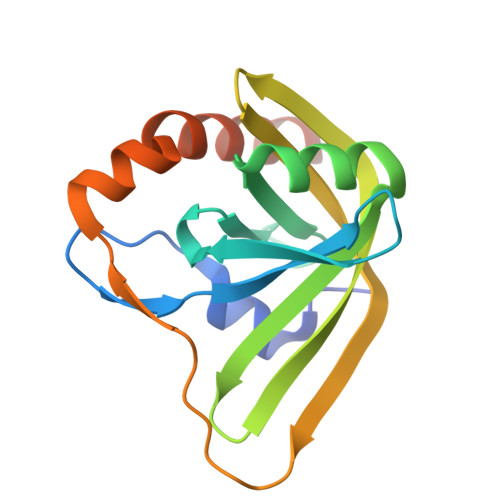
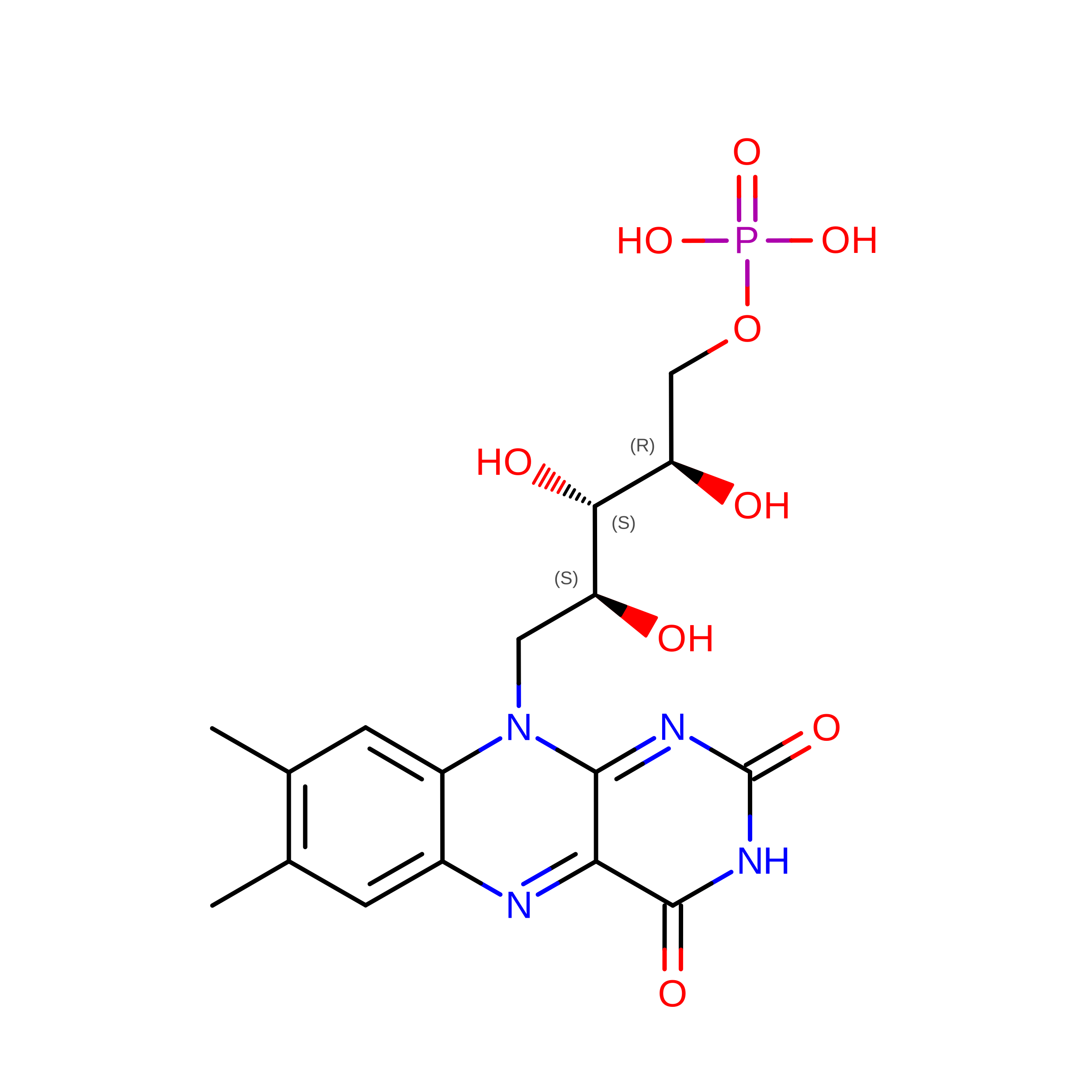
Prenylated flavin mononucleotide (prFMN) is a modified flavin cofactor required by the UbiD family of (de)carboxylase enzymes. While the reduced prFMNH 2 form is produced by the flavin prenyltransferase UbiX, the corresponding two-electron oxidized prFMN iminium form is required to support UbiD catalysis. Thus, oxidative maturation of prFMNH 2 is required, which can be catalyzed by UbiD. However, heterologous (over)expression of UbiDs frequently leads to the accumulation of the stable but non-active one-electron oxidized purple prFMN radical species. A dedicated prFMN maturase enzyme (PhdC) from Mycolicibacterium fortuitum was recently identified as capable of catalyzing the oxidative maturation of prFMN radical to prFMN iminium , thereby enabling an effective supply of active cofactor to the associated phenazine-1-carboxylate (de)carboxylase PhdA. We report the crystal structure of PhdC in complex with flavin, revealing it is a distant member of the class I HpaC-like family of short-chain dimeric flavin reductases and demonstrate catalytic conversion of the prFMN radical species to prFMN iminium in the presence of oxygen or ferricyanide. Co-expression of PhdC or a distant homologue from Priestia megaterium (YclD) with the canonical UbiD from Escherichia coli leads to activation of the latter, similar in effect to co-expression with the prFMNH 2 -binding chaperone LpdD. Conserved Glu residues in the PhdC active site suggest catalysis occurs through C1' proton-abstraction coupled oxidation. This study thus provides both structural and mechanistic insight into the function of PhdC, adding to the expanding repertoire of prFMN-binding proteins associated with the widespread UbiDX system.
- Manchester Institute of Biotechnology, University of Manchester, Manchester, UK.
Organizational Affiliation: