Download Mendeley
Pseudouridine residues as substrates for serum ribonucleases.
Gutierrez, C.S., Silkenath, B., Kojasoy, V., Pich, J.A., Lim, D.C., Raines, R.T.(2025) RNA 31: 1542-1556
- PubMed: 40835455 Search on PubMed
- DOI: https://doi.org/10.1261/rna.080404.125
- Primary Citation Related Structures:
9NCS, 9O4V, 9O5B - PubMed Abstract:
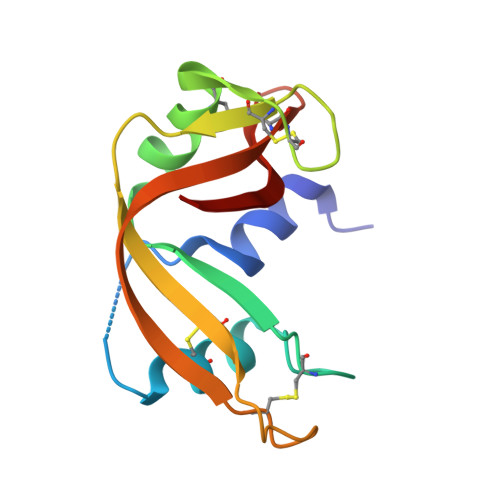
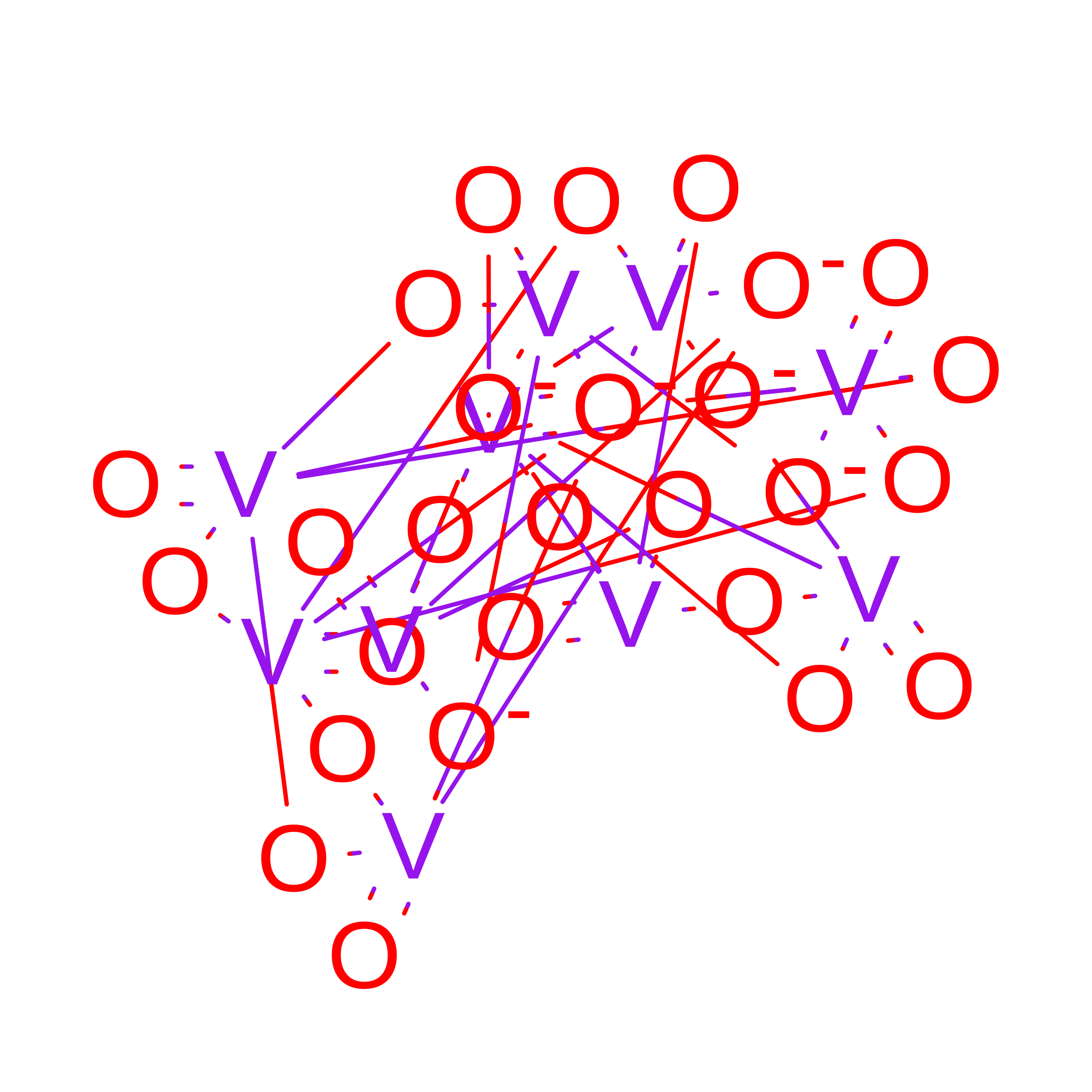
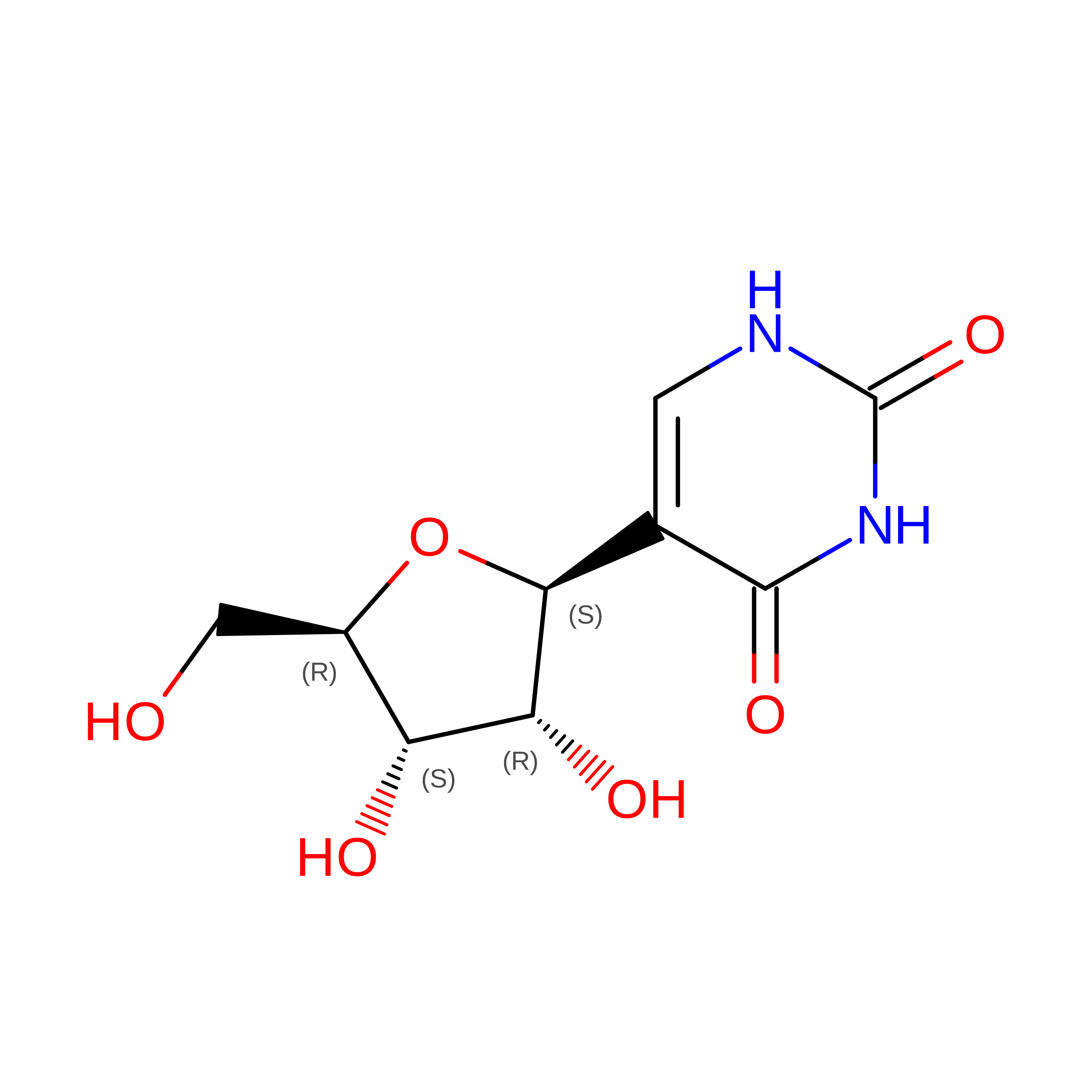
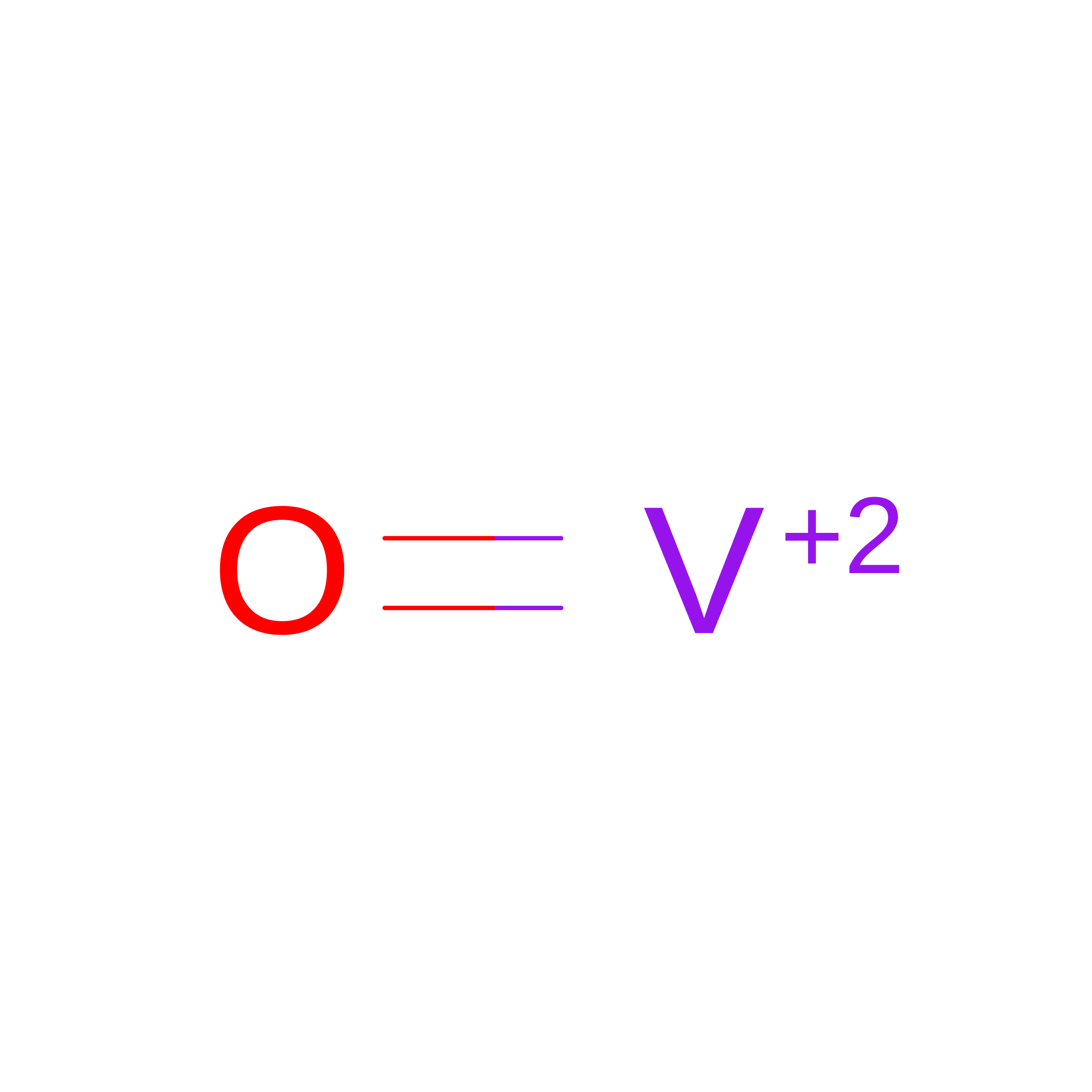
In clinical uses, RNA must maintain its integrity in serum that contains ribonucleases (RNases), especially RNase 1, which is a human homolog of RNase A. These omnipresent enzymes catalyze the cleavage of the P-O 5'' bond on the 3' side of pyrimidine residues. Pseudouridine (Ψ) is the most abundant modified nucleoside in natural RNA. The substitution of uridine (U) with Ψ or N 1 ‑methylpseudouridine (m 1 Ψ) reduces the immunogenicity of mRNA and increases ribosomal translation, and these modified nucleosides are key components of RNA-based vaccines. Here, we assessed the ability of RNase A and RNase 1 to catalyze the cleavage of the P-O 5'' bond on the 3' side of Ψ and m 1 Ψ. We find that these enzymes catalyze the cleavage of UpA up to 10‑fold more efficiently than the cleavage of ΨpA or m 1 ΨpA. X-ray crystallography of enzyme-bound nucleoside 2',3'‑cyclic vanadate complexes and molecular dynamics simulations of enzyme·dinucleotide complexes show that U, Ψ, and m 1 Ψ bind to RNase A and RNase 1 in a similar manner. Quantum chemistry calculations suggested that the higher reactivity of UpA is intrinsic, arising from an inductive effect that decreases the p K a of the 2'‑hydroxy group of U and enhances its nucleophilicity toward the P-O 5'' bond. Experimentally, we found that UpA does indeed undergo spontaneous hydrolysis faster than does m 1 ΨpA. Our findings inform the continuing development of RNA-based vaccines and therapeutic agents.
- Massachusetts Institute of Technology.
Organizational Affiliation: