Download Mendeley
Chemical knockdown of Keap1 and homoPROTAC-ing allergic rhinitis.
Yan, J., Wang, T., Yu, R., Xu, L., Shao, H., Li, T., Wang, Z., Cha, X., Miao, Z., Xing, C., Xu, K., Liu, H., Zhuang, C.(2025) Acta Pharm Sin B 15: 4137-4155
- PubMed: 40893683 Search on PubMedSearch on PubMed Central
- DOI: https://doi.org/10.1016/j.apsb.2025.05.025
- Primary Citation Related Structures:
9J70, 9J71, 9J7F, 9J7G - PubMed Abstract:
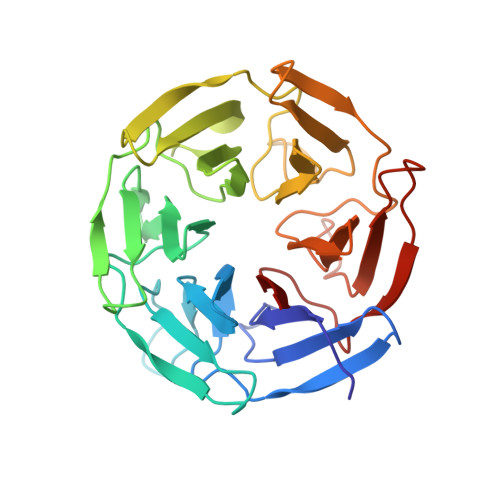
Allergic rhinitis (AR), a globally prevalent immune-mediated inflammatory condition, is still an incurable disease. In the present study, we have validated the impact of the Kelch-like ECH associated protein 1 (Keap1)-related oxidative stress and inflammatory response in clinical AR patient peripheral blood and nasal swab samples, emphasizing the biological relevance of Keap1 and AR. Targeting Keap1 -nuclear factor erythroid 2-related factor 2 (Nrf2) related anti-oxidative stress may be effective for AR intervention. Drawing inspiration from the Keap1 homodimerization and the E3 ligase characteristics, we herein present a design of novel bivalent molecules for chemical knockdown of Keap1. For the first time, we characterized ternary complexes of Keap1 dimer and one molecule of bivalent compounds. The best bivalent molecule 8 encompasses robust capacity to degrade Keap1 as a homoPROTAC KEAP1 . It efficaciously suppresses inflammatory cytokines in extensively different cells, including human nasal epithelial cells. Moreover, in an AR mouse model, we confirmed that the chemical degradation induced by homoPROTAC KEAP1 led to therapeutic benefits in managing AR symptoms, oxidative stress and inflammation. In summary, our findings underscore the efficacy of targeting the Keap1 system through the homoPROTAC-ing technology as an innovative and promising treatment strategy for the incurable allergic disorders.
- The Center for Basic Research and Innovation of Medicine and Pharmacy (MOE), School of Pharmacy, Naval Medical University/Second Military Medical University, Shanghai 200433, China.
Organizational Affiliation: