9IHD | pdb_00009ihd

Nucleosome core particle bound by one molecule of DTT-reduced native monomeric myeloperoxidase


Experimental Data Snapshot

  • Method: ELECTRON MICROSCOPY
  • Resolution: 2.97 Å
  • Aggregation State: PARTICLE 
  • Reconstruction Method: SINGLE PARTICLE 

wwPDB Validation   3D Report Full Report


This is version 1.3 of the entry. See complete history


Literature

Myeloperoxidase transforms chromatin into neutrophil extracellular traps.

Burn, G.L.Raisch, T.Tacke, S.Winkler, M.Prumbaum, D.Thee, S.Gimber, N.Raunser, S.Zychlinsky, A.

(2025) Nature 647: 747-756

  • DOI: https://doi.org/10.1038/s41586-025-09523-9
  • Primary Citation of Related Structures:  
    9GEN, 9GEO, 9GEP, 9GEQ, 9GER, 9IHD, 9IHE, 9IHF

  • PubMed Abstract: 

    Neutrophils, the most abundant and biotoxic immune cells, extrude nuclear DNA into the extracellular space to maintain homeostasis. Termed neutrophil extracellular traps (NETs), these protein-modified and decondensed extracellular DNA scaffolds control infection and are involved in coagulation, autoimmunity and cancer 1,2 . Here we show how myeloperoxidase (MPO), a highly expressed neutrophil protein, disassembles nucleosomes, thereby facilitating NET formation, yet also binds stably to NETs extracellularly. We describe how the oligomeric status of MPO governs both outcomes. MPO dimers interact with nucleosomal DNA using one protomer and concurrently dock into the nucleosome acidic patch with the other protomer. As a consequence, dimeric MPO displaces DNA from the core complex, culminating in nucleosome disassembly. On the other hand, MPO monomers stably interact with the nucleosome acidic patch without making concomitant DNA contacts, explaining how monomeric MPO binds to and licences NETs to confer hypohalous acid production in the extracellular space 3 . Our data demonstrate that the binding of MPO to chromatin is governed by specific molecular interactions that transform chromatin into a non-replicative, non-encoding state that offers new biological functions in a cell-free manner. We propose that MPO is, to our knowledge, the first member of a class of proteins that convert chromatin into an immune effector.


  • Organizational Affiliation
    • Department of Cellular Microbiology, Max Planck Institute for Infection Biology, Berlin, Germany.

Macromolecules

Find similar proteins by:  (by identity cutoff)  |  3D Structure
Entity ID: 1
MoleculeChains Sequence LengthOrganismDetailsImage
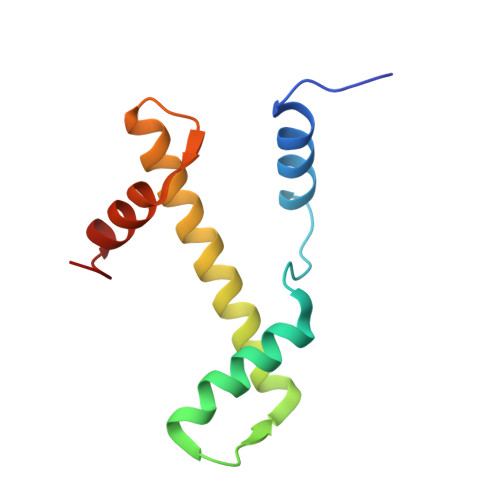
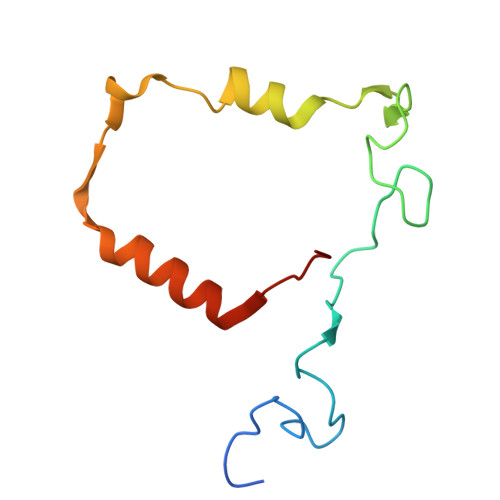
Histone H3.2
A, E
99Xenopus laevisMutation(s): 0 
UniProt
Find proteins for P84233 (Xenopus laevis)
Explore P84233 
Go to UniProtKB:  P84233
Entity Groups  
Sequence Clusters30% Identity50% Identity70% Identity90% Identity95% Identity100% Identity
UniProt GroupP84233
Sequence Annotations
Expand
  • Reference Sequence
Find similar proteins by:  (by identity cutoff)  |  3D Structure
Entity ID: 2
MoleculeChains Sequence LengthOrganismDetailsImage
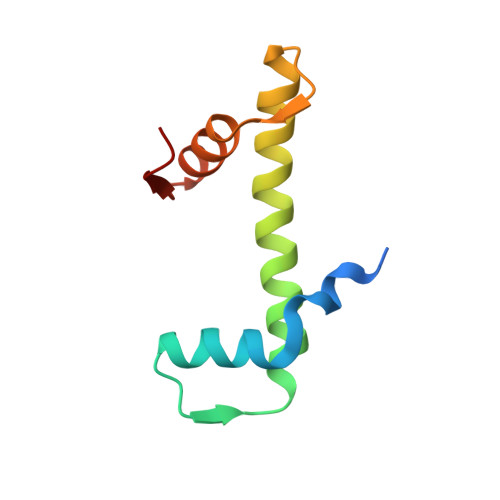
Histone H4
B, F
87Xenopus laevisMutation(s): 0 
UniProt
Find proteins for P62799 (Xenopus laevis)
Explore P62799 
Go to UniProtKB:  P62799
Entity Groups  
Sequence Clusters30% Identity50% Identity70% Identity90% Identity95% Identity100% Identity
UniProt GroupP62799
Sequence Annotations
Expand
  • Reference Sequence
Find similar proteins by:  (by identity cutoff)  |  3D Structure
Entity ID: 3
MoleculeChains Sequence LengthOrganismDetailsImage
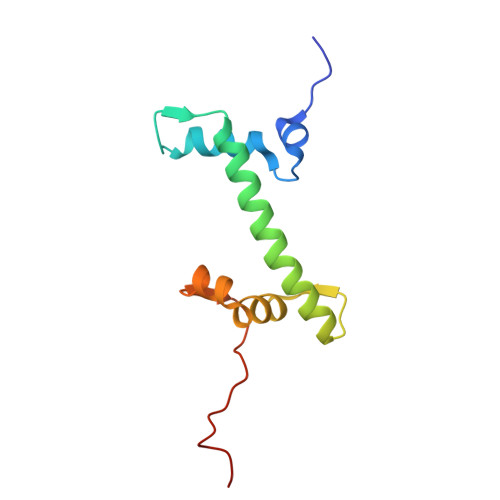
Histone H2A type 1
C, G
111Xenopus laevisMutation(s): 0 
UniProt
Find proteins for P06897 (Xenopus laevis)
Explore P06897 
Go to UniProtKB:  P06897
Entity Groups  
Sequence Clusters30% Identity50% Identity70% Identity90% Identity95% Identity100% Identity
UniProt GroupP06897
Sequence Annotations
Expand
  • Reference Sequence
Find similar proteins by:  (by identity cutoff)  |  3D Structure
Entity ID: 4
MoleculeChains Sequence LengthOrganismDetailsImage
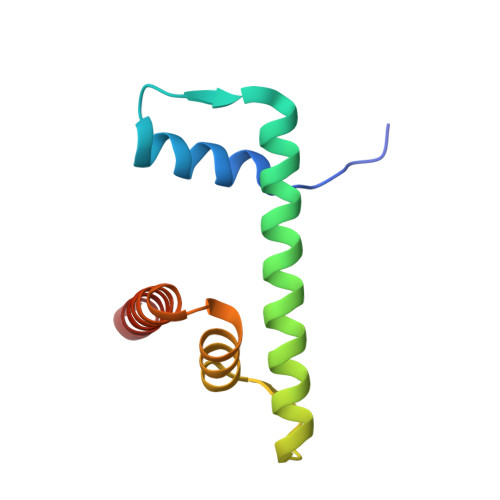
Histone H2B 1.1
D, H
96Xenopus laevisMutation(s): 0 
UniProt
Find proteins for P02281 (Xenopus laevis)
Explore P02281 
Go to UniProtKB:  P02281
Entity Groups  
Sequence Clusters30% Identity50% Identity70% Identity90% Identity95% Identity100% Identity
UniProt GroupP02281
Sequence Annotations
Expand
  • Reference Sequence
Find similar proteins by:  (by identity cutoff)  |  3D Structure
Entity ID: 7
MoleculeChains Sequence LengthOrganismDetailsImage
Myeloperoxidase light chainK [auth M]108Homo sapiensMutation(s): 0 
EC: 1.11.2.2
UniProt & NIH Common Fund Data Resources
Find proteins for P05164 (Homo sapiens)
Explore P05164 
Go to UniProtKB:  P05164
PHAROS:  P05164
GTEx:  ENSG00000005381 
Entity Groups  
Sequence Clusters30% Identity50% Identity70% Identity90% Identity95% Identity100% Identity
UniProt GroupP05164
Sequence Annotations
Expand
  • Reference Sequence
Find similar proteins by:  (by identity cutoff)  |  3D Structure
Entity ID: 8
MoleculeChains Sequence LengthOrganismDetailsImage
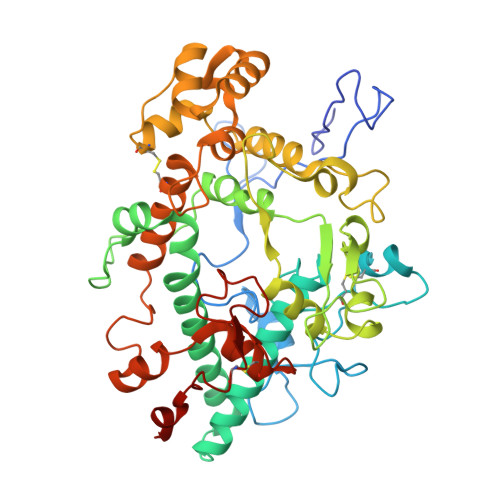
Myeloperoxidase light chainL [auth N]466Homo sapiensMutation(s): 0 
EC: 1.11.2.2
UniProt & NIH Common Fund Data Resources
Find proteins for P05164 (Homo sapiens)
Explore P05164 
Go to UniProtKB:  P05164
PHAROS:  P05164
GTEx:  ENSG00000005381 
Entity Groups  
Sequence Clusters30% Identity50% Identity70% Identity90% Identity95% Identity100% Identity
UniProt GroupP05164
Glycosylation
Glycosylation Sites: 2Go to GlyGen: P05164-1
Sequence Annotations
Expand
  • Reference Sequence
Find similar nucleic acids by:  (by identity cutoff)  |  3D Structure
Entity ID: 5
MoleculeChains LengthOrganismImage
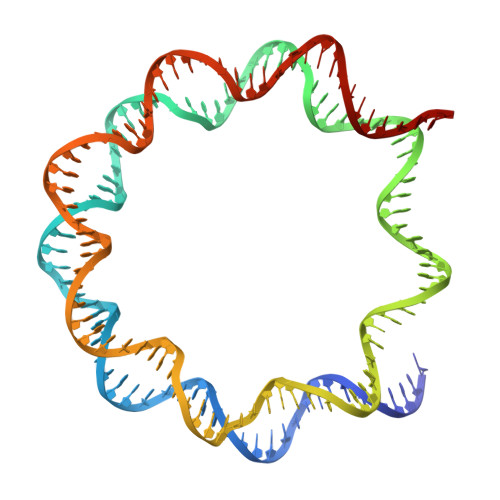
Widom-601 DNA (145-MER)147synthetic construct
Sequence Annotations
Expand
  • Reference Sequence
Find similar nucleic acids by:  (by identity cutoff)  |  3D Structure
Entity ID: 6
MoleculeChains LengthOrganismImage
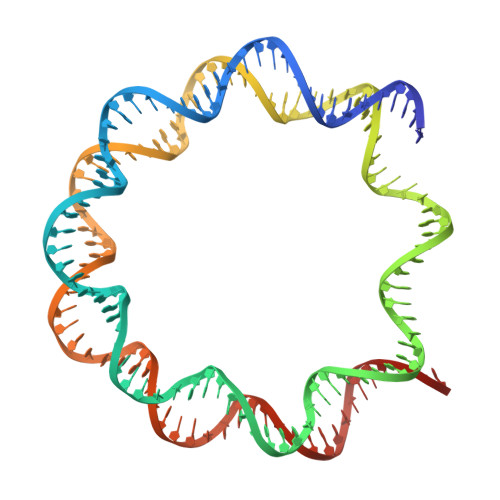
Widom-601 DNA (145-MER)147synthetic construct
Sequence Annotations
Expand
  • Reference Sequence
Experimental Data & Validation

Experimental Data

  • Method: ELECTRON MICROSCOPY
  • Resolution: 2.97 Å
  • Aggregation State: PARTICLE 
  • Reconstruction Method: SINGLE PARTICLE 
EM Software:
TaskSoftware PackageVersion
MODEL REFINEMENTPHENIX1.21_5207

Structure Validation

View Full Validation Report


Entry History & Funding Information

Deposition Data


Funding OrganizationLocationGrant Number
Max Planck SocietyGermany--

Revision History  (Full details and data files)

  • Version 1.0: 2025-08-06
    Type: Initial release
  • Version 1.1: 2025-09-24
    Changes: Data collection, Database references
  • Version 1.2: 2025-10-01
    Changes: Data collection, Database references
  • Version 1.3: 2025-12-03
    Changes: Data collection, Database references