Download Mendeley
Preclinical characterization of novel multi-client inhibitors of Sec61 with broad antitumor activity.
Lowe, E., Anderl, J.L., Bade, D., Delgado-Martin, C., Dong, C., Fan, R.A., Fang, Y., Jiang, J., Johnson, H.W.B., Kempema, A., McGilvray, P., McMinn, D., Millare, B., Muchamuel, T., Poweleit, N., Qian, Y., Rehan, S., Scapin, G., Sugahara, A., Tranter, D., Tuch, B., Wang, J., Wang, L., Whang, J.A., Zuno-Mitchell, P., Paavilainen, V.O., Park, E., Taunton, J., Kirk, C.J., Anand, N.K.(2025) J Pharmacol Exp Ther 392: 103634-103634
- PubMed: 40669140 Search on PubMed
- DOI: https://doi.org/10.1016/j.jpet.2025.103634
- Primary Citation Related Structures:
9D6L, 9HZ5 - PubMed Abstract:
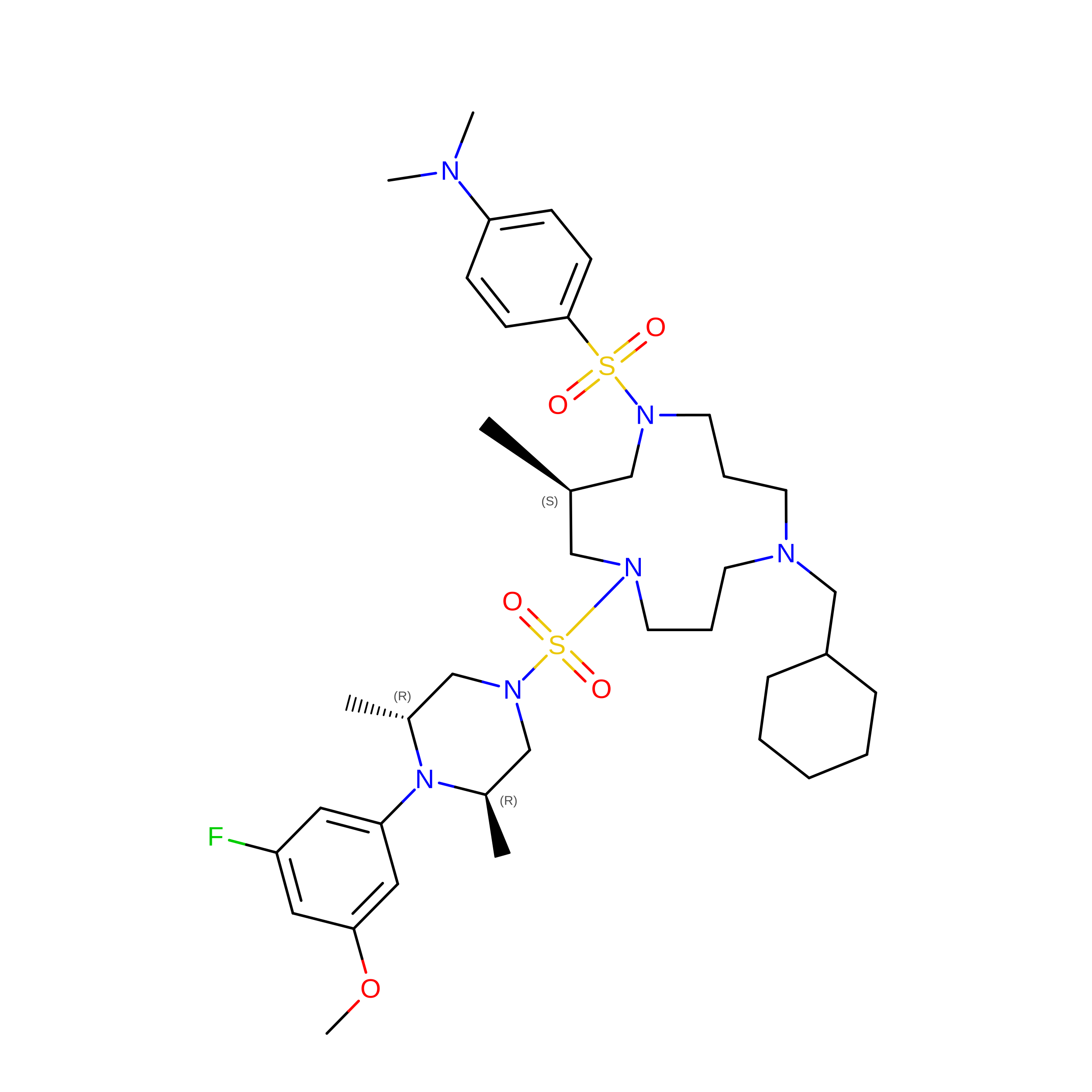
The Sec61 translocon mediates entry of most secreted and transmembrane proteins into the endoplasmic reticulum, providing a novel therapeutic target to block the expression of protumorigenic factors. Sec61 inhibitors with antitumor activity, mostly derived from natural products, have been reported. However, poor tolerability and suboptimal pharmaceutical properties have precluded their further development. We report here the discovery and characterization of KZR-834 and KZR-261, related small molecule analogs that directly bind to the Sec61 channel to potently inhibit the biogenesis of a subset of Sec61 client proteins. This client inhibition profile includes several tumorigenic factors, results in the activation of an endoplasmic reticulum stress response, and leads to broad anticancer effects in vitro. In vivo, KZR-261 was well tolerated and exhibits antitumor effects across multiple models, both as a single agent and in combination with anti-PD-1 immunotherapy. Based on the strength of this preclinical data, KZR-261 progressed into a phase I clinical trial (NCT05047536) in patients with malignant disease, where it was found to be well tolerated at doses that achieved durable stable disease. These results highlight the potential of Sec61 inhibition as a novel therapeutic target. SIGNIFICANCE STATEMENT: KZR-834 and KZR-261 are novel Sec61 inhibitors with the ability to block multiple Sec61 client proteins, leading to well-tolerated efficacy in in vivo cancer models. This represents a novel mechanism for blocking expression of oncogenic factors, including those not amenable to targeting through conventional methods.
- Kezar Life Sciences, South San Francisco, California.
Organizational Affiliation: