9D6L | pdb_00009d6l

Human Sec61 complex inhibited by KZR-261


Experimental Data Snapshot

  • Method: ELECTRON MICROSCOPY
  • Resolution: 3.10 Å
  • Aggregation State: PARTICLE 
  • Reconstruction Method: SINGLE PARTICLE 

wwPDB Validation   3D Report Full Report


This is version 1.1 of the entry. See complete history


Literature

Preclinical characterization of novel multi-client inhibitors of Sec61 with broad antitumor activity.

Lowe, E.Anderl, J.L.Bade, D.Delgado-Martin, C.Dong, C.Fan, R.A.Fang, Y.Jiang, J.Johnson, H.W.B.Kempema, A.McGilvray, P.McMinn, D.Millare, B.Muchamuel, T.Poweleit, N.Qian, Y.Rehan, S.Scapin, G.Sugahara, A.Tranter, D.Tuch, B.Wang, J.Wang, L.Whang, J.A.Zuno-Mitchell, P.Paavilainen, V.O.Park, E.Taunton, J.Kirk, C.J.Anand, N.K.

(2025) J Pharmacol Exp Ther 392: 103634-103634

  • DOI: https://doi.org/10.1016/j.jpet.2025.103634
  • Primary Citation of Related Structures:  
    9D6L, 9HZ5

  • PubMed Abstract: 

    The Sec61 translocon mediates entry of most secreted and transmembrane proteins into the endoplasmic reticulum, providing a novel therapeutic target to block the expression of protumorigenic factors. Sec61 inhibitors with antitumor activity, mostly derived from natural products, have been reported. However, poor tolerability and suboptimal pharmaceutical properties have precluded their further development. We report here the discovery and characterization of KZR-834 and KZR-261, related small molecule analogs that directly bind to the Sec61 channel to potently inhibit the biogenesis of a subset of Sec61 client proteins. This client inhibition profile includes several tumorigenic factors, results in the activation of an endoplasmic reticulum stress response, and leads to broad anticancer effects in vitro. In vivo, KZR-261 was well tolerated and exhibits antitumor effects across multiple models, both as a single agent and in combination with anti-PD-1 immunotherapy. Based on the strength of this preclinical data, KZR-261 progressed into a phase I clinical trial (NCT05047536) in patients with malignant disease, where it was found to be well tolerated at doses that achieved durable stable disease. These results highlight the potential of Sec61 inhibition as a novel therapeutic target. SIGNIFICANCE STATEMENT: KZR-834 and KZR-261 are novel Sec61 inhibitors with the ability to block multiple Sec61 client proteins, leading to well-tolerated efficacy in in vivo cancer models. This represents a novel mechanism for blocking expression of oncogenic factors, including those not amenable to targeting through conventional methods.


  • Organizational Affiliation
    • Kezar Life Sciences, South San Francisco, California.

Macromolecules
Find similar proteins by:  (by identity cutoff)  |  3D Structure
Entity ID: 1
MoleculeChains Sequence LengthOrganismDetailsImage
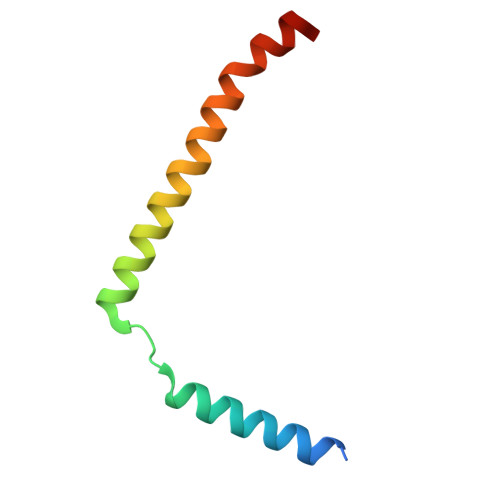
Protein transport protein Sec61 subunit gammaA [auth B]68Homo sapiensMutation(s): 0 
Gene Names: SEC61G
UniProt & NIH Common Fund Data Resources
Find proteins for P60059 (Homo sapiens)
Explore P60059 
Go to UniProtKB:  P60059
PHAROS:  P60059
GTEx:  ENSG00000132432 
Entity Groups  
Sequence Clusters30% Identity50% Identity70% Identity90% Identity95% Identity100% Identity
UniProt GroupP60059
Sequence Annotations
Expand
  • Reference Sequence
Find similar proteins by:  (by identity cutoff)  |  3D Structure
Entity ID: 2
MoleculeChains Sequence LengthOrganismDetailsImage
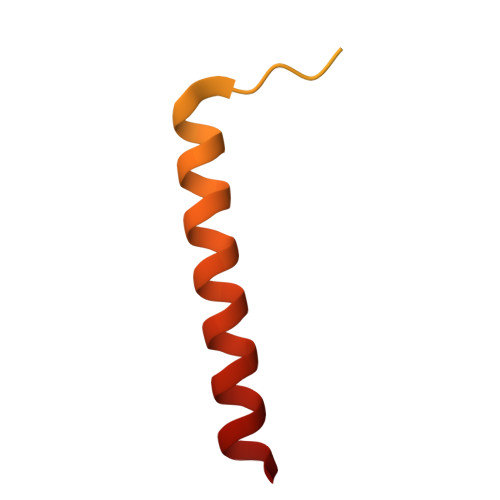
Protein transport protein Sec61 subunit betaB [auth C]96Homo sapiensMutation(s): 0 
Gene Names: SEC61B
UniProt & NIH Common Fund Data Resources
Find proteins for P60468 (Homo sapiens)
Explore P60468 
Go to UniProtKB:  P60468
PHAROS:  P60468
GTEx:  ENSG00000106803 
Entity Groups  
Sequence Clusters30% Identity50% Identity70% Identity90% Identity95% Identity100% Identity
UniProt GroupP60468
Sequence Annotations
Expand
  • Reference Sequence
Find similar proteins by:  (by identity cutoff)  |  3D Structure
Entity ID: 3
MoleculeChains Sequence LengthOrganismDetailsImage
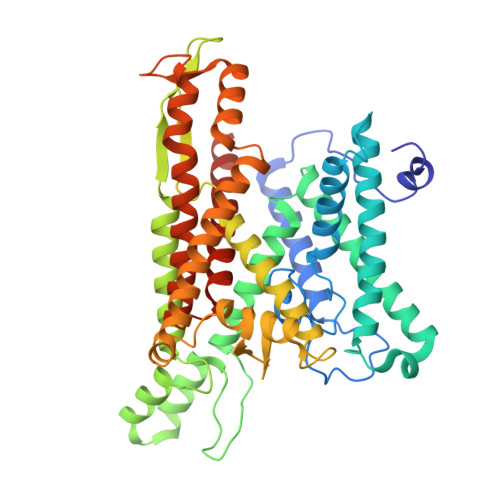
Protein transport protein Sec61 subunit alpha isoform 1C [auth A]476Homo sapiensMutation(s): 15 
Gene Names: SEC61A1SEC61A
UniProt & NIH Common Fund Data Resources
Find proteins for P61619 (Homo sapiens)
Explore P61619 
Go to UniProtKB:  P61619
PHAROS:  P61619
GTEx:  ENSG00000058262 
Entity Groups  
Sequence Clusters30% Identity50% Identity70% Identity90% Identity95% Identity100% Identity
UniProt GroupP61619
Sequence Annotations
Expand
  • Reference Sequence
Small Molecules
Ligands 1 Unique
IDChains Name / Formula / InChI Key2D Diagram3D Interactions
A1A2B (Subject of Investigation/LOI)
Query on A1A2B

Download Ideal Coordinates CCD File 
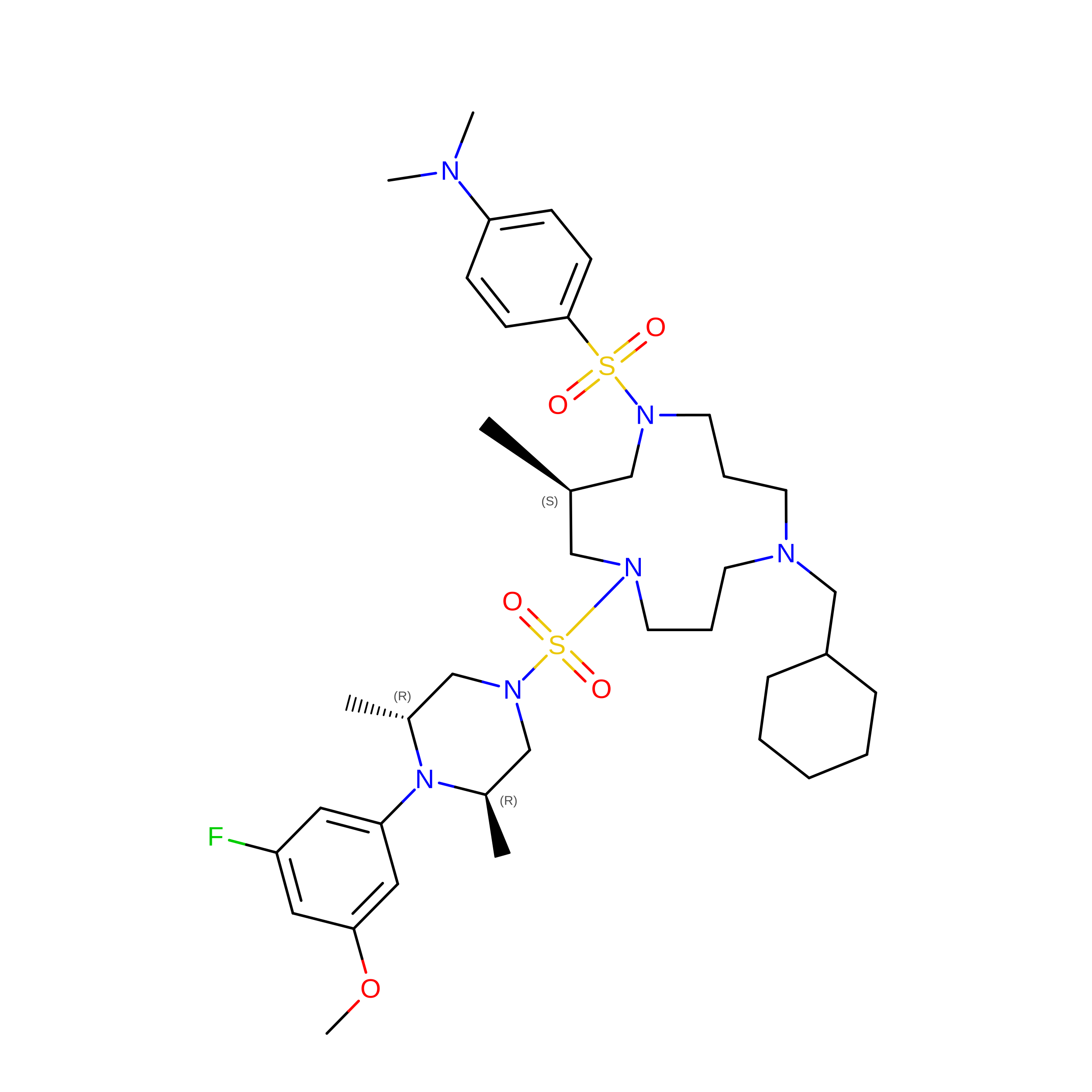
D [auth A]4-{(3S)-9-(cyclohexylmethyl)-5-[(3R,5R)-4-(3-fluoro-5-methoxyphenyl)-3,5-dimethylpiperazine-1-sulfonyl]-3-methyl-1,5,9-triazacyclododecane-1-sulfonyl}-N,N-dimethylaniline
C38 H61 F N6 O5 S2
LIDUHPAGWLBVCL-DCMFLLSESA-N
Experimental Data & Validation

Experimental Data

  • Method: ELECTRON MICROSCOPY
  • Resolution: 3.10 Å
  • Aggregation State: PARTICLE 
  • Reconstruction Method: SINGLE PARTICLE 
EM Software:
TaskSoftware PackageVersion
MODEL REFINEMENTPHENIX
RECONSTRUCTIONcryoSPARC4.5

Structure Validation

View Full Validation Report


Entry History & Funding Information

Deposition Data


Funding OrganizationLocationGrant Number
Other privateUnited States--

Revision History  (Full details and data files)

  • Version 1.0: 2025-07-23
    Type: Initial release
  • Version 1.1: 2025-07-30
    Changes: Data collection, Database references