Download Mendeley
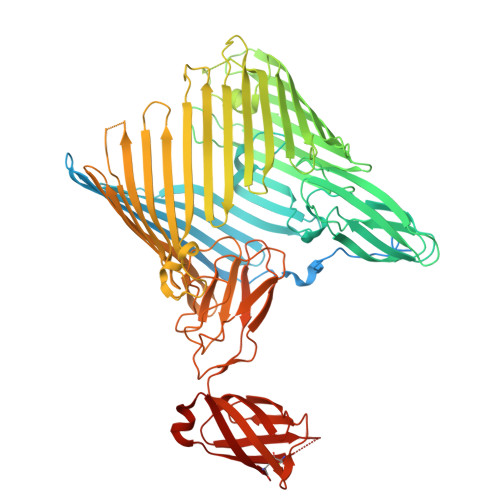
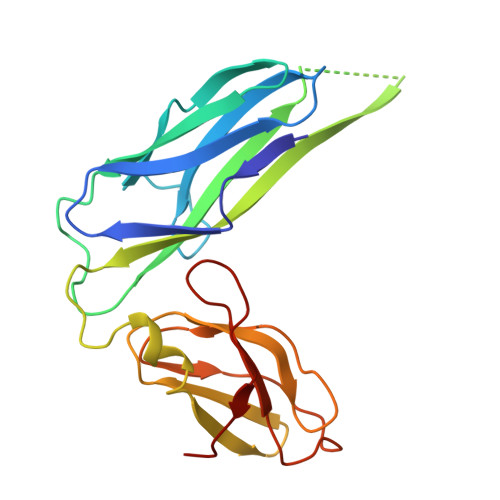
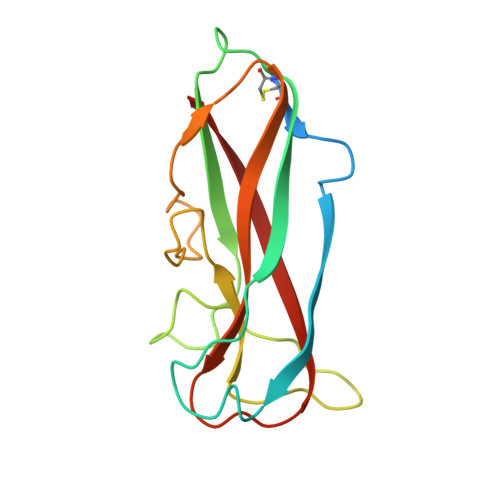
Structures of the Escherichia coli type 1 pilus during pilus rod assembly and after assembly termination.
Bachmann, P., Afanasyev, P., Boehringer, D., Glockshuber, R.(2025) Nat Commun 16: 4988-4988
- PubMed: 40442073 Search on PubMedSearch on PubMed Central
- DOI: https://doi.org/10.1038/s41467-025-60325-z
- Primary Citation Related Structures:
9FTT, 9FW9, 9FWB, 9FX0, 9FX8, 9FXA, 9FXB, 9FXS, 9FY9 - PubMed Abstract:
Uropathogenic Escherichia coli strains use filamentous type 1 pili to adhere to and invade uroepithelial cells. The pilus consists of a flexible tip fibrillum, formed by the adhesin FimH and the subunits FimG and FimF. The pilus rod is a helical assembly of up to 3000 copies of the main subunit FimA, terminated by a single copy of the subunit FimI that anchors the rod to the assembly platform FimD in the outer membrane. Although type 1 pilus assembly can be completely reconstituted in vitro, the precise mechanism of assembly termination on FimD is still unknown. Here, we present cryo-electron microscopy structures of the fully assembled pilus with all its components prior to and after incorporation of FimI, capped with the assembly chaperone FimC. The structures reveal that FimD positions the proximal end of the pilus rod at an angle of ca. 50 degrees relative to the plane of the outer membrane. Specific interactions between FimI and FimC, absent in the equivalent FimA-FimC interface of the non-terminated pilus, stabilize the assembly-terminated state. In addition, we present structures of the transition region between the tip fibrillum and the helical rod, showing how FimF aligns the tip fibrillum along the rod axis.
- Institute of Molecular Biology and Biophysics, ETH Zürich, Otto-Stern-Weg 5, Zürich, 8093, Switzerland.
Organizational Affiliation: