Download Mendeley
Structural basis of collagen glucosyltransferase function and its serendipitous role in kojibiose synthesis.
Kim, J.S., Chen, Z., Espinosa Garcia, S.A., Buhlheller, C., Zhang, B., Richards, S.J., Chen, T., Wu, J., Bruntz, R.C., Gilliam, M.E., Yamauchi, M., Liang, B., Guo, H.(2025) Nat Commun 16: 6704-6704
- PubMed: 40691173 Search on PubMedSearch on PubMed Central
- DOI: https://doi.org/10.1038/s41467-025-61973-x
- Primary Citation Related Structures:
9DYT, 9DZS, 9E92 - PubMed Abstract:
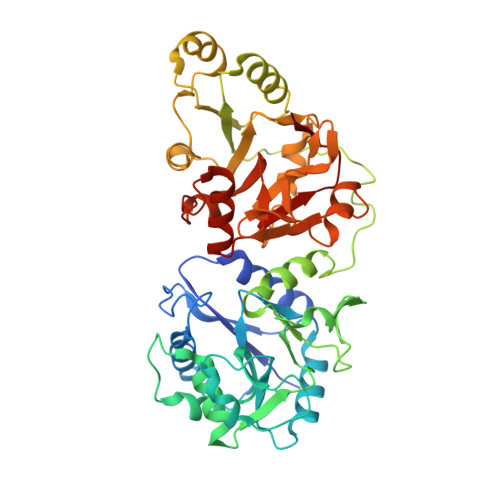
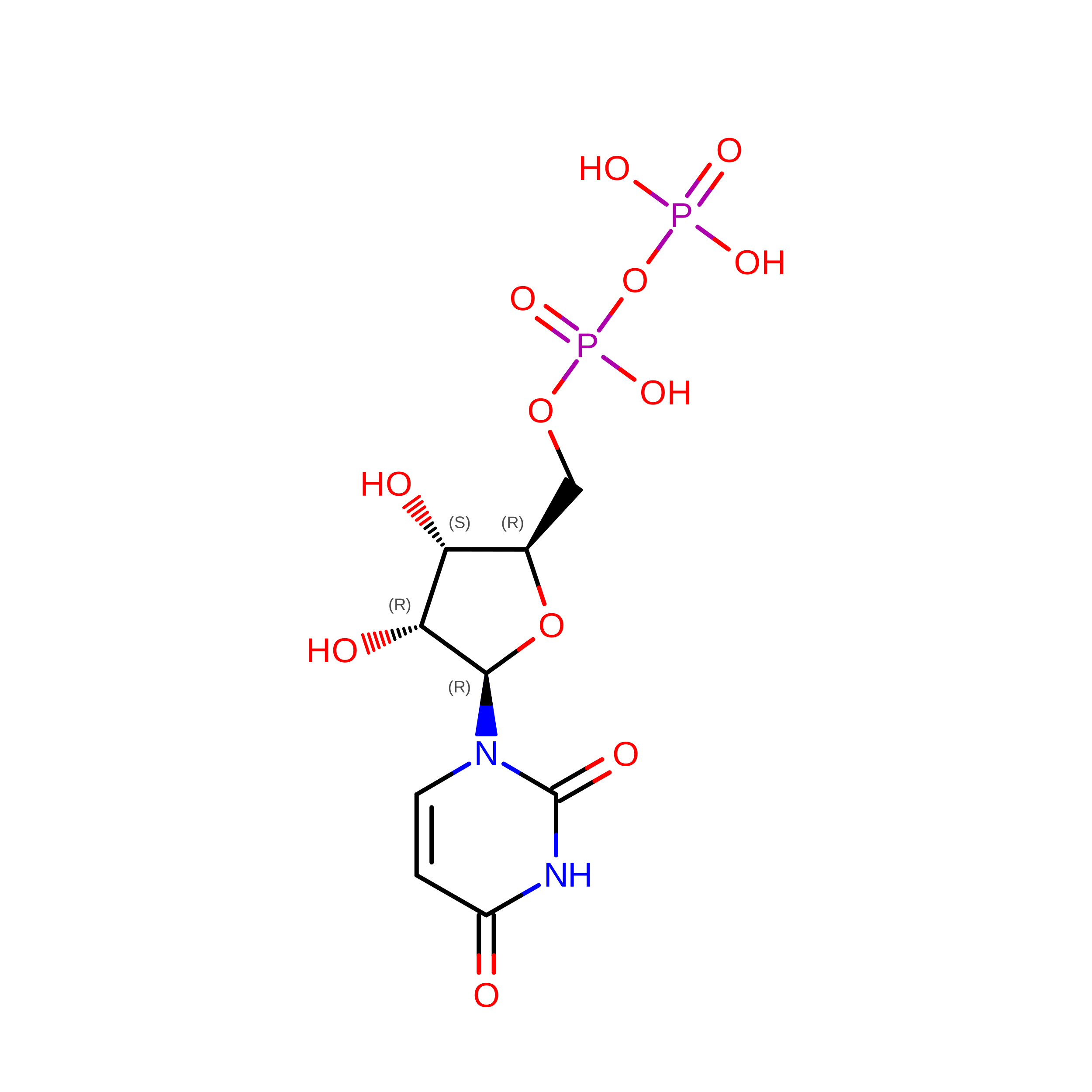
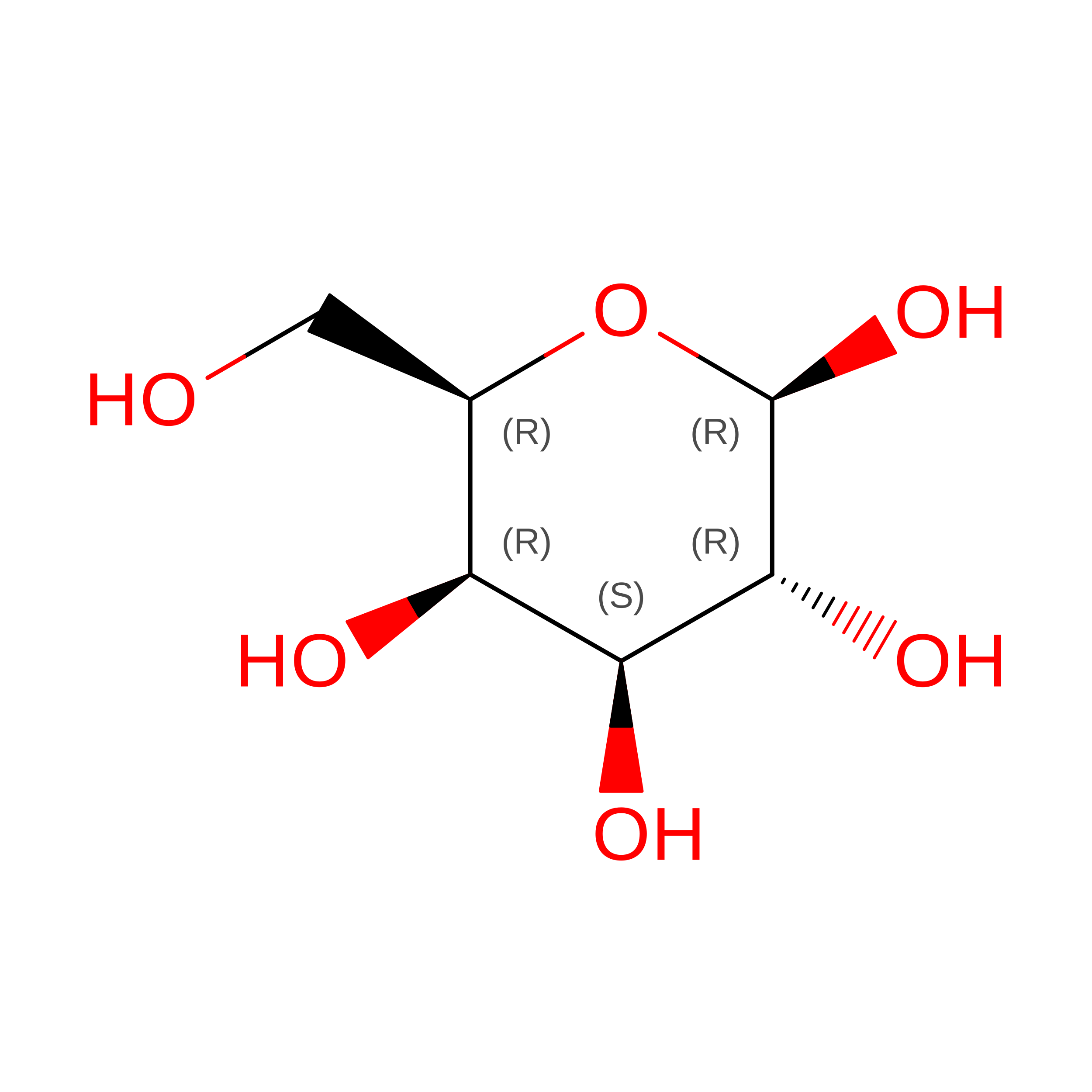
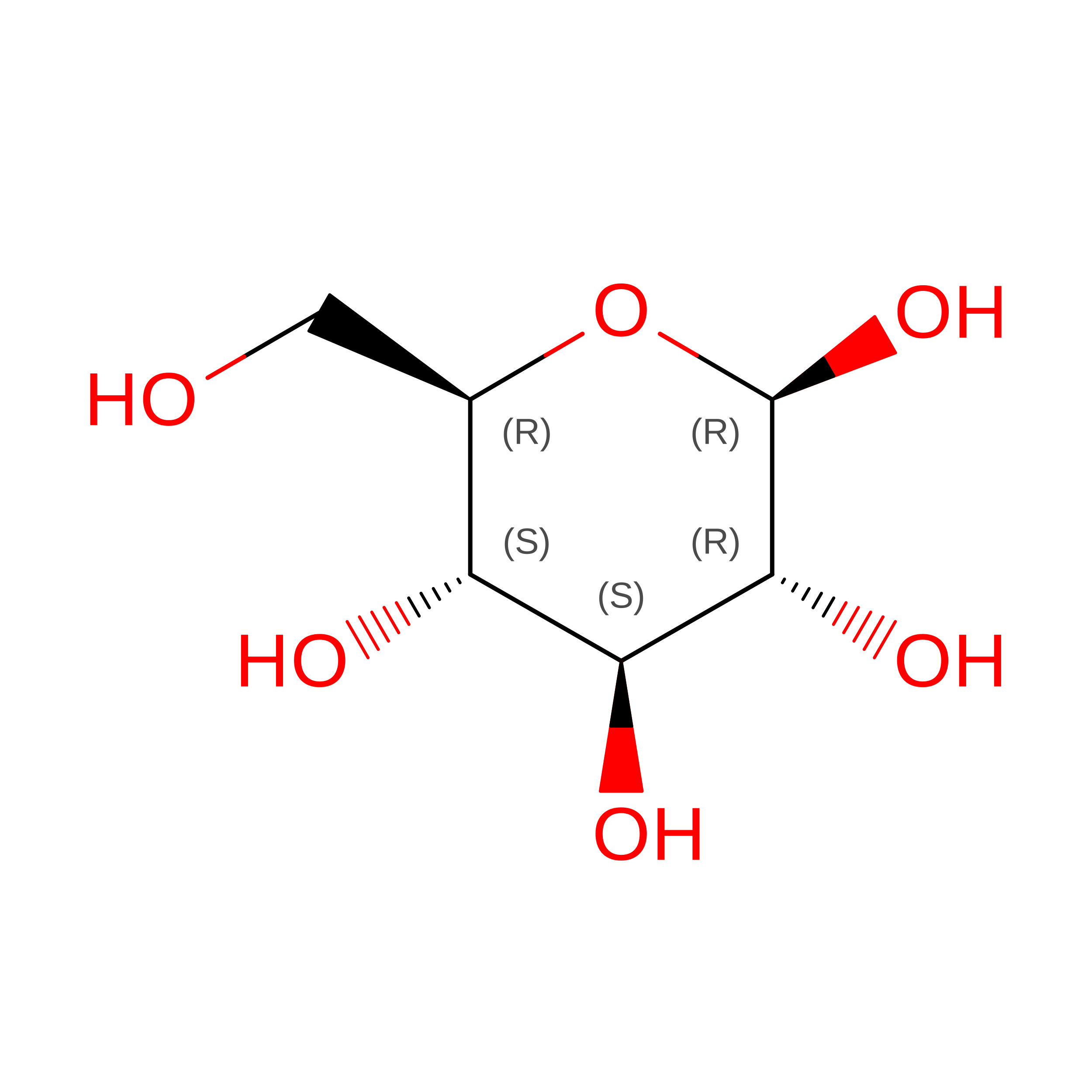
Collagen glucosyltransferases catalyze collagen glucosylation critical for biology and diseases, yet their structural regulation remains unclear. Here, we report crystal structures of a mimiviral collagen glucosyltransferase in its apo form and in complexes with uridine diphosphate (UDP) and the disaccharide product. We reveal that the enzyme forms a homodimer, stabilized by a loop from one subunit locking into a cleft on the other, enabling UDP-glucose binding cooperativity and enzymatic activity, a property conserved in the human homolog. The structures support an induced fit model for UDP interaction. The dimerization also forms an extended cleft flanked by two active sites, likely facilitating collagen recognition. Unexpectedly, the mimiviral enzyme also synthesizes a prebiotic disaccharide kojibiose. An elongated pocket near the active site allows the enzyme to use UDP-glucose and glucose for kojibiose production. We confirm the enzyme's kojibiose synthesis activity in vitro and in vivo. These insights inform glucosyltransferase function and open new avenues for inhibitor development and kojibiose biosynthesis.
- Department of Molecular and Cellular Biochemistry, University of Kentucky, Lexington, KY, USA.
Organizational Affiliation: