Download Mendeley
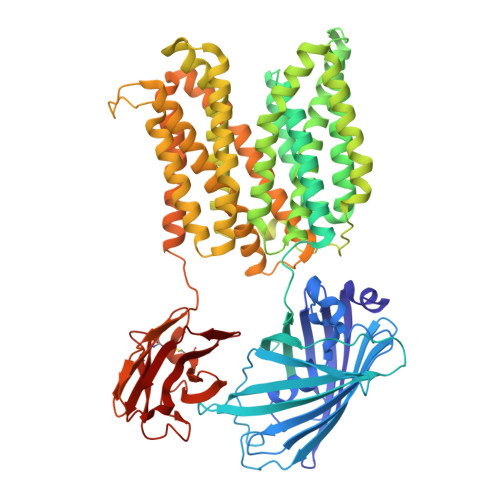
Structure and mechanism of human vesicular polyamine transporter.
Guo, Y., Yang, G., Liu, H., Chai, J., Chen, J., Shanklin, J., Liu, Q., Liu, B., Lu, M.(2025) Nat Commun 16: 4142-4142
- PubMed: 40319071 Search on PubMedSearch on PubMed Central
- DOI: https://doi.org/10.1038/s41467-025-59549-w
- Primary Citation Related Structures:
9D7U, 9D7V, 9D7W, 9D7X - PubMed Abstract:
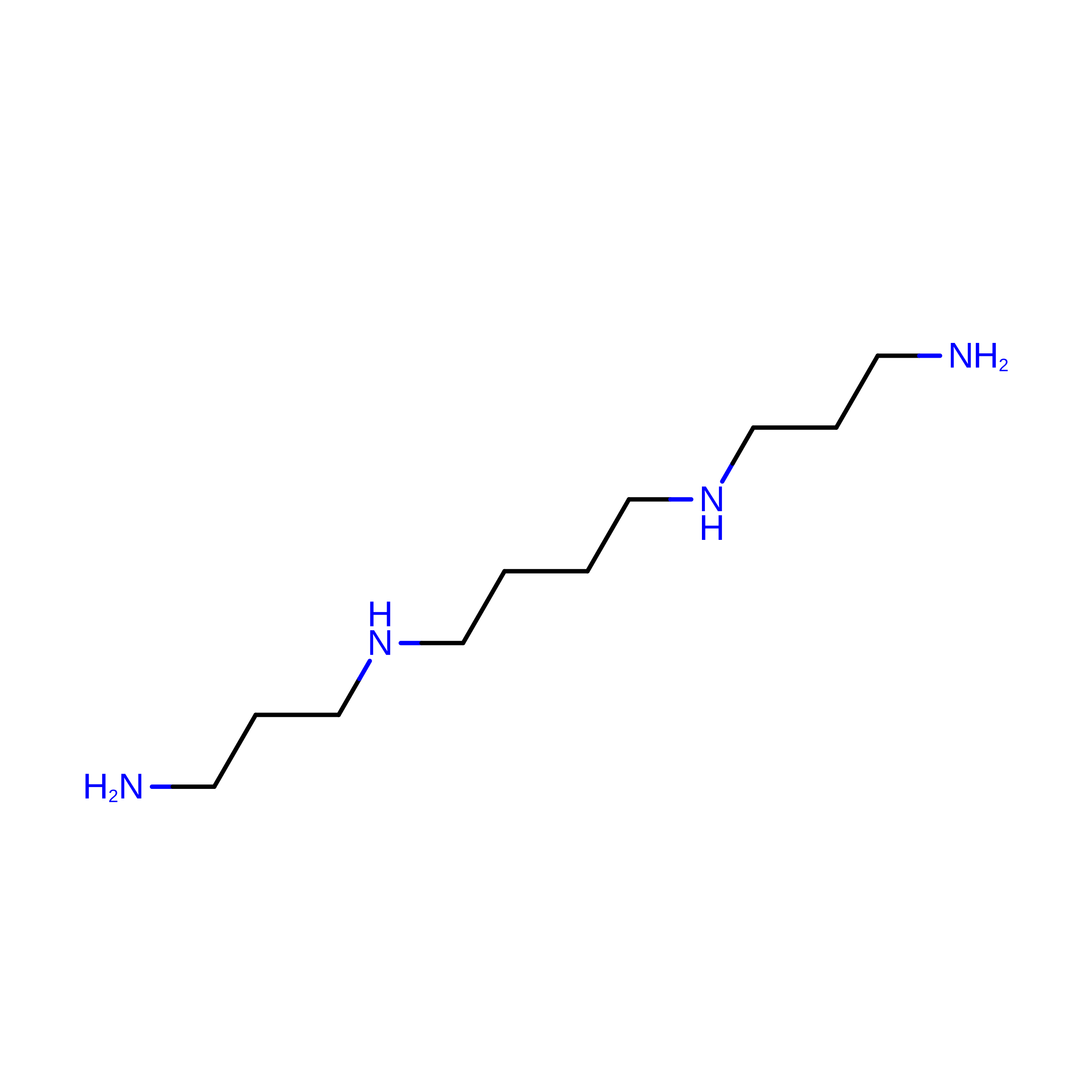
Polyamines play essential roles in gene expression and modulate neuronal transmission in mammals. Vesicular polyamine transporters (VPAT) from the SLC18 family exploit the transmembrane H + gradient to translocate polyamines into secretory vesicles, enabling the quantal release of polyamine neuromodulators and underpinning learning and memory formation. Here, we report the cryo-electron microscopy structures of human VPAT in complex with spermine, spermidine, H + , or tetrabenazine, elucidating discrete lumen-facing states of the antiporter and pivotal interactions between VPAT and its substrate or inhibitor. Leveraging structure-inspired mutagenesis studies and protein structure prediction, we deduce an unforeseen mechanism whereby the polyamine and H + compete for multiple acidic protein residues both directly and indirectly, and rationalize how the antidopaminergic therapeutic tetrabenazine impedes vesicular transport of polyamines. This study unravels the mechanism of an H + -coupled polyamine antiporter, reveals mechanistic diversity between VPAT and other SLC18 antiporters, and raises new prospects for combating human disorders of polyamine homeostasis.
- Center for Proteomics & Molecular Therapeutics, Rosalind Franklin University of Medicine & Science, 3333 Green Bay Road, North Chicago, IL, 60064, USA.
Organizational Affiliation: