9B26 | pdb_00009b26

Crystal structure of cod allergen Gad m 1.0201 coordinating lanthanum


Experimental Data Snapshot

  • Method: X-RAY DIFFRACTION
  • Resolution: 1.65 Å
  • R-Value Free: 
    0.197 (Depositor), 0.202 (DCC) 
  • R-Value Work: 
    0.162 (Depositor), 0.171 (DCC) 

Starting Model: experimental
View more details

wwPDB Validation   3D Report Full Report


This is version 1.1 of the entry. See complete history


Literature

Comparative studies of seafood and reptile alpha- and beta-parvalbumins.

O'Malley, A.Ray, J.M.Kitlas, P.Ruethers, T.Kapingidza, A.B.Cierpicki, T.Lopata, A.Kowal, K.Chruszcz, M.

(2024) Protein Sci 33: e5226-e5226

  • DOI: https://doi.org/10.1002/pro.5226
  • Primary Citation of Related Structures:  
    9B26, 9BAR, 9BB8, 9BCF

  • PubMed Abstract: 

    Small calcium-binding proteins such as parvalbumins (PVs) are major seafood and fish allergens. However, the impact of structural changes on their capacity to bind IgE has not been studied in detail. Therefore, fish and reptilian PVs, as well as human α-PV, were selected for biochemical, structural, and IgE binding studies. Likely due to their high solubility, crystallization proved difficult, so additional techniques were used to promote crystallization of the proteins. Novel crystal structures were determined for human PV, cod allergen Gad m 1.0201, saltwater crocodile allergen Cro p 1.0101, and the α-PV from thornback ray. β-PVs are considered the major fish allergens, while α-PVs are rarely categorized as allergens. To explain these differences, the results of structural and IgE binding studies were combined. This approach allowed us to provide new insight into IgE binding epitopes present on PVs, focusing on cross-reactivity among the selected α- and β-PVs. In addition, we have shown that these proteins display remarkable thermal stability across a range of pH conditions, which is relevant in the case of food allergens and food processing. Moreover, it is shown that the presence of calcium cations is critical for stability of the studied PVs via their protein folding, which has an impact on the formation of IgE binding epitopes. These studies shows the stability of fish and reptile PV allergens, and it allows for further evaluation of their IgE cross-reactivity.


  • Organizational Affiliation
    • Department of Biochemistry and Molecular Biology, Michigan State University, East Lansing, Michigan, USA.

Macromolecules
Find similar proteins by:  (by identity cutoff)  |  3D Structure
Entity ID: 1
MoleculeChains Sequence LengthOrganismDetailsImage
Parvalbumin beta109Gadus morhuaMutation(s): 0 
UniProt
Find proteins for Q90YK9 (Gadus morhua)
Explore Q90YK9 
Go to UniProtKB:  Q90YK9
Entity Groups  
Sequence Clusters30% Identity50% Identity70% Identity90% Identity95% Identity100% Identity
UniProt GroupQ90YK9
Sequence Annotations
Expand
  • Reference Sequence
Small Molecules
Ligands 4 Unique
IDChains Name / Formula / InChI Key2D Diagram3D Interactions
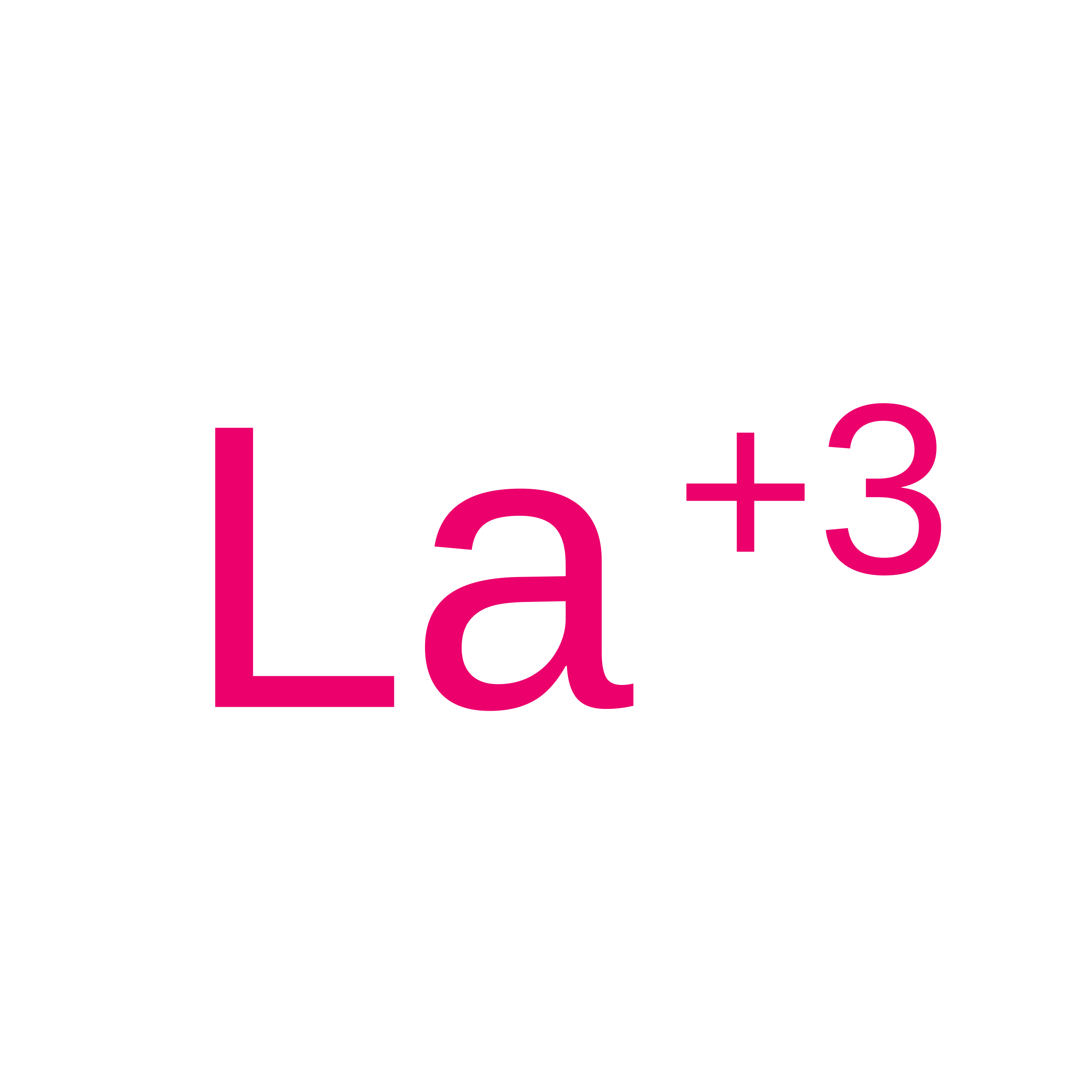
LA (Subject of Investigation/LOI)
Query on LA

Download Ideal Coordinates CCD File 
B [auth A],
C [auth A],
D [auth A],
E [auth A]
LANTHANUM (III) ION
La
CZMAIROVPAYCMU-UHFFFAOYSA-N
MLI
Query on MLI

Download Ideal Coordinates CCD File 
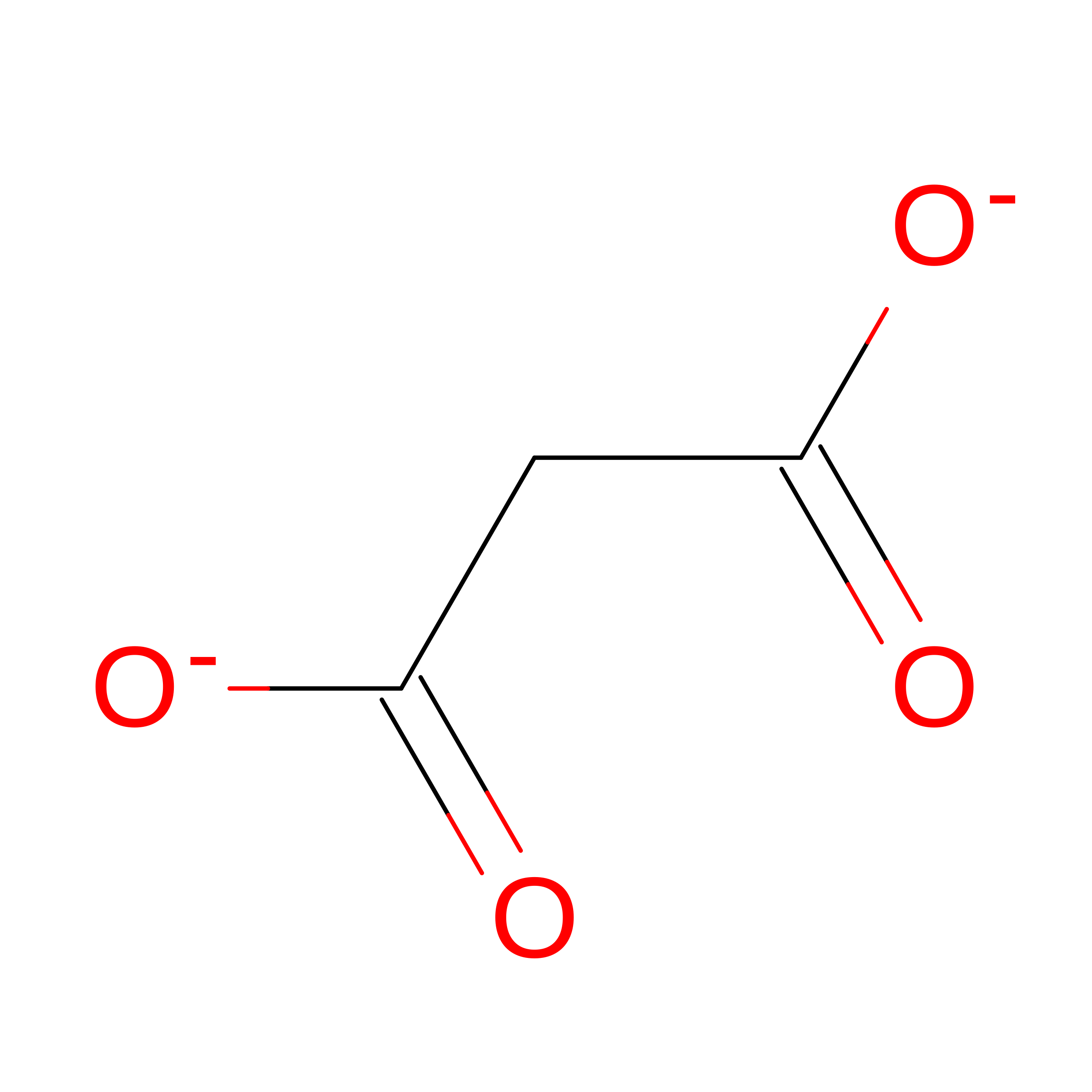
F [auth A]MALONATE ION
C3 H2 O4
OFOBLEOULBTSOW-UHFFFAOYSA-L
SO4
Query on SO4

Download Ideal Coordinates CCD File 
H [auth A]SULFATE ION
O4 S
QAOWNCQODCNURD-UHFFFAOYSA-L
CL
Query on CL

Download Ideal Coordinates CCD File 
G [auth A]CHLORIDE ION
Cl
VEXZGXHMUGYJMC-UHFFFAOYSA-M
Experimental Data & Validation

Experimental Data

  • Method: X-RAY DIFFRACTION
  • Resolution: 1.65 Å
  • R-Value Free:  0.197 (Depositor), 0.202 (DCC) 
  • R-Value Work:  0.162 (Depositor), 0.171 (DCC) 
Space Group: C 2 2 21
Unit Cell:
Length ( Å )Angle ( ˚ )
a = 46.712α = 90
b = 85.723β = 90
c = 54.786γ = 90
Software Package:
Software NamePurpose
REFMACrefinement
HKL-2000data reduction
HKL-3000data scaling
MOLREPphasing

Structure Validation

View Full Validation Report


Entry History & Funding Information

Deposition Data


Funding OrganizationLocationGrant Number
Not funded--

Revision History  (Full details and data files)

  • Version 1.0: 2024-12-04
    Type: Initial release
  • Version 1.1: 2025-05-21
    Changes: Database references