Download Mendeley
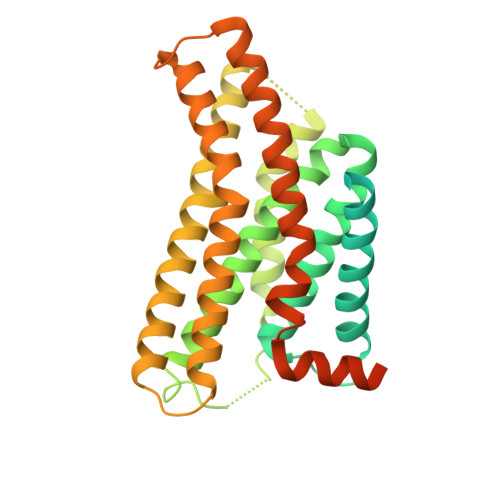
Structural visualization of small molecule recognition by CXCR3 uncovers dual-agonism in the CXCR3-CXCR7 system.
Saha, S., Sano, F.K., Sharma, S., Ganguly, M., Dalal, A., Mishra, S., Tiwari, D., Akasaka, H., Kobayashi, T.A., Roy, N., Zaidi, N., Itoh, Y., Leurs, R., Banerjee, R., Shihoya, W., Nureki, O., Shukla, A.K.(2025) Nat Commun 16: 3047-3047
- PubMed: 40155369 Search on PubMedSearch on PubMed Central
- DOI: https://doi.org/10.1038/s41467-025-58264-w
- Primary Citation Related Structures:
8XXY, 8XXZ, 8XYI, 8XYK, 8Y0H, 8Y0N - PubMed Abstract:
Chemokine receptors are critically involved in multiple physiological and pathophysiological processes related to immune response mechanisms. Most chemokine receptors are prototypical GPCRs although some also exhibit naturally-encoded signaling-bias toward β-arrestins (βarrs). C-X-C type chemokine receptors, namely CXCR3 and CXCR7, constitute a pair wherein the former is a prototypical GPCR while the latter exhibits selective coupling to βarrs despite sharing a common natural agonist: CXCL11. Moreover, CXCR3 and CXCR7 also recognize small molecule agonists suggesting a modular orthosteric ligand binding pocket. Here, we determine cryo-EM structures of CXCR3 in an Apo-state and in complex with small molecule agonists biased toward G-proteins or βarrs. These structural snapshots uncover an allosteric network bridging the ligand-binding pocket to intracellular side, driving the transducer-coupling bias at this receptor. Furthermore, structural topology of the orthosteric binding pocket also allows us to discover and validate that selected small molecule agonists of CXCR3 display robust agonism at CXCR7. Collectively, our study offers molecular insights into signaling-bias and dual agonism in the CXCR3-CXCR7 system with therapeutic implications.
- Department of Biological Sciences and Bioengineering, Indian Institute of Technology Kanpur, Kanpur, India.
Organizational Affiliation: