Download Mendeley
Cryo-EM structure of the full-length LGR4-RSPOs complex and a targeting nanobody for anti-obesity therapy.
Zhang, Z., Wang, L., Qiao, H., Jiang, H., Guo, S., Li, Y., Zhang, N., Geng, T., Cui, Q., Lan, Z., Hong, J., Gu, W., Liu, R., Ning, G., Li, J., Wang, J., Geng, Y.(2025) Nat Commun 16: 8406-8406
- PubMed: 40998774 Search on PubMedSearch on PubMed Central
- DOI: https://doi.org/10.1038/s41467-025-63410-5
- Primary Citation Related Structures:
8XT9, 8XUM, 9S37 - PubMed Abstract:
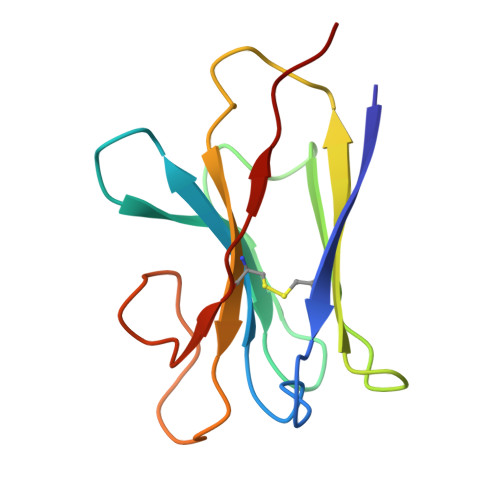
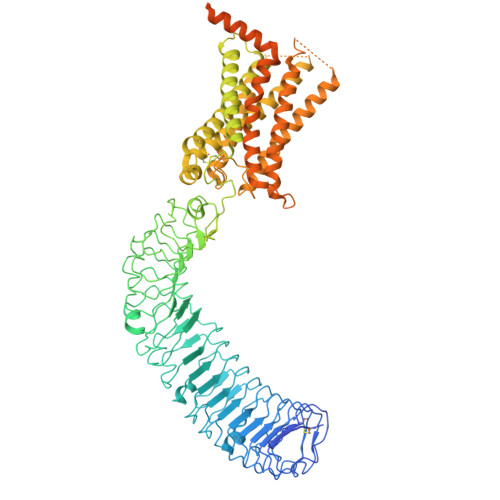
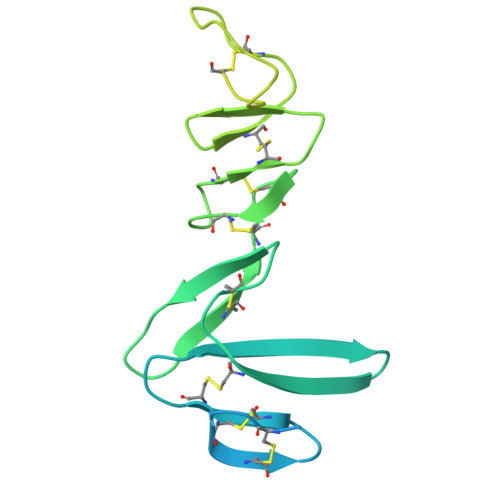
Obesity poses a substantial threat to human health but lacks effective management. Recent advancements in large-scale deep sequencing and cryo-electron microscopy (cryo-EM) have transformed drug discovery paradigms. Leveraging prior genetics investigation, we pinpointed Leucine-rich repeat-containing G protein-coupled receptor 4 (LGR4) as a promising target for combating obesity. Here, we present cryo-EM structures of full-length LGR4 alone and in complex with RSPO2(FU). Notably, we develop an inhibitory nanobody (NB21) that blocks the binding of RSPO1/2 to LGR4, and we also determine the structure of the LGR4-NB21 complex. NB21-mFc (NB21 fused with mouse IgG2) effectively inhibits the canonical Wnt signaling pathway, thereby enhancing mitochondrial respiration and thermogenesis in beige adipocytes. In vivo, NB21-mFc increases energy expenditure by promoting the browning of white fat, conferring resistance to both diet-induced and genetic (ob/ob) obesity. Furthermore, LGR4 deficiency abolishes the effects of NB21-mFc in boosting the browning program and subsequent weight reduction. In summary, our study unveils structural insights into the LGR4-RSPOs and LGR4-NB21 complexes, paving the way for the development of an LGR4-targeting nanobody for weight loss.
- Department of Endocrine and Metabolic Diseases, Shanghai Institute of Endocrine and Metabolic Diseases, Ruijin Hospital, Shanghai Jiao Tong University School of Medicine, Shanghai, China.
Organizational Affiliation: