8R3Y | pdb_00008r3y

Cryo EM structure of a stable LGL/aPKC Iota/Par-6 complex


Experimental Data Snapshot

  • Method: ELECTRON MICROSCOPY
  • Resolution: 3.68 Å
  • Aggregation State: PARTICLE 
  • Reconstruction Method: SINGLE PARTICLE 

Starting Models: experimental
View more details

wwPDB Validation 3D Report Full Report

Validation slider image for 8R3Y

This is version 1.2 of the entry. See complete history

Literature

Capture, mutual inhibition and release mechanism for aPKC-Par6 and its multisite polarity substrate Lgl.

Earl, C.P.Cobbaut, M.Barros-Carvalho, A.Ivanova, M.E.Briggs, D.C.Morais-de-Sa, E.Parker, P.J.McDonald, N.Q.

(2025) Nat Struct Mol Biol 32: 729-739

  • DOI: https://doi.org/10.1038/s41594-024-01425-0
  • Primary Citation Related Structures: 
    8R3X, 8R3Y

  • PubMed Abstract: 

    The mutually antagonistic relationship of atypical protein kinase C (aPKC) and partitioning-defective protein 6 (Par6) with the substrate lethal (2) giant larvae (Lgl) is essential for regulating polarity across many cell types. Although aPKC-Par6 phosphorylates Lgl at three serine sites to exclude it from the apical domain, aPKC-Par6 and Lgl paradoxically form a stable kinase-substrate complex, with conflicting roles proposed for Par6. We report the structure of human aPKCι-Par6α bound to full-length Llgl1, captured through an aPKCι docking site and a Par6 PDZ contact. This complex traps a phospho-S663 Llgl1 intermediate bridging between aPKC and Par6, impeding phosphorylation progression. Thus, aPKCι is effectively inhibited by Llgl1 pS663 while Llgl1 is captured by aPKCι-Par6. Mutational disruption of the Lgl-aPKC interaction impedes complex assembly and Lgl phosphorylation, whereas disrupting the Lgl-Par6 PDZ contact promotes complex dissociation and Lgl phosphorylation. We demonstrate a Par6 PDZ -regulated substrate capture-and-release model requiring binding by active Cdc42 and the apical partner Crumbs to drive complex disassembly. Our results suggest a mechanism for mutual regulation and spatial control of aPKC-Par6 and Lgl activities.


  • Organizational Affiliation
    • Signalling and Structural Biology Laboratory, Francis Crick Institute, London, UK.

Macromolecule Content 

  • Total Structure Weight: 152.4 kDa 
  • Atom Count: 10,132 
  • Modeled Residue Count: 1,293 
  • Deposited Residue Count: 1,374 
  • Unique protein chains: 3

Macromolecules

Find similar proteins by:|  3D Structure
Entity ID: 1
MoleculeChains  Sequence LengthOrganismDetailsImage
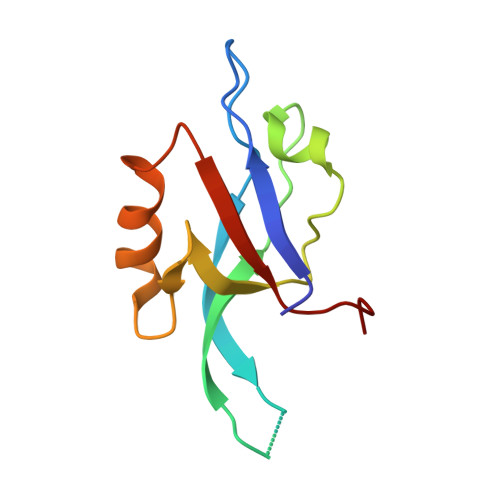
Protein kinase C iota typeA [auth I]338Homo sapiensMutation(s): 0 
Gene Names: PRKCIDXS1179E
EC: 2.7.11.13
UniProt & NIH Common Fund Data Resources
Find proteins for P41743 (Homo sapiens)
Explore P41743 
Go to UniProtKB:  P41743
PHAROS:  P41743
GTEx:  ENSG00000163558 
Entity Groups
Sequence Clusters30% Identity50% Identity70% Identity90% Identity95% Identity100% Identity
UniProt GroupP41743
Sequence Annotations
Expand
Reference Sequence
Find similar proteins by:|  3D Structure
Entity ID: 2
MoleculeChains  Sequence LengthOrganismDetailsImage
Lethal(2) giant larvae protein homolog 1B [auth L]937Homo sapiensMutation(s): 0 
Gene Names: LLGL1DLG4HUGLHUGL1
UniProt & NIH Common Fund Data Resources
Find proteins for Q15334 (Homo sapiens)
Explore Q15334 
Go to UniProtKB:  Q15334
PHAROS:  Q15334
GTEx:  ENSG00000131899 
Entity Groups
Sequence Clusters30% Identity50% Identity70% Identity90% Identity95% Identity100% Identity
UniProt GroupQ15334
Sequence Annotations
Expand
Reference Sequence
Find similar proteins by:|  3D Structure
Entity ID: 3
MoleculeChains  Sequence LengthOrganismDetailsImage
Partitioning defective 6 homolog alphaC [auth P]99Homo sapiensMutation(s): 0 
Gene Names: PARD6APAR6A
UniProt & NIH Common Fund Data Resources
Find proteins for R4GMM2 (Homo sapiens)
Explore R4GMM2 
Go to UniProtKB:  R4GMM2
GTEx:  ENSG00000102981 
Entity Groups
Sequence Clusters30% Identity50% Identity70% Identity90% Identity95% Identity100% Identity
UniProt GroupR4GMM2
Sequence Annotations
Expand
Reference Sequence

Small Molecules

Ligands 1 Unique
IDChains Name / Formula / InChI Key2D Diagram3D Interactions
ANP

Query on ANP


Download:Ideal Coordinates CCD File
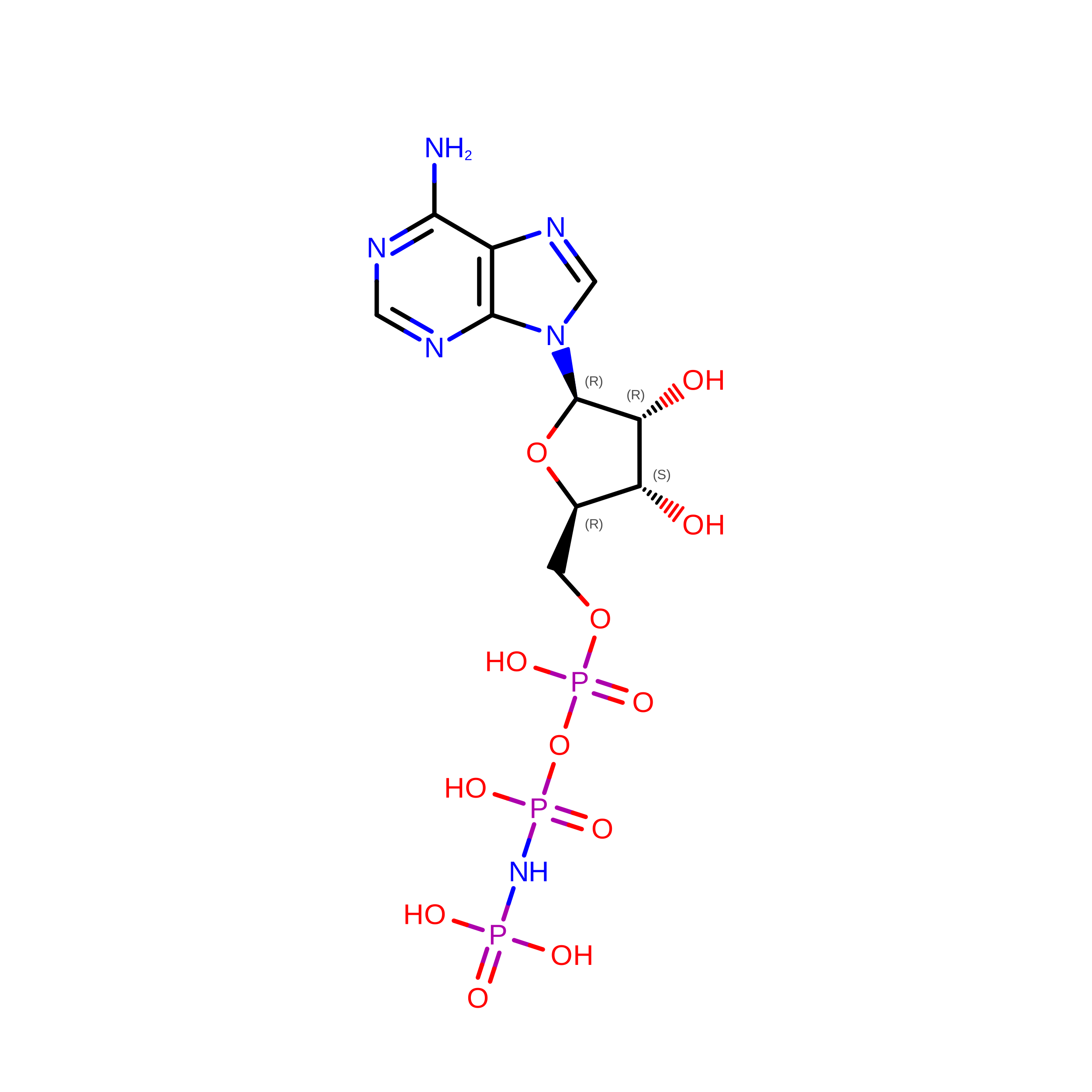
D [auth I]PHOSPHOAMINOPHOSPHONIC ACID-ADENYLATE ESTER
C10 H17 N6 O12 P3
PVKSNHVPLWYQGJ-KQYNXXCUSA-N
Modified Residues  2 Unique
IDChains TypeFormula2D DiagramParent
TPO
Query on TPO
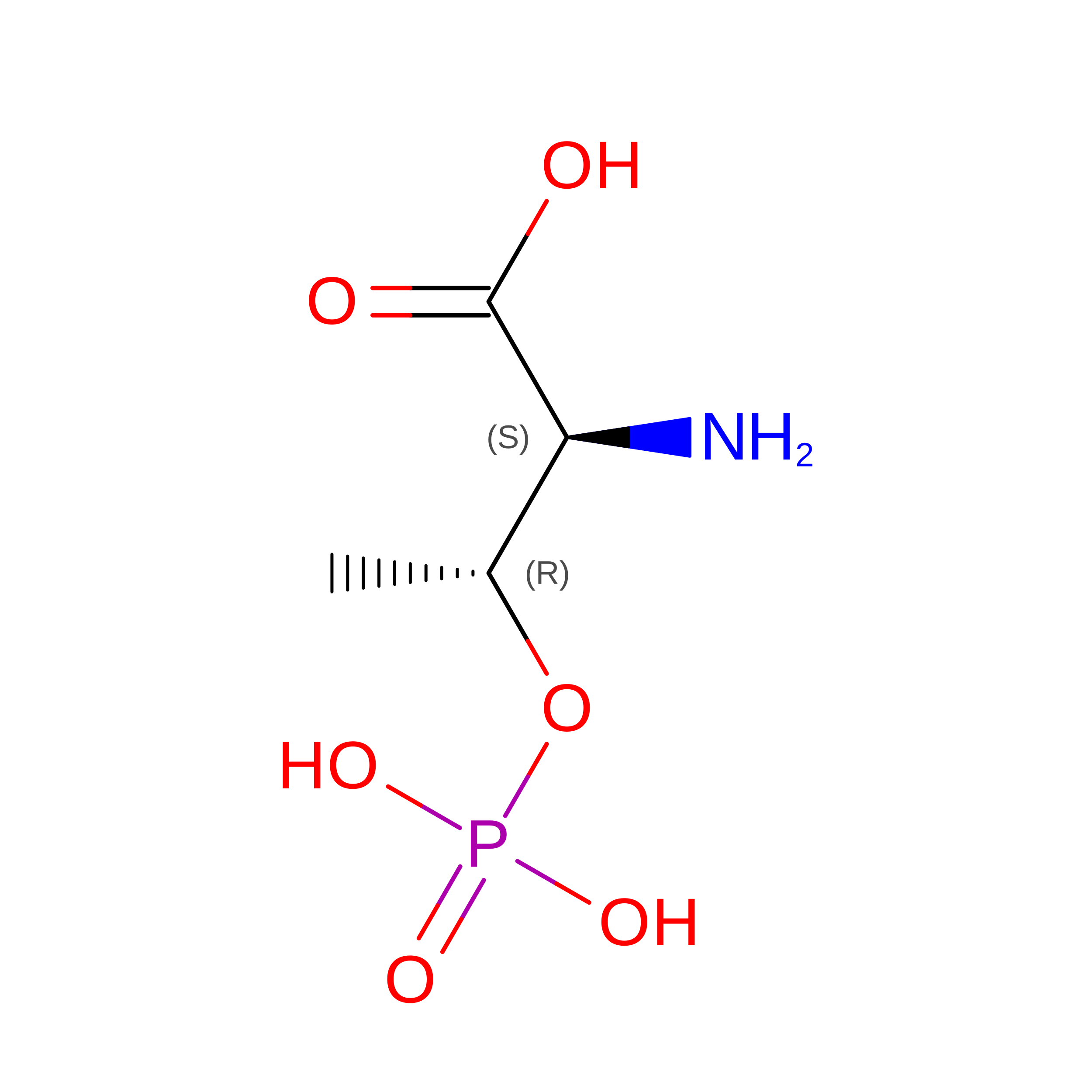
A [auth I]L-PEPTIDE LINKINGC4 H10 N O6 PTHR
SEP
Query on SEP
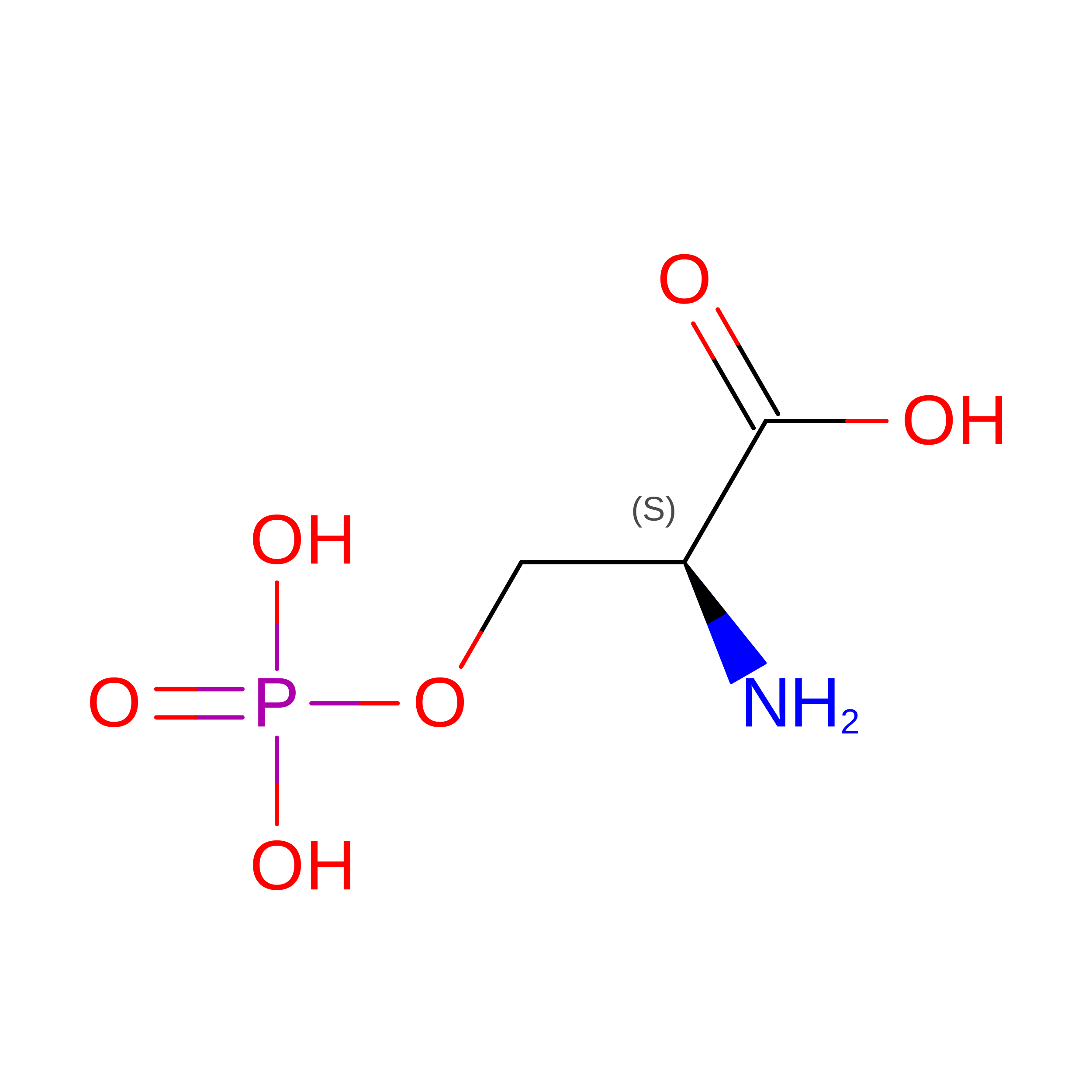
B [auth L]L-PEPTIDE LINKINGC3 H8 N O6 PSER

Experimental Data & Validation

Experimental Data

  • Method: ELECTRON MICROSCOPY
  • Resolution: 3.68 Å
  • Aggregation State: PARTICLE 
  • Reconstruction Method: SINGLE PARTICLE 
EM Software:
TaskSoftware PackageVersion
RECONSTRUCTIONcryoSPARC2
MODEL REFINEMENTPHENIX

Structure Validation

View Full Validation Report


Entry History 

& Funding Information

Deposition Data


Funding OrganizationLocationGrant Number
Wellcome TrustUnited KingdomCC2068
Cancer Research UKUnited KingdomCC2026
Medical Research Council (MRC, United Kingdom)United KingdomCC2068

Revision History  (Full details and data files)

  • Version 1.0: 2024-11-20
    Type: Initial release
  • Version 1.1: 2025-01-15
    Changes: Data collection, Database references
  • Version 1.2: 2025-04-23
    Changes: Data collection, Database references