8QMW | pdb_00008qmw

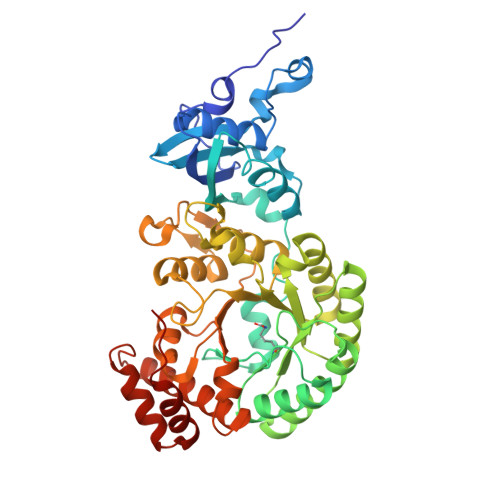
Non-obligately L8S8-complex forming RubisCO derived from ancestral sequence reconstruction and rational engineering in L8S8 complex with substitutions R269W, E271R, L273N


Experimental Data Snapshot

  • Method: X-RAY DIFFRACTION
  • Resolution: 1.75 Å
  • R-Value Free: 
    0.174 (Depositor), 0.174 (DCC) 
  • R-Value Work: 
    0.145 (Depositor), 0.145 (DCC) 
  • R-Value Observed: 
    0.145 (Depositor) 

wwPDB Validation 3D Report Full Report

Validation slider image for 8QMW

Ligand Structure Quality Assessment 


This is version 1.2 of the entry. See complete history

Literature

Layered entrenchment maintains essentiality in the evolution of Form I Rubisco complexes.

Schulz, L.Zarzycki, J.Steinchen, W.Hochberg, G.K.A.Erb, T.J.

(2025) EMBO J 44: 269-280

  • DOI: https://doi.org/10.1038/s44318-024-00311-1
  • Primary Citation Related Structures: 
    8QMV, 8QMW

  • PubMed Abstract: 

    Protein complexes composed of strictly essential subunits are abundant in nature and often arise through the gradual complexification of ancestral precursor proteins. Essentiality can arise through the accumulation of changes that are tolerated in the complex state but would be deleterious for the standalone complex components. While this theoretical framework to explain how essentiality arises has been proposed long ago, it is unclear which factors cause essentiality to persist over evolutionary timescales. In this work we show that the central enzyme of photosynthesis, ribulose-1,5-bisphosphate carboxylase/oxygenase (Rubisco), can easily start to depend on a newly recruited interaction partner through multiple, genetically distinct mechanisms that affect stability, solubility, and catalysis. We demonstrate that layering multiple mechanisms of essentiality can lead to its persistence, even if any given mechanism reverts. More broadly, our work highlights that new interaction partners can drastically re-shape which substitutions are tolerated in the proteins they are recruited into. This can lead to the evolution of multilayered essentiality through the exploration of areas of sequence space that are only accessible in the complex state.


  • Organizational Affiliation
    • Department of Biochemistry & Synthetic Metabolism, Max Planck Institute for Terrestrial Microbiology, Karl-von-Frisch Straße 10, 35043, Marburg, Germany.

Macromolecule Content 

  • Total Structure Weight: 256.35 kDa 
  • Atom Count: 19,717 
  • Modeled Residue Count: 2,206 
  • Deposited Residue Count: 2,248 
  • Unique protein chains: 2

Macromolecules

Find similar proteins by:|  3D Structure
Entity ID: 1
MoleculeChains  Sequence LengthOrganismDetailsImage
RubisCO large subunit
A, B, C, D
457synthetic constructMutation(s): 0 
EC: 4.1.1.39
Find similar proteins by:|  3D Structure
Entity ID: 2
MoleculeChains  Sequence LengthOrganismDetailsImage
RubisCO small subunit
E, F, G, H
105synthetic constructMutation(s): 0 

Small Molecules

Ligands 3 Unique
IDChains Name / Formula / InChI Key2D Diagram3D Interactions
CAP
(Subject of Investigation/LOI)

Query on CAP


Download:Ideal Coordinates CCD File
I [auth A],
K [auth B],
M [auth C],
P [auth D]
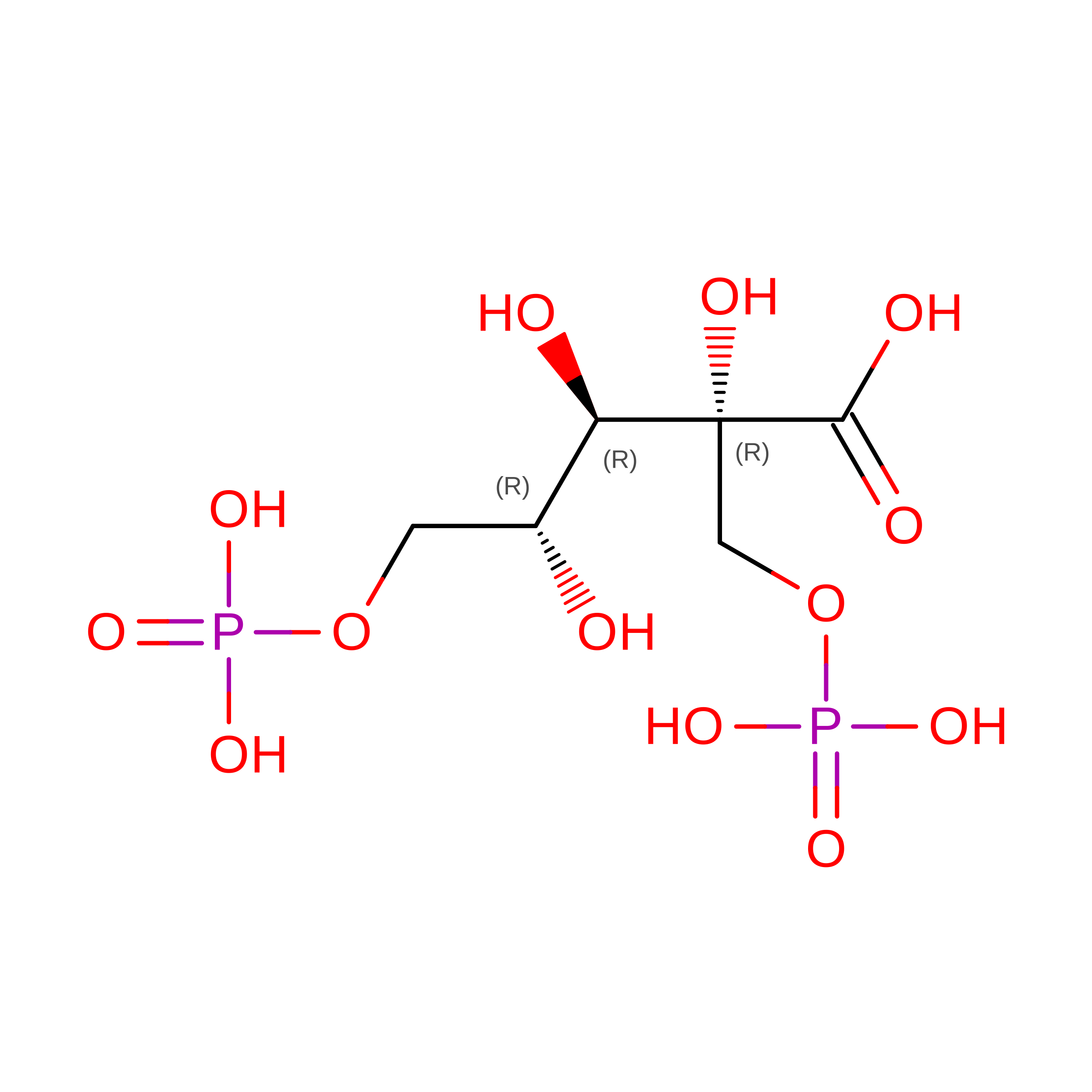
2-CARBOXYARABINITOL-1,5-DIPHOSPHATE
C6 H14 O13 P2
ITHCSGCUQDMYAI-ZMIZWQJLSA-N
B3P

Query on B3P


Download:Ideal Coordinates CCD File
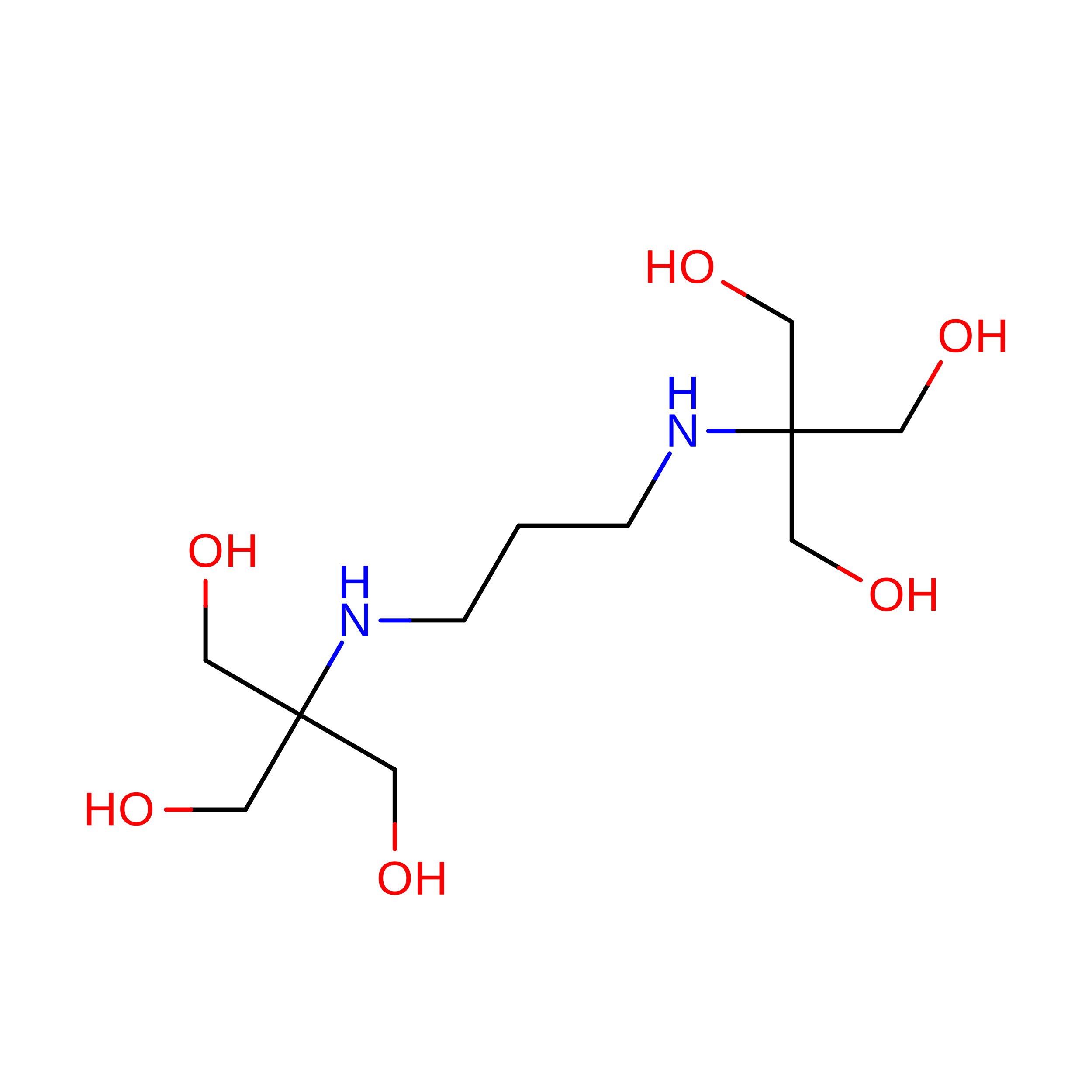
O [auth C]2-[3-(2-HYDROXY-1,1-DIHYDROXYMETHYL-ETHYLAMINO)-PROPYLAMINO]-2-HYDROXYMETHYL-PROPANE-1,3-DIOL
C11 H26 N2 O6
HHKZCCWKTZRCCL-UHFFFAOYSA-N
MG

Query on MG


Download:Ideal Coordinates CCD File
J [auth A],
L [auth B],
N [auth C],
Q [auth D]
MAGNESIUM ION
Mg
JLVVSXFLKOJNIY-UHFFFAOYSA-N
Modified Residues  1 Unique
IDChains TypeFormula2D DiagramParent
KCX
Query on KCX
A, B, C, D
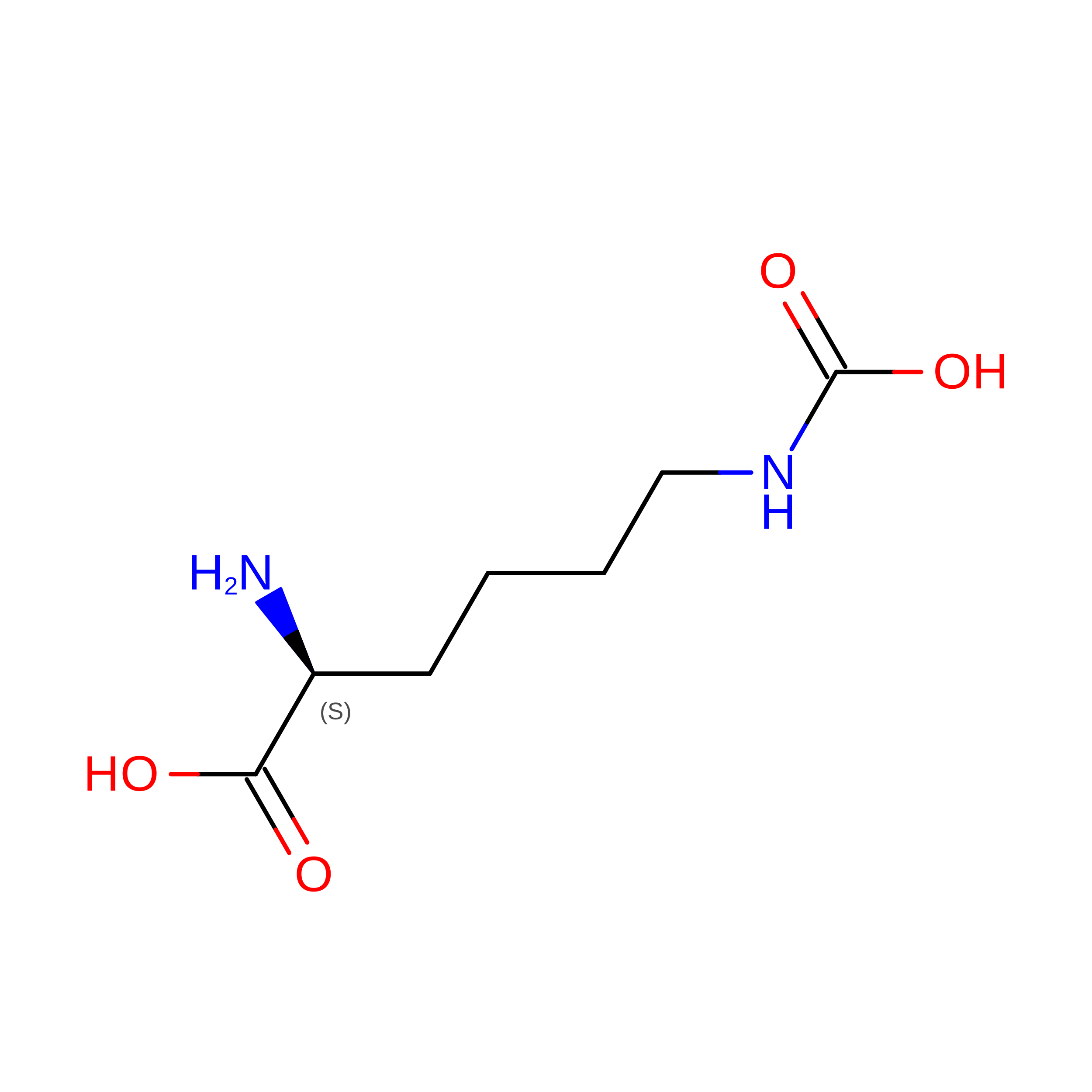
L-PEPTIDE LINKINGC7 H14 N2 O4LYS

Experimental Data & Validation

Experimental Data

  • Method: X-RAY DIFFRACTION
  • Resolution: 1.75 Å
  • R-Value Free:  0.174 (Depositor), 0.174 (DCC) 
  • R-Value Work:  0.145 (Depositor), 0.145 (DCC) 
  • R-Value Observed: 0.145 (Depositor) 
Space Group: C 1 2 1
Unit Cell:
Length ( Å )Angle ( ˚ )
a = 206.01α = 90
b = 106.44β = 113.09
c = 108.49γ = 90
Software Package:
Software NamePurpose
PHENIXrefinement
XSCALEdata scaling
XDSdata reduction
PHENIXphasing

Structure Validation

View Full Validation Report


Ligand Structure Quality Assessment 


Entry History 

& Funding Information

Deposition Data


Funding OrganizationLocationGrant Number
Max Planck SocietyGermany--
Joachim Herz StiftungGermany--

Revision History  (Full details and data files)

  • Version 1.0: 2024-10-02
    Type: Initial release
  • Version 1.1: 2024-12-04
    Changes: Database references, Structure summary
  • Version 1.2: 2025-01-15
    Changes: Database references