Download Mendeley
Build-Couple-Transform: A Paradigm for Lead-like Library Synthesis with Scaffold Diversity.
Uguen, M., Davison, G., Sprenger, L.J., Hunter, J.H., Martin, M.P., Turberville, S., Watt, J.E., Golding, B.T., Noble, M.E.M., Stewart, H.L., Waring, M.J.(2022) J Med Chem 65: 11322-11339
- PubMed: 35943172 Search on PubMedSearch on PubMed Central
- DOI: https://doi.org/10.1021/acs.jmedchem.2c00897
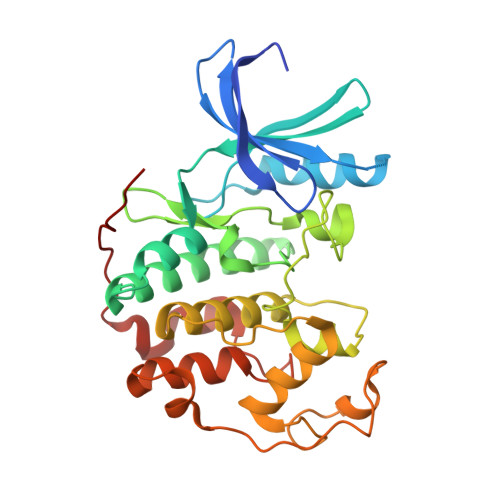
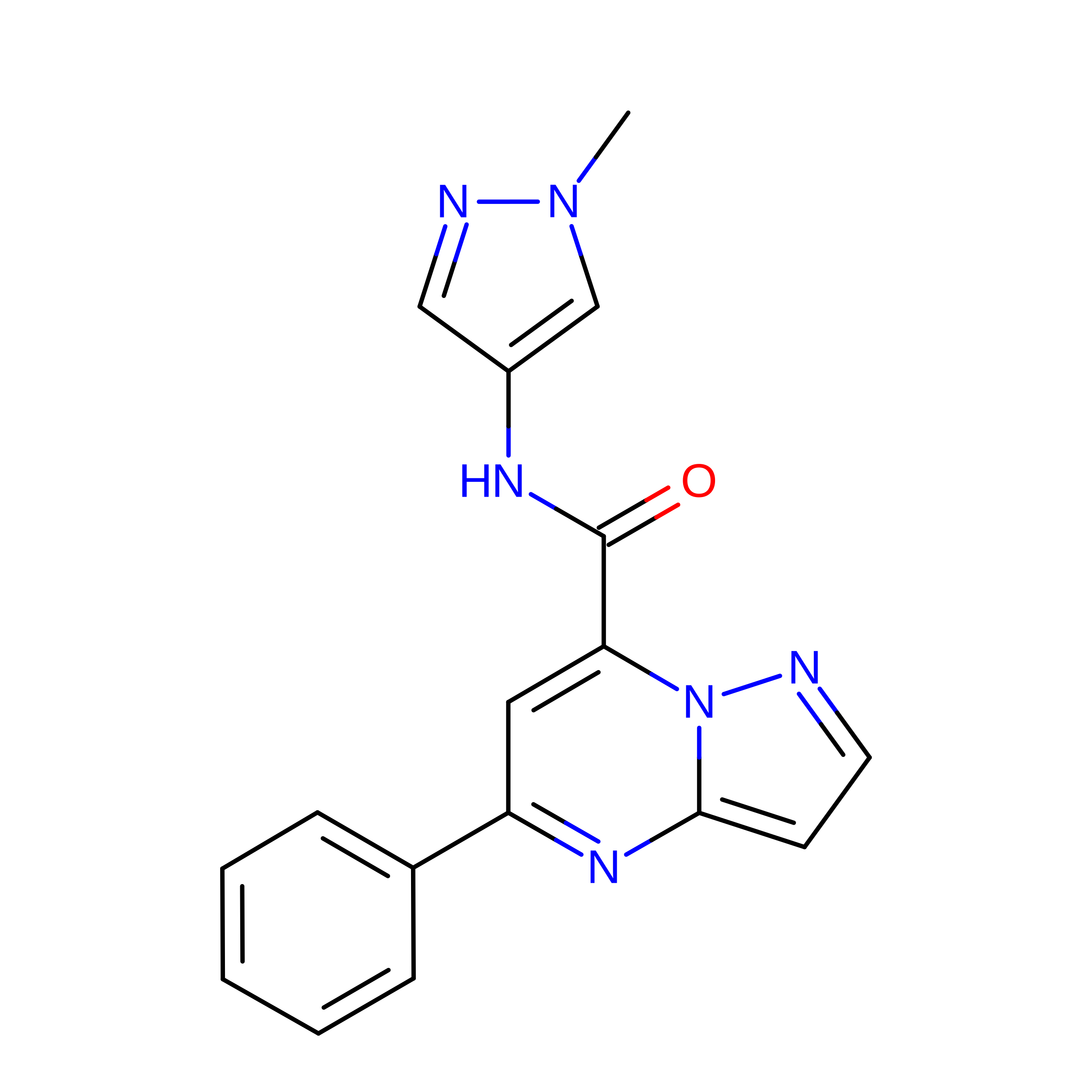
- Primary Citation Related Structures:
7ZPC - PubMed Abstract:
High-throughput screening provides one of the most common ways of finding hit compounds. Lead-like libraries, in particular, provide hits with compatible functional groups and vectors for structural elaboration and physical properties suitable for optimization. Library synthesis approaches can lead to a lack of chemical diversity because they employ parallel derivatization of common building blocks using single reaction types. We address this problem through a "build-couple-transform" paradigm for the generation of lead-like libraries with scaffold diversity. Nineteen transformations of a 4-oxo-2-butenamide scaffold template were optimized, including 1,4-cyclizations, 3,4-cyclizations, reductions, and 1,4-additions. A pool-transformation approach efficiently explored the scope of these transformations for nine different building blocks and synthesized a >170-member library with enhanced chemical space coverage and favorable drug-like properties. Screening revealed hits against CDK2. This work establishes the build-couple-transform concept for the synthesis of lead-like libraries and provides a differentiated approach to libraries with significantly enhanced scaffold diversity.
- Cancer Research UK Newcastle Drug Discovery Unit, Newcastle University Centre for Cancer, Chemistry, School of Natural and Environmental Sciences, Newcastle University, Bedson Building, Newcastle upon Tyne NE1 7RU, U.K.
Organizational Affiliation: