7YIY | pdb_00007yiy

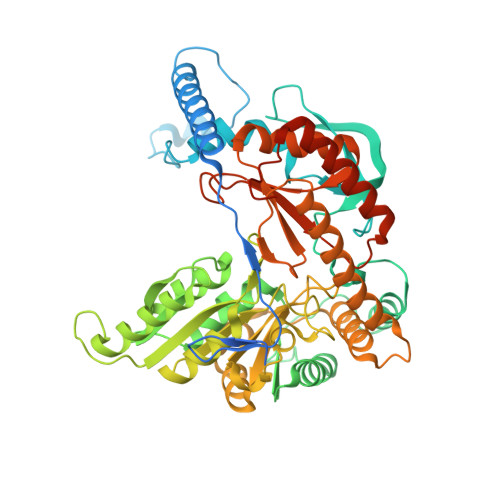
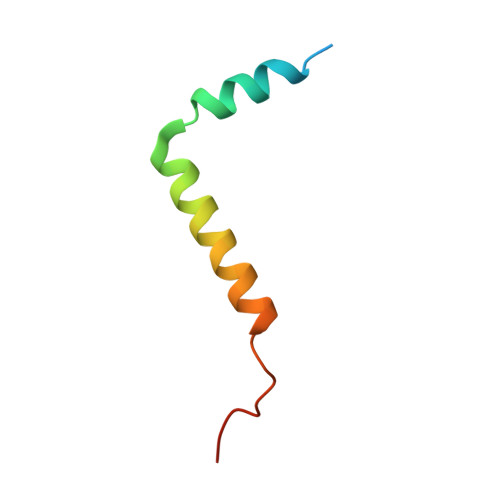
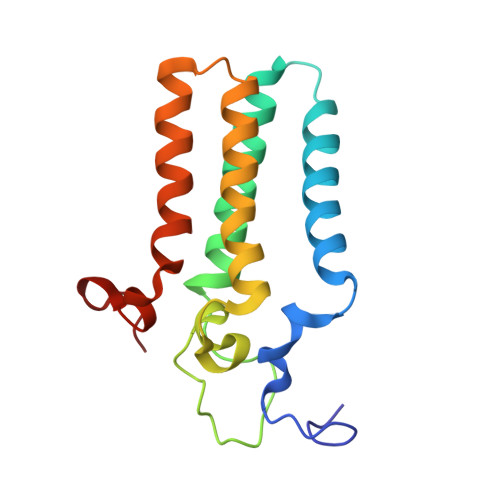
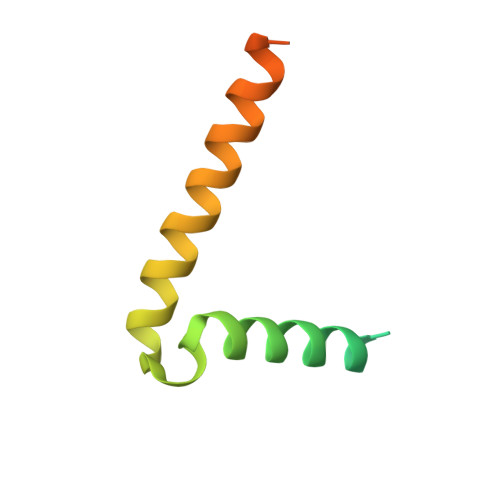
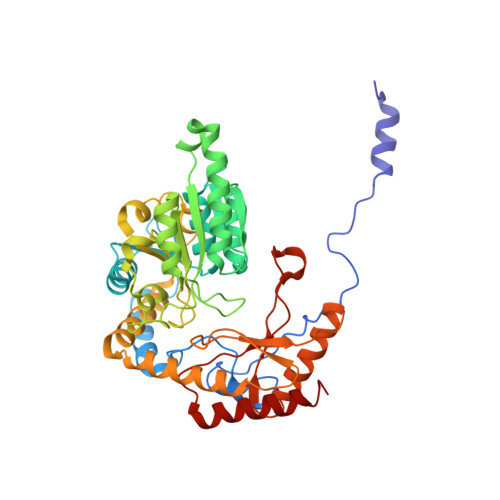
Cryo-EM structure of SPT-ORMDL3 complex


Experimental Data Snapshot

  • Method: ELECTRON MICROSCOPY
  • Resolution: 2.70 Å
  • Aggregation State: PARTICLE 
  • Reconstruction Method: SINGLE PARTICLE 

wwPDB Validation 3D Report Full Report

Validation slider image for 7YIY

This is version 1.2 of the entry. See complete history. 

Literature

Ceramide sensing by human SPT-ORMDL complex for establishing sphingolipid homeostasis.

Xie, T., Liu, P., Wu, X., Dong, F., Zhang, Z., Yue, J., Mahawar, U., Farooq, F., Vohra, H., Fang, Q., Liu, W., Wattenberg, B.W., Gong, X.

(2023) Nat Commun 14: 3475-3475

  • DOI: https://doi.org/10.1038/s41467-023-39274-y
  • Primary Citation Related Structures: 
    7YIU, 7YIY, 7YJ1, 7YJ2

  • PubMed Abstract: 

    The ORM/ORMDL family proteins function as regulatory subunits of the serine palmitoyltransferase (SPT) complex, which is the initiating and rate-limiting enzyme in sphingolipid biosynthesis. This complex is tightly regulated by cellular sphingolipid levels, but the sphingolipid sensing mechanism is unknown. Here we show that purified human SPT-ORMDL complexes are inhibited by the central sphingolipid metabolite ceramide. We have solved the cryo-EM structure of the SPT-ORMDL3 complex in a ceramide-bound state. Structure-guided mutational analyses reveal the essential function of this ceramide binding site for the suppression of SPT activity. Structural studies indicate that ceramide can induce and lock the N-terminus of ORMDL3 into an inhibitory conformation. Furthermore, we demonstrate that childhood amyotrophic lateral sclerosis (ALS) variants in the SPTLC1 subunit cause impaired ceramide sensing in the SPT-ORMDL3 mutants. Our work elucidates the molecular basis of ceramide sensing by the SPT-ORMDL complex for establishing sphingolipid homeostasis and indicates an important role of impaired ceramide sensing in disease development.


  • Organizational Affiliation: 
    • Department of Chemical Biology, School of Life Sciences, Southern University of Science and Technology, Shenzhen, Guangdong, 518055, China.

Macromolecule Content 

  • Total Structure Weight: 144.98 kDa 
  • Atom Count: 9,257 
  • Modeled Residue Count: 1,164 
  • Deposited Residue Count: 1,280 
  • Unique protein chains: 5

Macromolecules

Find similar proteins by:|  3D Structure
Entity ID: 1
MoleculeChains  Sequence LengthOrganismDetailsImage
Serine palmitoyltransferase 2A [auth B]562Homo sapiensMutation(s): 0 
Gene Names: SPTLC2
EC: 2.3.1.50
Membrane Entity: Yes 
UniProt & NIH Common Fund Data Resources
Find proteins for O15270 (Homo sapiens)
Explore O15270 
Go to UniProtKB:  O15270
PHAROS:  O15270
GTEx:  ENSG00000100596 
Entity Groups
Sequence Clusters30% Identity50% Identity70% Identity90% Identity95% Identity100% Identity
UniProt GroupO15270
Sequence Annotations
Expand
Reference Sequence
Find similar proteins by:|  3D Structure
Entity ID: 2
MoleculeChains  Sequence LengthOrganismDetailsImage
Serine palmitoyltransferase 1B [auth E]50Homo sapiensMutation(s): 0 
Gene Names: SPTLC1, LCB1
EC: 2.3.1.50
Membrane Entity: Yes 
UniProt & NIH Common Fund Data Resources
Find proteins for O15269 (Homo sapiens)
Explore O15269 
Go to UniProtKB:  O15269
PHAROS:  O15269
GTEx:  ENSG00000090054 
Entity Groups
Sequence Clusters30% Identity50% Identity70% Identity90% Identity95% Identity100% Identity
UniProt GroupO15269
Sequence Annotations
Expand
Reference Sequence
Find similar proteins by:|  3D Structure
Entity ID: 3
MoleculeChains  Sequence LengthOrganismDetailsImage
ORM1-like protein 3C [auth D]153Homo sapiensMutation(s): 0 
Gene Names: ORMDL3
Membrane Entity: Yes 
UniProt & NIH Common Fund Data Resources
Find proteins for Q8N138 (Homo sapiens)
Explore Q8N138 
Go to UniProtKB:  Q8N138
PHAROS:  Q8N138
GTEx:  ENSG00000172057 
Entity Groups
Sequence Clusters30% Identity50% Identity70% Identity90% Identity95% Identity100% Identity
UniProt GroupQ8N138
Sequence Annotations
Expand
Reference Sequence
Find similar proteins by:|  3D Structure
Entity ID: 4
MoleculeChains  Sequence LengthOrganismDetailsImage
Serine palmitoyltransferase small subunit AD [auth C]92Homo sapiensMutation(s): 0 
Gene Names: SPTSSA
Membrane Entity: Yes 
UniProt & NIH Common Fund Data Resources
Find proteins for Q969W0 (Homo sapiens)
Explore Q969W0 
Go to UniProtKB:  Q969W0
PHAROS:  Q969W0
GTEx:  ENSG00000165389 
Entity Groups
Sequence Clusters30% Identity50% Identity70% Identity90% Identity95% Identity100% Identity
UniProt GroupQ969W0
Sequence Annotations
Expand
Reference Sequence
Find similar proteins by:|  3D Structure
Entity ID: 5
MoleculeChains  Sequence LengthOrganismDetailsImage
Serine palmitoyltransferase 1E [auth A]423Homo sapiensMutation(s): 0 
Gene Names: SPTLC1, LCB1
EC: 2.3.1.50
Membrane Entity: Yes 
UniProt & NIH Common Fund Data Resources
Find proteins for O15269 (Homo sapiens)
Explore O15269 
Go to UniProtKB:  O15269
PHAROS:  O15269
GTEx:  ENSG00000090054 
Entity Groups
Sequence Clusters30% Identity50% Identity70% Identity90% Identity95% Identity100% Identity
UniProt GroupO15269
Sequence Annotations
Expand
Reference Sequence

Small Molecules

Ligands 2 Unique
IDChains Name / Formula / InChI Key2D Diagram3D Interactions
Z1T
(Subject of Investigation/LOI)

Query on Z1T


Download:Ideal Coordinates CCD File
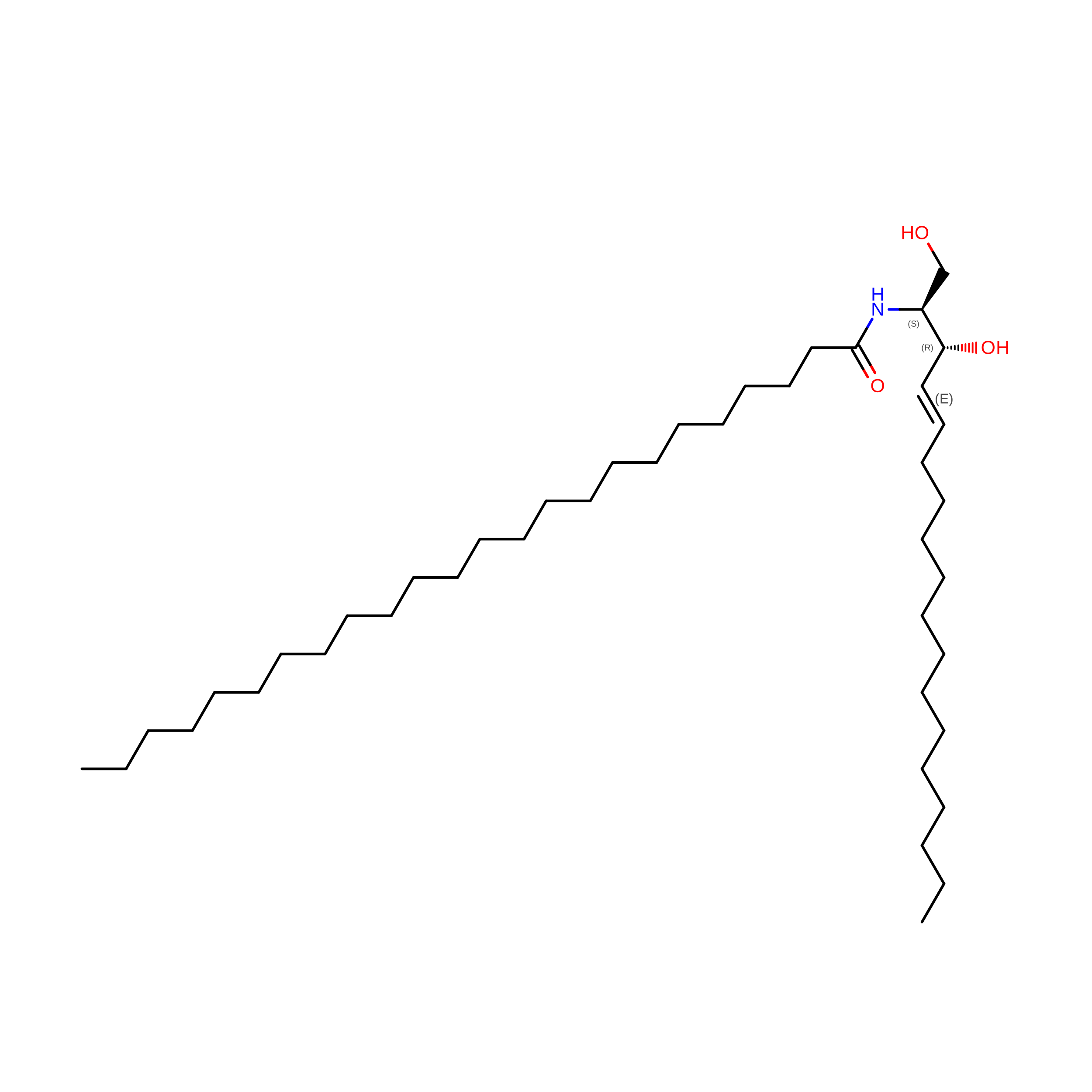
G [auth D]N-[(2S,3R,4E)-1,3-dihydroxyoctadec-4-en-2-yl]tetracosanamide
C42 H83 N O3
ZJVVOYPTFQEGPH-AUTSUKAISA-N
PLP

Query on PLP


Download:Ideal Coordinates CCD File
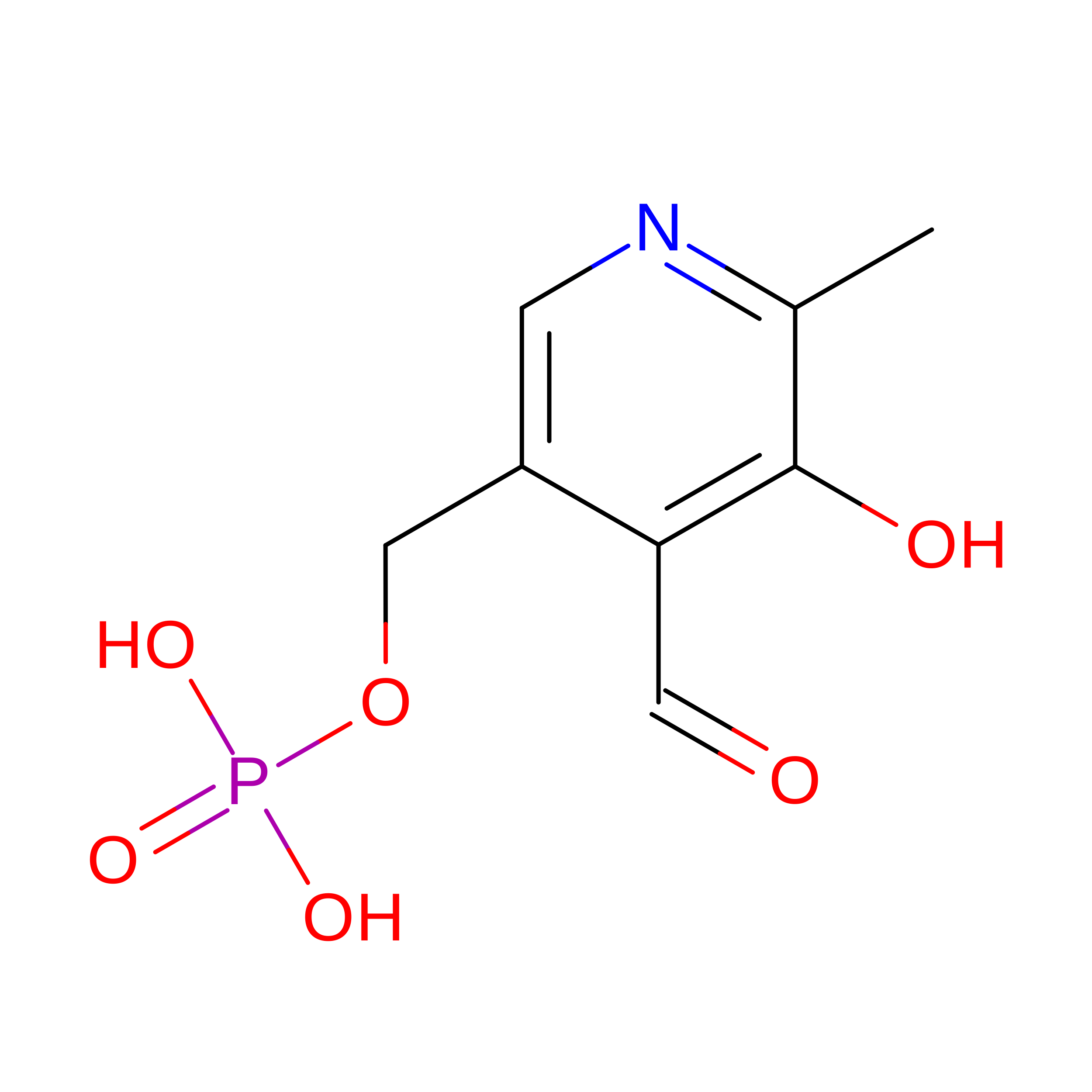
F [auth B]PYRIDOXAL-5'-PHOSPHATE
C8 H10 N O6 P
NGVDGCNFYWLIFO-UHFFFAOYSA-N

Experimental Data & Validation

Experimental Data

  • Method: ELECTRON MICROSCOPY
  • Resolution: 2.70 Å
  • Aggregation State: PARTICLE 
  • Reconstruction Method: SINGLE PARTICLE 
EM Software:
TaskSoftware PackageVersion
MODEL REFINEMENTPHENIX

Structure Validation

View Full Validation Report


Entry History 

& Funding Information

Deposition Data


Funding OrganizationLocationGrant Number
Not funded--

Revision History  (Full details and data files)

  • Version 1.0: 2023-07-05
    Type: Initial release
  • Version 1.1: 2024-03-20
    Changes: Data collection, Source and taxonomy
  • Version 1.2: 2025-06-25
    Changes: Data collection, Structure summary