Download Mendeley
Discovery of Sulfonamide Pantothenate Kinase Activators and Elucidation of the Role of Isoform Selectivity in Cellular Pantothenate Kinase Activation.
Coker, A.L., Tangallapally, R., Yun, M.K., Subramanian, C., Jayasinghe, T., Miller, K., Edwards, A., Frank, M., Jackowski, S., Rock, C.O., White, S.W., Lee, R.E.(2026) J Med Chem 69: 6004-6013
- PubMed: 41771535 Search on PubMedSearch on PubMed Central
- DOI: https://doi.org/10.1021/acs.jmedchem.5c03452
- Primary Citation Related Structures:
7UER, 7UES, 7UEU, 7UEV, 7UEY, 9D2O, 9D2P, 9ECG, 9ECH - PubMed Abstract:
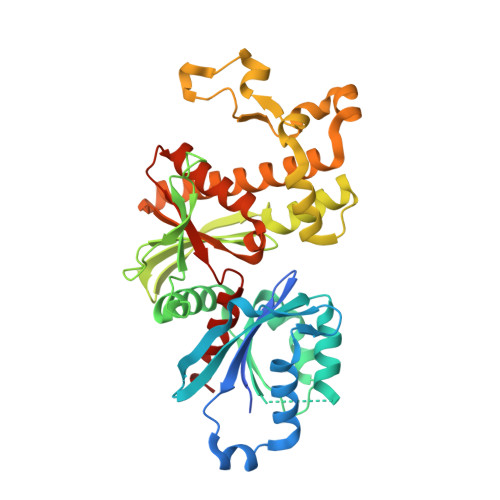
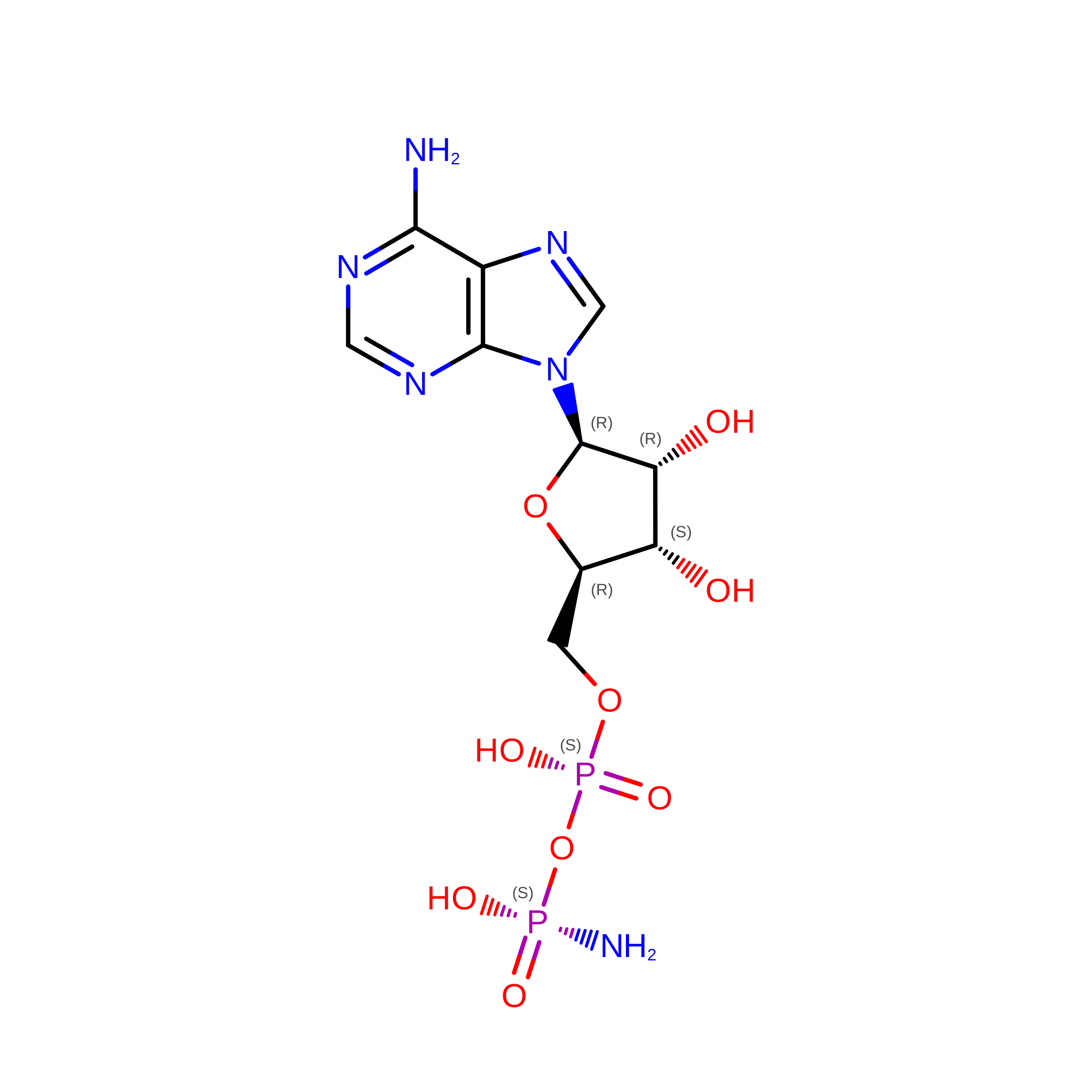
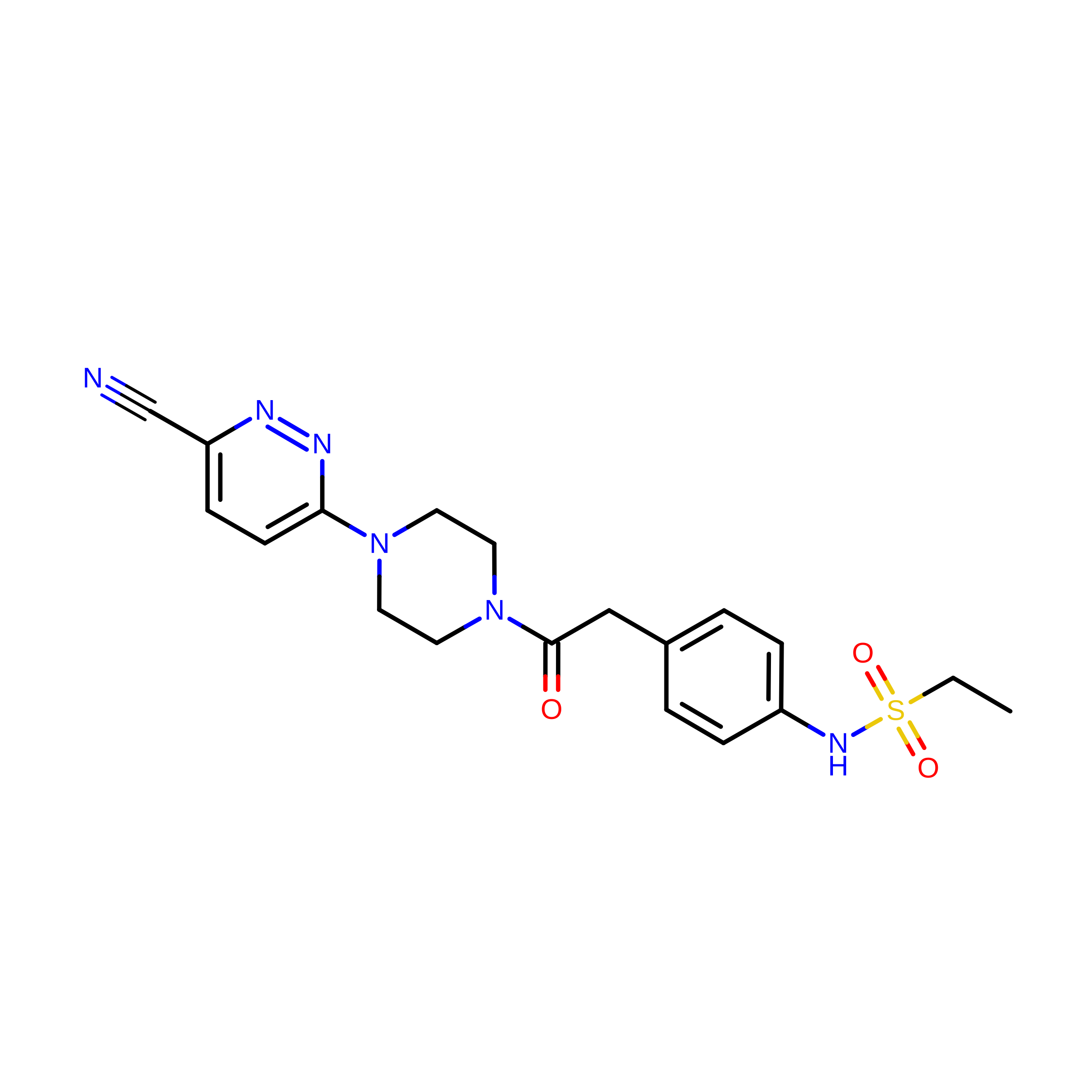
Coenzyme A (CoA) biosynthesis is controlled by the four isoforms of the rate-limiting enzyme pantothenate kinase (PANK), whose tissue expression and subcellular localization regulate CoA homeostasis. Pantazines are positive allosteric modulators of PANK that increase cellular CoA levels by disrupting feedback inhibition by acyl-CoA esters. In this study, a structure-guided design was used to modify the Pantazine scaffold near the ATP-binding site to address metabolic liabilities of earlier leads. Replacement of a metabolically labile cyclopropyl group with a sulfonamide introduced a new hydrogen-bonding interaction with the γ-phosphate of ATP in the PANK3•ATP•Pantazine complex. This interaction improved ligand affinity, solubility, and metabolic stability. Analysis of isoform-specific inhibition revealed that cellular CoA elevation correlates with the difference in affinity between PANK3 and PANK1β, defining an "activation window" for CoA induction. Lead sulfonamide Pantazines were metabolically stable and increased hepatic CoA levels, supporting their potential for treating metabolic CoA deficiencies.
- Department of Chemical Biology and Therapeutics, St. Jude Children's Research Hospital, 262 Danny Thomas PI, Memphis, Tennessee 38105, United States.
Organizational Affiliation: