7U6I | pdb_00007u6i

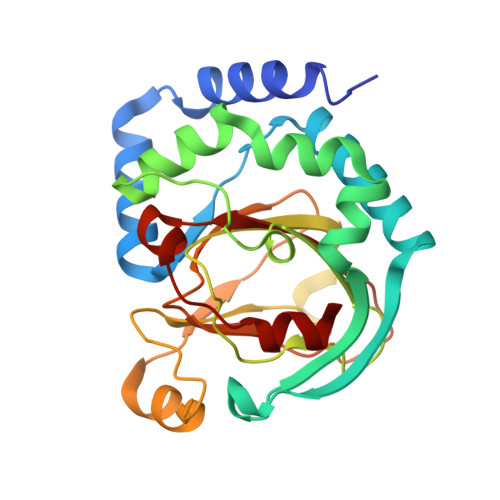
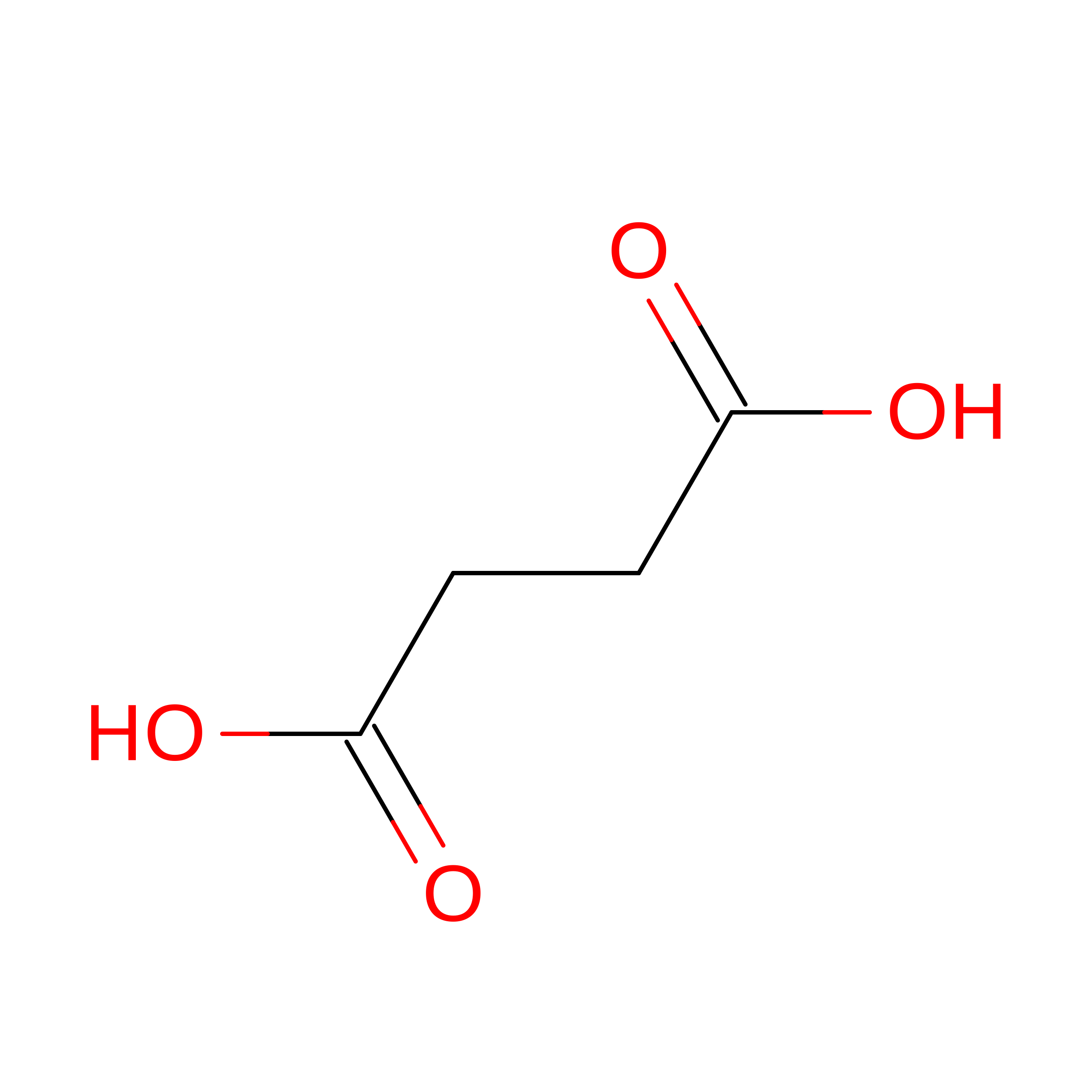
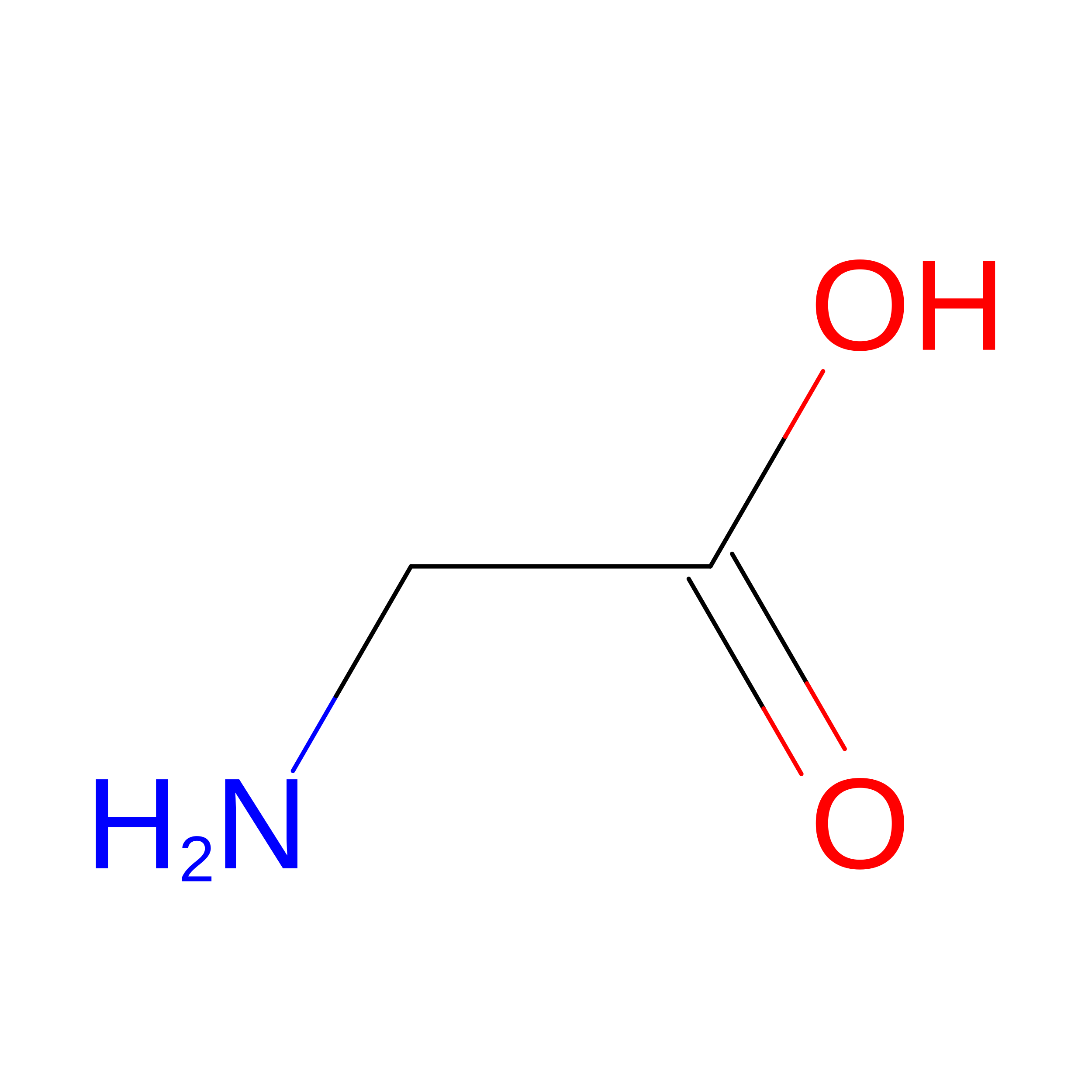
HalB with glycine and succinate


Experimental Data Snapshot

  • Method: X-RAY DIFFRACTION
  • Resolution: 2.05 Å
  • R-Value Free: 
    0.223 (Depositor), 0.191 (DCC) 
  • R-Value Work: 
    0.197 (Depositor) 
  • R-Value Observed: 
    0.199 (Depositor) 

Starting Model: experimental
View more details

wwPDB Validation 3D Report Full Report

Validation slider image for 7U6I

Ligand Structure Quality Assessment 


This is version 1.2 of the entry. See complete history

Literature

Biocatalytic control of site-selectivity and chain length-selectivity in radical amino acid halogenases.

Kissman, E.N.Neugebauer, M.E.Sumida, K.H.Swenson, C.V.Sambold, N.A.Marchand, J.A.Millar, D.C.Chang, M.C.Y.

(2023) Proc Natl Acad Sci U S A 120: e2214512120-e2214512120

  • DOI: https://doi.org/10.1073/pnas.2214512120
  • Primary Citation Related Structures: 
    7U6H, 7U6I, 7U6J

  • PubMed Abstract: 

    Biocatalytic C-H activation has the potential to merge enzymatic and synthetic strategies for bond formation. Fe II /αKG-dependent halogenases are particularly distinguished for their ability both to control selective C-H activation as well as to direct group transfer of a bound anion along a reaction axis separate from oxygen rebound, enabling the development of new transformations. In this context, we elucidate the basis for the selectivity of enzymes that perform selective halogenation to yield 4-Cl-lysine (BesD), 5-Cl-lysine (HalB), and 4-Cl-ornithine (HalD), allowing us to probe how site-selectivity and chain length selectivity are achieved. We now report the crystal structure of the HalB and HalD, revealing the key role of the substrate-binding lid in positioning the substrate for C 4 vs C 5 chlorination and recognition of lysine vs ornithine. Targeted engineering of the substrate-binding lid further demonstrates that these selectivities can be altered or switched, showcasing the potential to develop halogenases for biocatalytic applications.


  • Organizational Affiliation
    • Department of Chemistry, University of California, Berkeley, CA 94720.

Macromolecule Content 

  • Total Structure Weight: 57.67 kDa 
  • Atom Count: 4,340 
  • Modeled Residue Count: 481 
  • Deposited Residue Count: 502 
  • Unique protein chains: 1

Macromolecules

Find similar proteins by:|  3D Structure
Entity ID: 1
MoleculeChains  Sequence LengthOrganismDetailsImage
Halogenase B
A, B
251Streptomyces wuyuanensisMutation(s): 0 
Gene Names: SAMN05444921_127108
UniProt
Find proteins for A0A1H0BKU7 (Streptomyces wuyuanensis)
Explore A0A1H0BKU7 
Go to UniProtKB:  A0A1H0BKU7
Entity Groups
Sequence Clusters30% Identity50% Identity70% Identity90% Identity95% Identity100% Identity
UniProt GroupA0A1H0BKU7
Sequence Annotations
Expand
Reference Sequence

Experimental Data & Validation

Experimental Data

  • Method: X-RAY DIFFRACTION
  • Resolution: 2.05 Å
  • R-Value Free:  0.223 (Depositor), 0.191 (DCC) 
  • R-Value Work:  0.197 (Depositor) 
  • R-Value Observed: 0.199 (Depositor) 
Space Group: P 62 2 2
Unit Cell:
Length ( Å )Angle ( ˚ )
a = 165.48α = 90
b = 165.48β = 90
c = 105.332γ = 120
Software Package:
Software NamePurpose
PHENIXrefinement
PDB_EXTRACTdata extraction
Aimlessdata scaling
XDSdata reduction
PHASERphasing

Structure Validation

View Full Validation Report


Ligand Structure Quality Assessment 


Entry History 

& Funding Information

Deposition Data


Funding OrganizationLocationGrant Number
National Institutes of Health/National Institute of General Medical Sciences (NIH/NIGMS)United States--

Revision History  (Full details and data files)

  • Version 1.0: 2023-03-15
    Type: Initial release
  • Version 1.1: 2023-03-22
    Changes: Database references
  • Version 1.2: 2023-10-25
    Changes: Data collection, Refinement description