Find PDB structures and Computed Structure Models (CSM) by combining queries from tools in this suite: Attribute Search, Sequence Similarity, Sequence Motif, 3D Similarity, and 3D Motif with 'AND' logic.
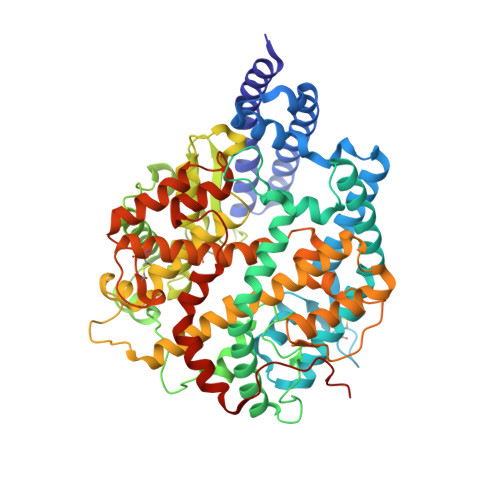
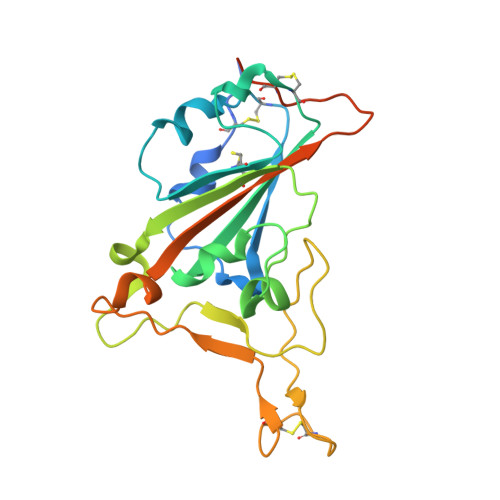
Multiple SARS-CoV-2 variants of concern (VOCs) have been emerging and some have been linked to an increase in case numbers globally. However, there is yet a lack of understanding of the molecular basis for the interactions between the human ACE2 (hACE2) receptor and these VOCs. Here we examined several VOCs including Alpha, Beta, and Gamma, and demonstrate that five variants receptor-binding domain (RBD) increased binding affinity for hACE2, and four variants pseudoviruses increased entry into susceptible cells. Crystal structures of hACE2-RBD complexes help identify the key residues facilitating changes in hACE2 binding affinity. Additionally, soluble hACE2 protein efficiently prevent most of the variants pseudoviruses. Our findings provide important molecular information and may help the development of novel therapeutic and prophylactic agents targeting these emerging mutants.
Organizational Affiliation:
CAS Key Laboratory of Pathogenic Microbiology and Immunology, Institute of Microbiology, Chinese Academy of Sciences, Beijing, 100101, China.
Department of Biomedical Engineering, Emory University, Atlanta, GA, 30322, USA.
College of Life Science and Technology, Southeast University, NanJing, 210096, China.
Department of Biomedical Sciences, City University of Hong Kong, Hong Kong, 999077, China.
Laboratory of Protein Engineering and Vaccines, Tianjin Institute of Industrial Biotechnology, Chinese Academy of Sciences, Tianjin, 300308, China.
Shanxi Academy of Advanced Research and Innovation, Taiyuan, 030032, China.
Central Laboratory, Shanxi Province Hospital of Traditional Chinese Medicine, Taiyuan, 030012, China.
University of the Chinese Academy of Sciences, Beijing, 100049, China.
National Institute of Biological Sciences, Beijing, 102206, China.
College of Veterinary Medicine, Shanxi Agricultural University, Jinzhong, 030801, China.
Institutes of Physical Science and Information Technology, Anhui University, Hefei, 230601, China.
School of Laboratory Medicine and Life Science, Wenzhou Medical University, Wenzhou, 325035, China.
School of Life Sciences, Division of Life Sciences and Medicine, University of Science and Technology of China, Hefei, Anhui, 230026, China.
Tsinghua Institute of Multidisciplinary Biomedical Research, Tsinghua University, Beijing, 102206, China.
CAS Key Laboratory of Microbial Physiological and Metabolic Engineering, Institute of Microbiology, Chinese Academy of Sciences, Beijing, 100101, China.
CAS Key Laboratory of Pathogenic Microbiology and Immunology, Institute of Microbiology, Chinese Academy of Sciences, Beijing, 100101, China. zhaoxin@im.ac.cn.
CAS Center for Influenza Research and Early-Warning (CASCIRE), Chinese Academy of Sciences, 100101, Beijing, China. zhaoxin@im.ac.cn.
CAS Key Laboratory of Pathogenic Microbiology and Immunology, Institute of Microbiology, Chinese Academy of Sciences, Beijing, 100101, China. gaof@im.ac.cn.
Department of Biomedical Sciences, City University of Hong Kong, Hong Kong, 999077, China. gaof@im.ac.cn.
University of the Chinese Academy of Sciences, Beijing, 100049, China. gaof@im.ac.cn.
CAS Key Laboratory of Pathogenic Microbiology and Immunology, Institute of Microbiology, Chinese Academy of Sciences, Beijing, 100101, China. jxqi@im.ac.cn.
University of the Chinese Academy of Sciences, Beijing, 100049, China. jxqi@im.ac.cn.

 Download Mendeley