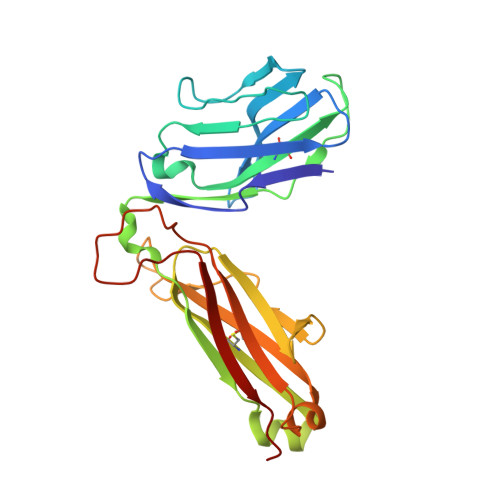
6V15 | pdb_00006v15

immune receptor complex


Experimental Data Snapshot

  • Method: X-RAY DIFFRACTION
  • Resolution: 2.80 Å
  • R-Value Free: 
    0.233 (Depositor), 0.221 (DCC) 
  • R-Value Work: 
    0.197 (Depositor) 
  • R-Value Observed: 
    0.199 (Depositor) 

Starting Model: experimental
View more details

wwPDB Validation 3D Report Full Report

Validation slider image for 6V15

Ligand Structure Quality Assessment 


This is version 2.1 of the entry. See complete history

Literature

The shared susceptibility epitope of HLA-DR4 binds citrullinated self-antigens and the TCR.

Lim, J.J.Jones, C.M.Loh, T.J.Ting, Y.T.Zareie, P.Loh, K.L.Felix, N.J.Suri, A.McKinnon, M.Stevenaert, F.Sharma, R.K.Klareskog, L.Malmstrom, V.Baker, D.G.Purcell, A.W.Reid, H.H.La Gruta, N.L.Rossjohn, J.

(2021) Sci Immunol 6

  • DOI: https://doi.org/10.1126/sciimmunol.abe0896
  • Primary Citation Related Structures: 
    6V0Y, 6V13, 6V15, 6V18, 6V19, 6V1A

  • PubMed Abstract: 

    Individuals expressing HLA-DR4 bearing the shared susceptibility epitope (SE) have an increased risk of developing rheumatoid arthritis (RA). Posttranslational modification of self-proteins via citrullination leads to the formation of neoantigens that can be presented by HLA-DR4 SE allomorphs. However, in T cell-mediated autoimmunity, the interplay between the HLA molecule, posttranslationally modified epitope(s), and the responding T cell repertoire remains unclear. In HLA-DR4 transgenic mice, we show that immunization with a Fibβ-74cit 69-81 peptide led to a population of HLA-DR4 Fibβ-74cit69-81 tetramer + T cells that exhibited biased T cell receptor (TCR) β chain usage, which was attributable to selective clonal expansion from the preimmune repertoire. Crystal structures of pre- and postimmune TCRs showed that the SE of HLA-DR4 represented a main TCR contact zone. Immunization with a double citrullinated epitope (Fibβ-72,74cit 69-81 ) altered the responding HLA-DR4 tetramer + T cell repertoire, which was due to the P2-citrulline residue interacting with the TCR itself. We show that the SE of HLA-DR4 has dual functionality, namely, presentation and a direct TCR recognition determinant. Analogous biased TCR β chain usage toward the Fibβ-74cit 69-81 peptide was observed in healthy HLA-DR4 + individuals and patients with HLA-DR4 + RA, thereby suggesting a link to human RA.


  • Organizational Affiliation
    • Infection and Immunity Program and Department of Biochemistry and Molecular Biology, Biomedicine Discovery Institute, Monash University, Clayton, Victoria 3800, Australia.

Macromolecule Content 

  • Total Structure Weight: 97.55 kDa 
  • Atom Count: 6,567 
  • Modeled Residue Count: 814 
  • Deposited Residue Count: 847 
  • Unique protein chains: 5

Macromolecules

Find similar proteins by:|  3D Structure
Entity ID: 1
MoleculeChains  Sequence LengthOrganismDetailsImage
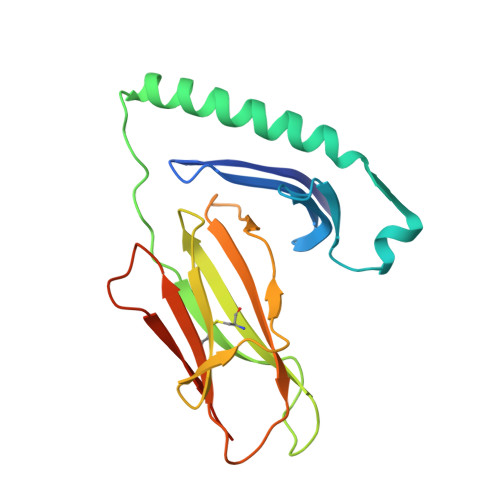
HLA class II histocompatibility antigen, DR alpha chain189Homo sapiensMutation(s): 0 
Gene Names: HLA-DRAHLA-DRA1
UniProt & NIH Common Fund Data Resources
Find proteins for P01903 (Homo sapiens)
Explore P01903 
Go to UniProtKB:  P01903
PHAROS:  P01903
GTEx:  ENSG00000204287 
Entity Groups
Sequence Clusters30% Identity50% Identity70% Identity90% Identity95% Identity100% Identity
UniProt GroupP01903
Glycosylation
Glycosylation Sites: 2Go to GlyGen: P01903-1
Sequence Annotations
Expand
Reference Sequence
Find similar proteins by:|  3D Structure
Entity ID: 2
MoleculeChains  Sequence LengthOrganismDetailsImage
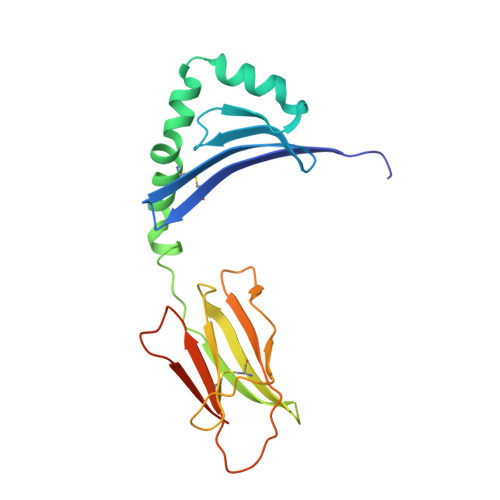
HLA class II histocompatibility antigen, DRB1-4 beta chain198Homo sapiensMutation(s): 0 
Gene Names: HLA-DRB1
UniProt & NIH Common Fund Data Resources
Find proteins for P01911 (Homo sapiens)
Explore P01911 
Go to UniProtKB:  P01911
PHAROS:  P01911
GTEx:  ENSG00000196126 
Entity Groups
Sequence Clusters30% Identity50% Identity70% Identity90% Identity95% Identity100% Identity
UniProt GroupP01911
Glycosylation
Glycosylation Sites: 1Go to GlyGen: P01911-1
Sequence Annotations
Expand
Reference Sequence
Find similar proteins by:  Sequence   |   3D Structure  
Entity ID: 3
MoleculeChains  Sequence LengthOrganismDetailsImage
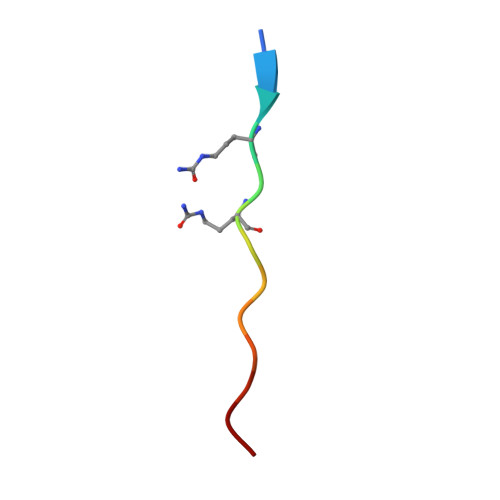
Fibrinogen beta 72,74cit69-8113Homo sapiensMutation(s): 0 
UniProt & NIH Common Fund Data Resources
Find proteins for P02675 (Homo sapiens)
Explore P02675 
Go to UniProtKB:  P02675
PHAROS:  P02675
GTEx:  ENSG00000171564 
Entity Groups
Sequence Clusters30% Identity50% Identity70% Identity90% Identity95% Identity100% Identity
UniProt GroupP02675
Sequence Annotations
Expand
Reference Sequence
Find similar proteins by:|  3D Structure
Entity ID: 4
MoleculeChains  Sequence LengthOrganismDetailsImage
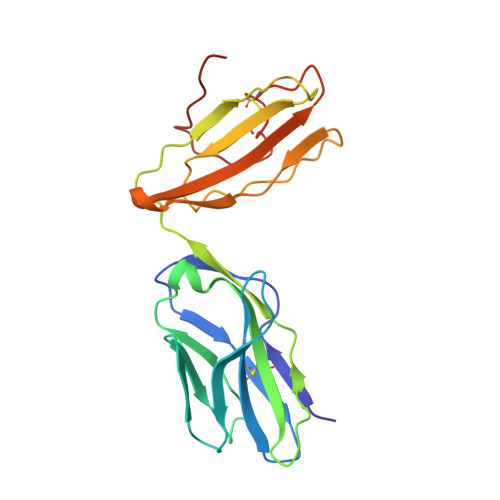
G08 TCR alpha chain206Mus musculusMutation(s): 0 
Find similar proteins by:|  3D Structure
Entity ID: 5
MoleculeChains  Sequence LengthOrganismDetailsImage
G08 TCR beta chain241Mus musculusMutation(s): 0 

Small Molecules

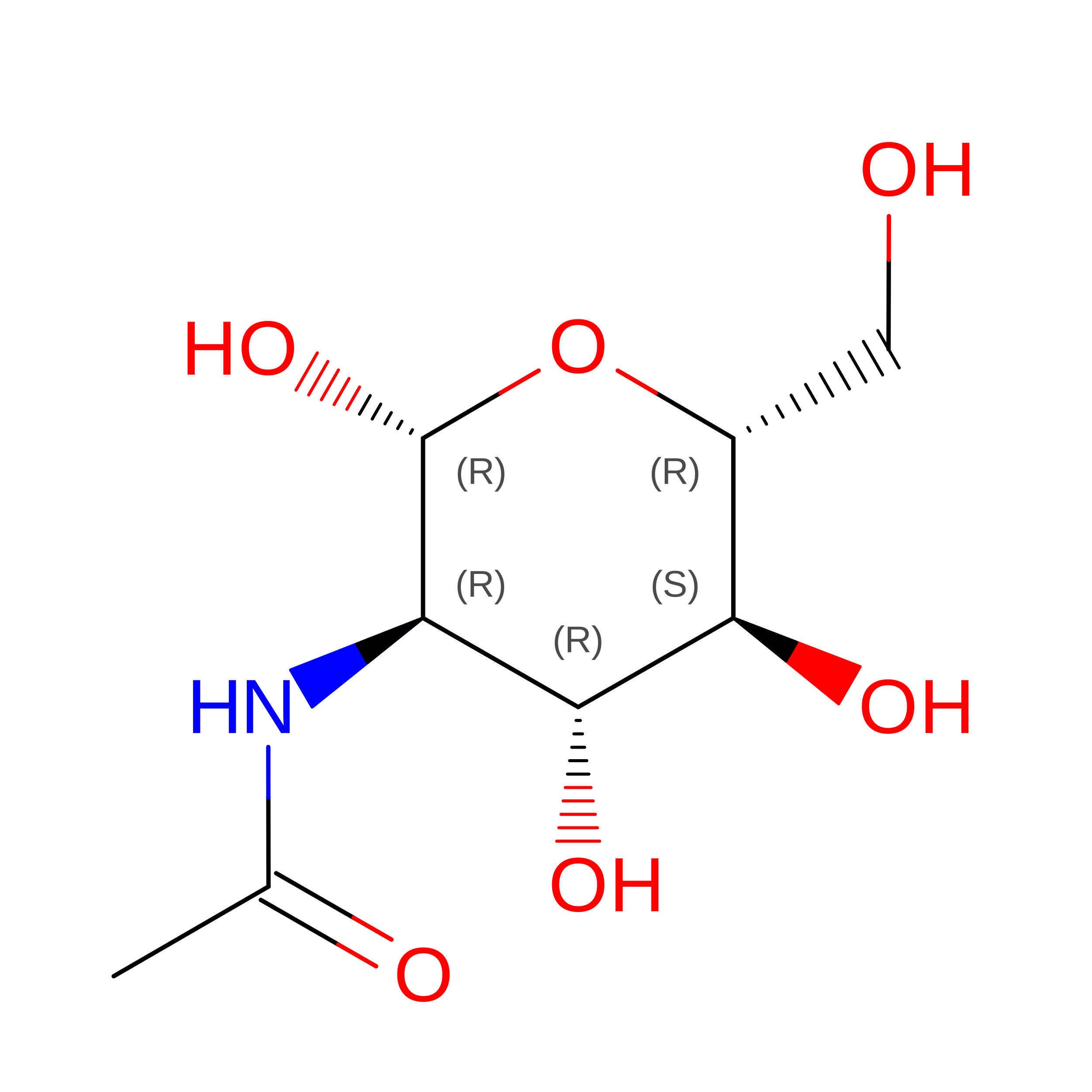
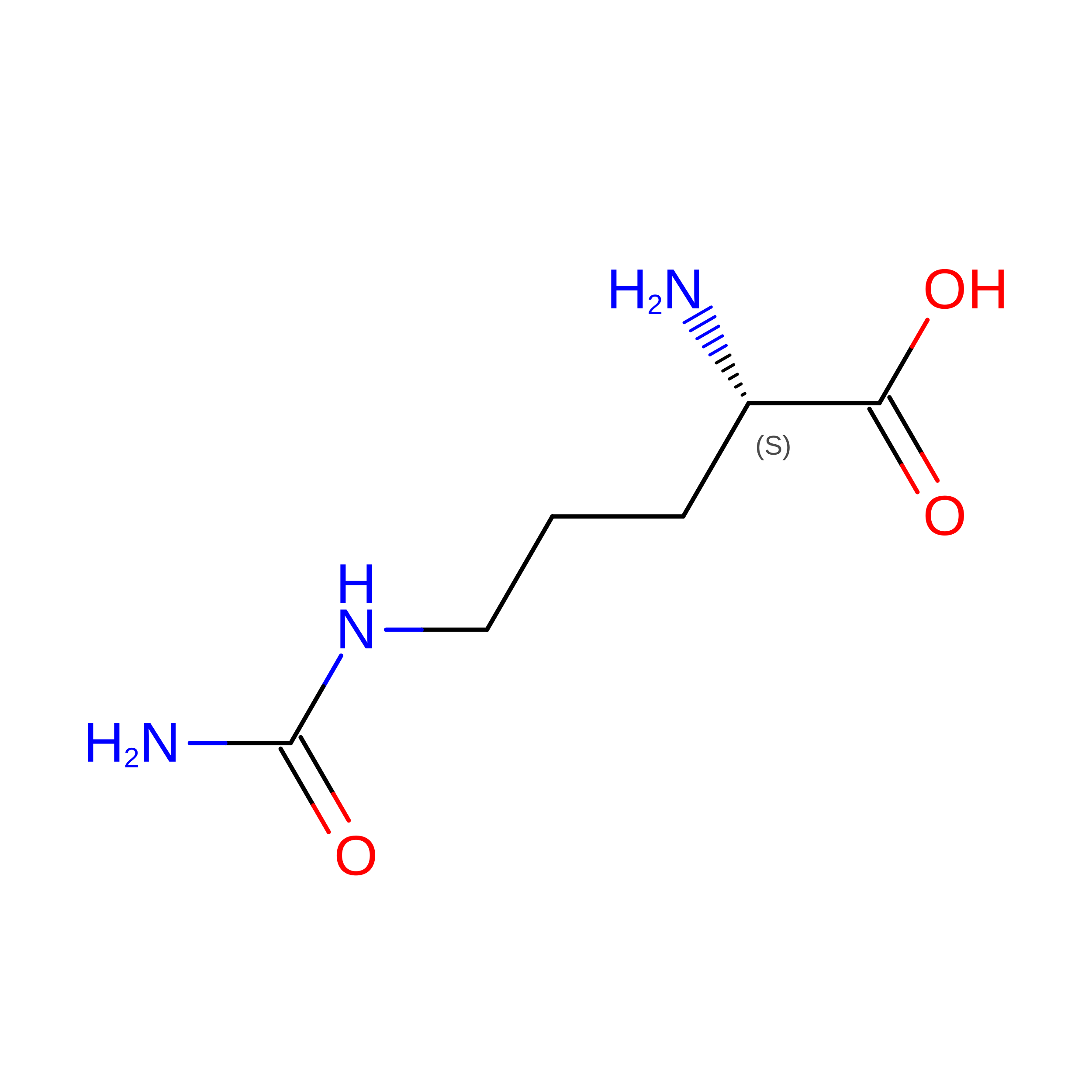
Modified Residues  1 Unique
IDChains TypeFormula2D DiagramParent
CIR
Query on CIR
C
L-PEPTIDE LINKINGC6 H13 N3 O3ARG

Experimental Data & Validation

Experimental Data

  • Method: X-RAY DIFFRACTION
  • Resolution: 2.80 Å
  • R-Value Free:  0.233 (Depositor), 0.221 (DCC) 
  • R-Value Work:  0.197 (Depositor) 
  • R-Value Observed: 0.199 (Depositor) 
Space Group: C 1 2 1
Unit Cell:
Length ( Å )Angle ( ˚ )
a = 149.995α = 90
b = 56.548β = 92.205
c = 136.198γ = 90
Software Package:
Software NamePurpose
PHENIXrefinement
XDSdata reduction
Aimlessdata scaling
PHASERphasing

Structure Validation

View Full Validation Report


Ligand Structure Quality Assessment 


Entry History 

& Funding Information

Deposition Data


Funding OrganizationLocationGrant Number
Australian Research Council (ARC)AustraliaCE140100011

Revision History  (Full details and data files)

  • Version 1.0: 2020-11-25
    Type: Initial release
  • Version 1.1: 2021-06-09
    Changes: Database references
  • Version 1.2: 2023-10-11
    Changes: Data collection, Database references, Refinement description
  • Version 2.0: 2023-11-15
    Changes: Atomic model, Data collection, Derived calculations
  • Version 2.1: 2024-10-16
    Changes: Structure summary