6A9A | pdb_00006a9a

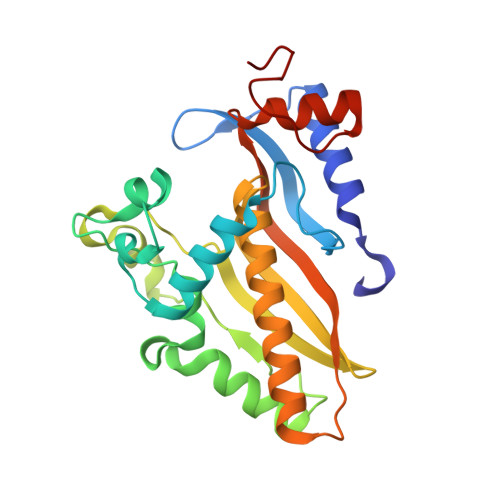
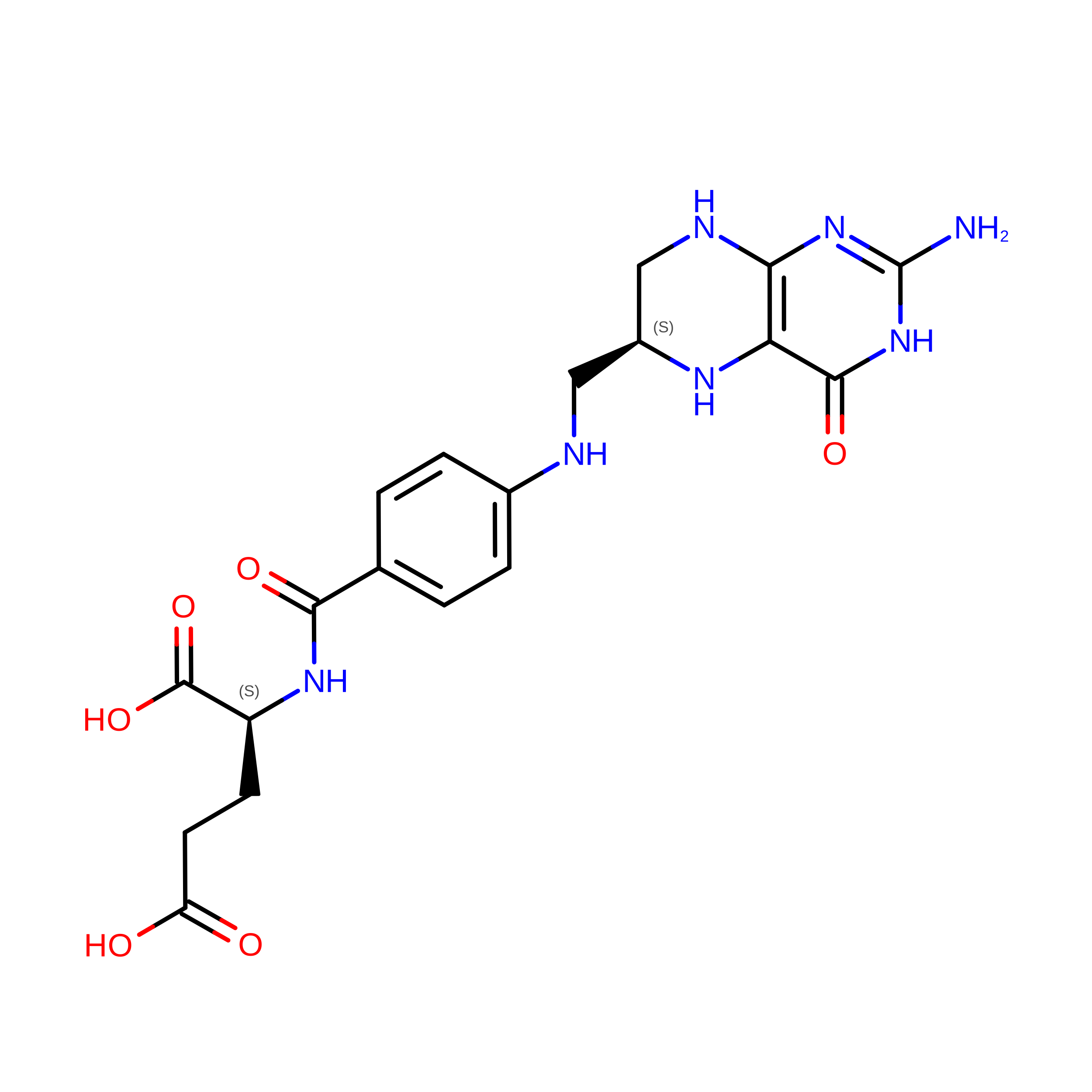
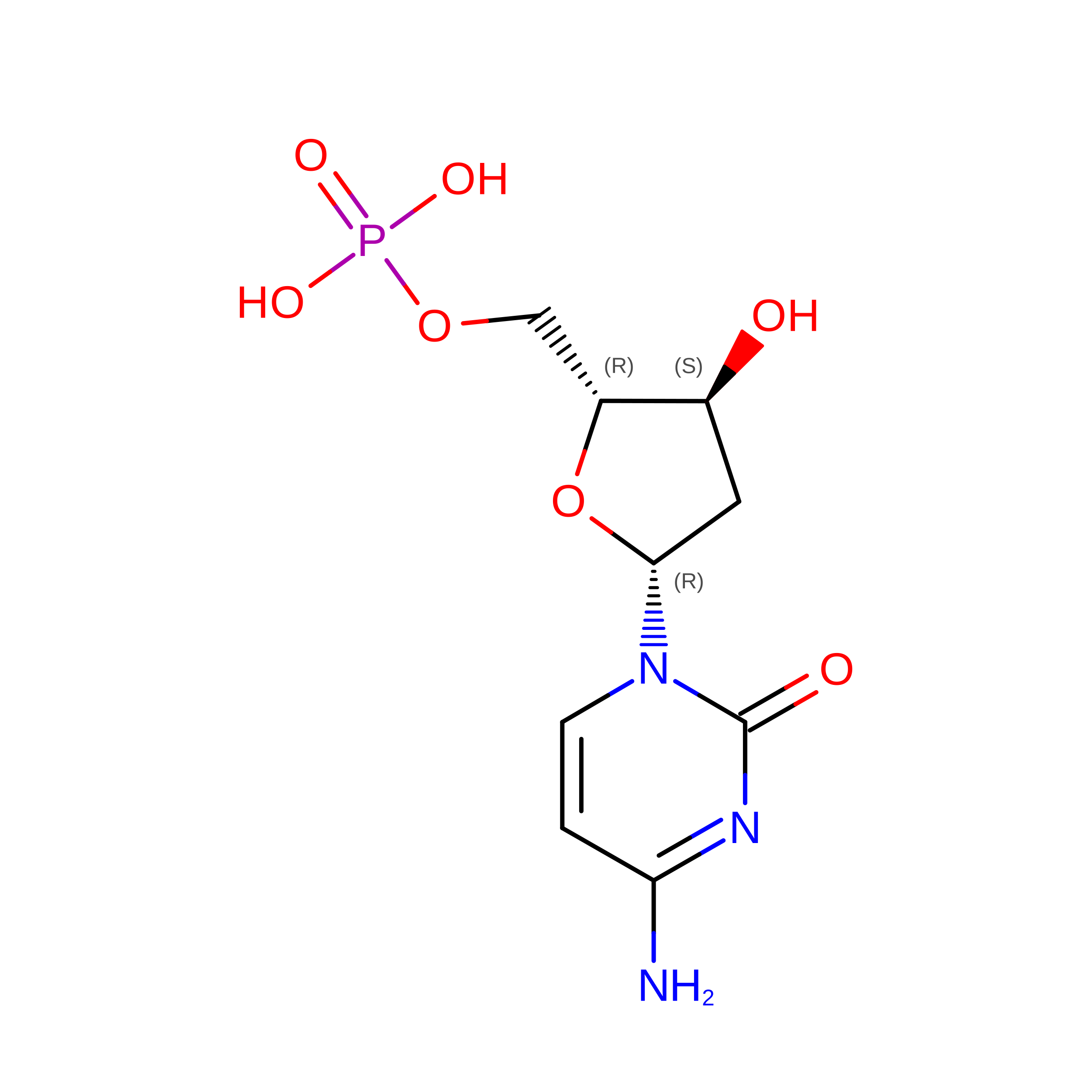
Ternary complex crystal structure of dCH with dCMP and THF


Experimental Data Snapshot

  • Method: X-RAY DIFFRACTION
  • Resolution: 1.90 Å
  • R-Value Free: 
    0.187 (Depositor), 0.187 (DCC) 
  • R-Value Work: 
    0.153 (Depositor), 0.153 (DCC) 
  • R-Value Observed: 
    0.155 (Depositor) 

Starting Model: experimental
View more details

wwPDB Validation 3D Report Full Report

Validation slider image for 6A9A

Ligand Structure Quality Assessment 


This is version 2.2 of the entry. See complete history

Literature

A cytosine modification mechanism revealed by the structure of a ternary complex of deoxycytidylate hydroxymethylase from bacteriophage T4 with its cofactor and substrate.

Park, S.H.Suh, S.W.Song, H.K.

(2019) IUCrJ 6: 206-217

  • DOI: https://doi.org/10.1107/S2052252518018274
  • Primary Citation Related Structures: 
    6A9A, 6A9B

  • PubMed Abstract: 

    To protect viral DNA against the host bacterial restriction system, bacterio-phages utilize a special modification system - hydroxymethylation - in which dCMP hydroxymethylase (dCH) converts dCMP to 5-hydroxymethyl-dCMP (5hm-dCMP) using N 5, N 10-methylenetetrahydrofolate as a cofactor. Despite shared similarity with thymidylate synthase (TS), dCH catalyzes hydroxylation through an exocyclic methylene intermediate during the last step, which is different from the hydride transfer that occurs with TS. In contrast to the extensively studied TS, the hydroxymethylation mechanism of a cytosine base is not well understood due to the lack of a ternary complex structure of dCH in the presence of both its substrate and cofactor. This paper reports the crystal structure of the ternary complex of dCH from bacteriophage T4 (T4dCH) with dCMP and tetrahydrofolate at 1.9 Å resolution. The authors found key residues of T4dCH for accommodating the cofactor without a C-terminal tail, an optimized network of ordered water molecules and a hydrophobic gating mechanism for cofactor regulation. In combination with biochemical data on structure-based mutants, key residues within T4dCH and a substrate water molecule for hydroxymethylation were identified. Based on these results, a complete enzyme mechanism of dCH and signature residues that can identify dCH enzymes within the TS family have been proposed. These findings provide a fundamental basis for understanding the pyrimidine modification system.


  • Organizational Affiliation
    • Department of Life Sciences, Korea University, 145 Anam-ro, Seongbuk-gu, Seoul 02841, Republic of Korea.

Macromolecule Content 

  • Total Structure Weight: 29.39 kDa 
  • Atom Count: 2,317 
  • Modeled Residue Count: 246 
  • Deposited Residue Count: 246 
  • Unique protein chains: 1

Macromolecules

Find similar proteins by:|  3D Structure
Entity ID: 1
MoleculeChains  Sequence LengthOrganismDetailsImage
Deoxycytidylate 5-hydroxymethyltransferase246Tequatrovirus T4Mutation(s): 2 
Gene Names: 42
EC: 2.1.2.8
UniProt
Find proteins for P08773 (Enterobacteria phage T4)
Explore P08773 
Go to UniProtKB:  P08773
Entity Groups
Sequence Clusters30% Identity50% Identity70% Identity90% Identity95% Identity100% Identity
UniProt GroupP08773
Sequence Annotations
Expand
Reference Sequence

Experimental Data & Validation

Experimental Data

  • Method: X-RAY DIFFRACTION
  • Resolution: 1.90 Å
  • R-Value Free:  0.187 (Depositor), 0.187 (DCC) 
  • R-Value Work:  0.153 (Depositor), 0.153 (DCC) 
  • R-Value Observed: 0.155 (Depositor) 
Space Group: I 2 2 2
Unit Cell:
Length ( Å )Angle ( ˚ )
a = 52.625α = 90
b = 75.226β = 90
c = 154.087γ = 90
Software Package:
Software NamePurpose
PHENIXrefinement
SCALEPACKdata scaling
PDB_EXTRACTdata extraction
HKL-2000data reduction
PHASERphasing

Structure Validation

View Full Validation Report


Ligand Structure Quality Assessment 


Entry History 

Deposition Data

Revision History  (Full details and data files)

  • Version 1.0: 2019-01-02
    Type: Initial release
  • Version 2.0: 2019-05-15
    Changes: Atomic model, Data collection, Derived calculations, Refinement description
  • Version 2.1: 2019-07-17
    Changes: Data collection, Database references
  • Version 2.2: 2023-11-22
    Changes: Data collection, Database references, Refinement description