5W9H | pdb_00005w9h

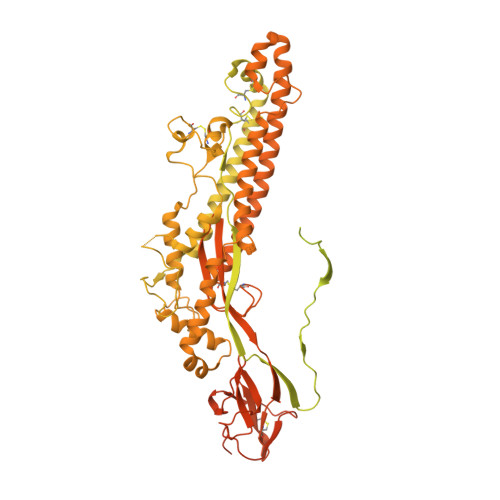
MERS S ectodomain trimer in complex with variable domain of neutralizing antibody G4


Experimental Data Snapshot

  • Method: ELECTRON MICROSCOPY
  • Resolution: 4.00 Å
  • Aggregation State: PARTICLE 
  • Reconstruction Method: SINGLE PARTICLE 

wwPDB Validation 3D Report Full Report

Validation slider image for 5W9H

This is version 2.1 of the entry. See complete history. 

Literature

Immunogenicity and structures of a rationally designed prefusion MERS-CoV spike antigen.

Pallesen, J., Wang, N., Corbett, K.S., Wrapp, D., Kirchdoerfer, R.N., Turner, H.L., Cottrell, C.A., Becker, M.M., Wang, L., Shi, W., Kong, W.P., Andres, E.L., Kettenbach, A.N., Denison, M.R., Chappell, J.D., Graham, B.S., Ward, A.B., McLellan, J.S.

(2017) Proc Natl Acad Sci U S A 114: E7348-E7357

  • DOI: https://doi.org/10.1073/pnas.1707304114
  • Primary Citation Related Structures: 
    5VYH, 5VZR, 5W9H, 5W9I, 5W9J, 5W9K, 5W9L, 5W9M, 5W9N, 5W9O, 5W9P

  • PubMed Abstract: 

    Middle East respiratory syndrome coronavirus (MERS-CoV) is a lineage C betacoronavirus that since its emergence in 2012 has caused outbreaks in human populations with case-fatality rates of ∼36%. As in other coronaviruses, the spike (S) glycoprotein of MERS-CoV mediates receptor recognition and membrane fusion and is the primary target of the humoral immune response during infection. Here we use structure-based design to develop a generalizable strategy for retaining coronavirus S proteins in the antigenically optimal prefusion conformation and demonstrate that our engineered immunogen is able to elicit high neutralizing antibody titers against MERS-CoV. We also determined high-resolution structures of the trimeric MERS-CoV S ectodomain in complex with G4, a stem-directed neutralizing antibody. The structures reveal that G4 recognizes a glycosylated loop that is variable among coronaviruses and they define four conformational states of the trimer wherein each receptor-binding domain is either tightly packed at the membrane-distal apex or rotated into a receptor-accessible conformation. Our studies suggest a potential mechanism for fusion initiation through sequential receptor-binding events and provide a foundation for the structure-based design of coronavirus vaccines.


  • Organizational Affiliation: 
    • Department of Integrative Structural and Computational Biology, The Scripps Research Institute, La Jolla, CA 92037.

Macromolecule Content 

  • Total Structure Weight: 1,039.05 kDa 
  • Atom Count: 33,840 
  • Modeled Residue Count: 4,257 
  • Deposited Residue Count: 9,327 
  • Unique protein chains: 3

Macromolecules

Find similar proteins by:|  3D Structure
Entity ID: 1
MoleculeChains  Sequence LengthOrganismDetailsImage
MERS S1,329Middle East respiratory syndrome-related coronavirusMutation(s): 2 
UniProt
Find proteins for K9N5Q8 (Middle East respiratory syndrome-related coronavirus (isolate United Kingdom/H123990006/2012))
Explore K9N5Q8 
Go to UniProtKB:  K9N5Q8
Entity Groups
Sequence Clusters30% Identity50% Identity70% Identity90% Identity95% Identity100% Identity
UniProt GroupK9N5Q8
Glycosylation
Glycosylation Sites: 9
Sequence Annotations
Expand
Reference Sequence
Find similar proteins by:|  3D Structure
Entity ID: 2
MoleculeChains  Sequence LengthOrganismDetailsImage
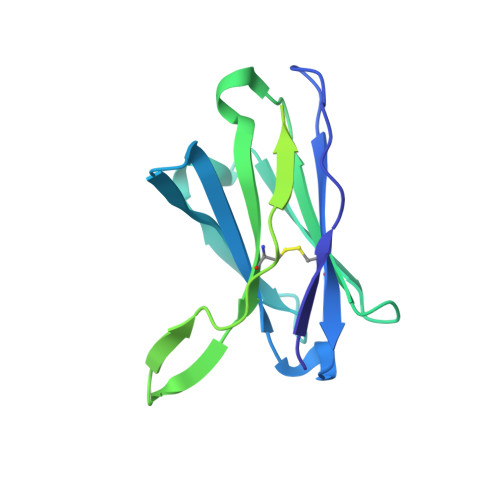
G4 VH
B, E, H
233Mus musculusMutation(s): 0 
Entity Groups
Sequence Clusters30% Identity50% Identity70% Identity90% Identity95% Identity100% Identity
Sequence Annotations
Expand
Reference Sequence
Find similar proteins by:|  3D Structure
Entity ID: 3
MoleculeChains  Sequence LengthOrganismDetailsImage
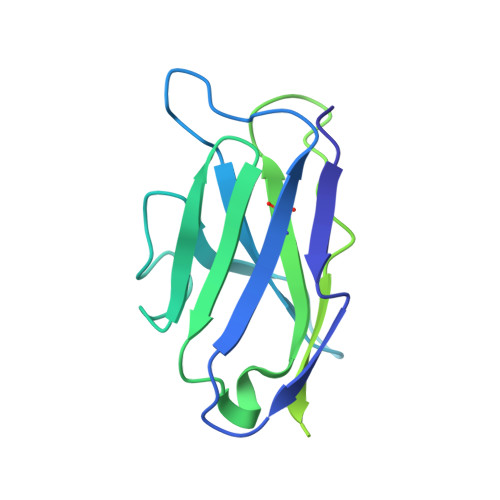
G4 VL
C, F, I
218Mus musculusMutation(s): 0 
Entity Groups
Sequence Clusters30% Identity50% Identity70% Identity90% Identity95% Identity100% Identity
Sequence Annotations
Expand
Reference Sequence

Oligosaccharides

Help  
Entity ID: 4
MoleculeChains Length2D Diagram GlycosylationD Interactions
2-acetamido-2-deoxy-beta-D-glucopyranose-(1-4)-2-acetamido-2-deoxy-beta-D-glucopyranose
AA [auth X],
BA [auth Y],
CA [auth Z],
DA [auth a],
EA [auth b],
AA [auth X],
BA [auth Y],
CA [auth Z],
DA [auth a],
EA [auth b],
FA [auth c],
GA [auth d],
M [auth J],
N [auth K],
O [auth L],
P [auth M],
Q [auth N],
R [auth O],
S [auth P],
T [auth Q],
U [auth R],
V [auth S],
W [auth T],
X [auth U],
Y [auth V],
Z [auth W]
2N-Glycosylation
Glycosylation Resources
GlyTouCan: G42666HT
GlyCosmos: G42666HT
GlyGen: G42666HT

Small Molecules

Ligands 1 Unique
IDChains Name / Formula / InChI Key2D Diagram3D Interactions
NAG

Query on NAG


Download:Ideal Coordinates CCD File
AB [auth r]
BB [auth r]
HA [auth A]
IA [auth D]
JA [auth G]
AB [auth r],
BB [auth r],
HA [auth A],
IA [auth D],
JA [auth G],
KA [auth p],
LA [auth p],
MA [auth p],
NA [auth p],
OA [auth p],
PA [auth p],
QA [auth q],
RA [auth q],
SA [auth q],
TA [auth q],
UA [auth q],
VA [auth q],
WA [auth r],
XA [auth r],
YA [auth r],
ZA [auth r]
2-acetamido-2-deoxy-beta-D-glucopyranose
C8 H15 N O6
OVRNDRQMDRJTHS-FMDGEEDCSA-N

Experimental Data & Validation

Experimental Data

  • Method: ELECTRON MICROSCOPY
  • Resolution: 4.00 Å
  • Aggregation State: PARTICLE 
  • Reconstruction Method: SINGLE PARTICLE 
EM Software:
TaskSoftware PackageVersion
MODEL REFINEMENTRosetta
MODEL REFINEMENTPHENIX
RECONSTRUCTIONRELION1.4

Structure Validation

View Full Validation Report


Entry History 

& Funding Information

Deposition Data


Funding OrganizationLocationGrant Number
National Institutes of Health/National Institute of General Medical Sciences (NIH/NIGMS)United StatesP20GM113132
National Institutes of Health/National Institute Of Allergy and Infectious Diseases (NIH/NIAID)United StatesR01AI127521

Revision History  (Full details and data files)

  • Version 1.0: 2017-08-16
    Type: Initial release
  • Version 1.1: 2017-08-30
    Changes: Database references
  • Version 1.2: 2017-09-13
    Changes: Author supporting evidence, Data collection, Database references
  • Version 1.3: 2017-11-08
    Changes: Derived calculations
  • Version 1.4: 2018-07-18
    Changes: Data collection, Experimental preparation
  • Version 1.5: 2019-11-06
    Changes: Data collection, Other
  • Version 1.6: 2019-12-11
    Changes: Advisory, Author supporting evidence, Derived calculations
  • Version 2.0: 2020-07-29
    Type: Remediation
    Reason: Carbohydrate remediation
    Changes: Atomic model, Data collection, Derived calculations, Structure summary
  • Version 2.1: 2024-11-06
    Changes: Data collection, Database references, Structure summary