5MT0 | pdb_00005mt0

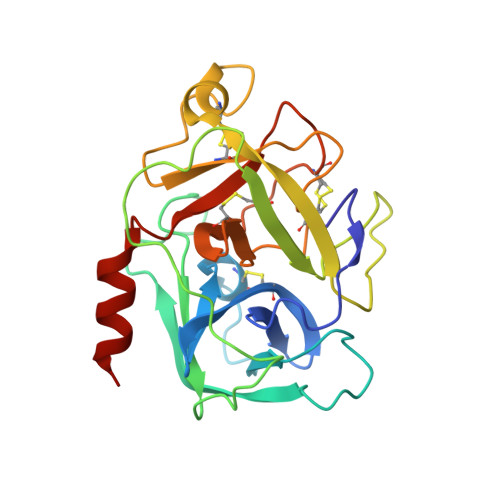
COMPLEMENT FACTOR D IN COMPLEX WITH A REVERSIBLE INDOLE CARBOXYLIC ACID BASED INHIBITOR


Experimental Data Snapshot

  • Method: X-RAY DIFFRACTION
  • Resolution: 1.29 Å
  • R-Value Free: 
    0.196 (Depositor), 0.194 (DCC) 
  • R-Value Work: 
    0.154 (Depositor), 0.152 (DCC) 

Starting Model: experimental
View more details

wwPDB Validation 3D Report Full Report

Validation slider image for 5MT0

Ligand Structure Quality Assessment 


This is version 1.4 of the entry. See complete history

Literature

Structure-Based Library Design and Fragment Screening for the Identification of Reversible Complement Factor D Protease Inhibitors.

Vulpetti, A.Randl, S.Rudisser, S.Ostermann, N.Erbel, P.Mac Sweeney, A.Zoller, T.Salem, B.Gerhartz, B.Cumin, F.Hommel, U.Dalvit, C.Lorthiois, E.Maibaum, J.

(2017) J Med Chem 60: 1946-1958

  • DOI: https://doi.org/10.1021/acs.jmedchem.6b01684
  • Primary Citation Related Structures: 
    5MT0, 5MT4

  • PubMed Abstract: 

    Chronic dysregulation of alternative complement pathway activation has been associated with diverse clinical disorders including age-related macular degeneration and paroxysmal nocturnal hemoglobinurea. Factor D is a trypsin-like serine protease with a narrow specificity for arginine in the P1 position, which catalyzes the first enzymatic reaction of the amplification loop of the alternative pathway. In this article, we describe two hit finding approaches leading to the discovery of new chemical matter for this pivotal protease of the complement system: in silico active site mapping for hot spot identification to guide rational structure-based design and NMR screening of focused and diverse fragment libraries. The wealth of information gathered by these complementary approaches enabled the identification of ligands binding to different subpockets of the latent Factor D conformation and was instrumental for understanding the binding requirements for the generation of the first known potent noncovalent reversible Factor D inhibitors.


  • Organizational Affiliation
    • Novartis Institutes for BioMedical Research, Novartis Pharma AG , Novartis Campus, CH-4056 Basel, Switzerland.

Macromolecule Content 

  • Total Structure Weight: 25.17 kDa 
  • Atom Count: 1,972 
  • Modeled Residue Count: 230 
  • Deposited Residue Count: 232 
  • Unique protein chains: 1

Macromolecules

Find similar proteins by:|  3D Structure
Entity ID: 1
MoleculeChains  Sequence LengthOrganismDetailsImage
Complement factor D232Homo sapiensMutation(s): 0 
Gene Names: CFDDFPFD
EC: 3.4.21.46
UniProt & NIH Common Fund Data Resources
Find proteins for P00746 (Homo sapiens)
Explore P00746 
Go to UniProtKB:  P00746
PHAROS:  P00746
GTEx:  ENSG00000197766 
Entity Groups
Sequence Clusters30% Identity50% Identity70% Identity90% Identity95% Identity100% Identity
UniProt GroupP00746
Sequence Annotations
Expand
Reference Sequence

Small Molecules

Ligands 2 Unique
IDChains Name / Formula / InChI Key2D Diagram3D Interactions
QJS

Query on QJS


Download:Ideal Coordinates CCD File
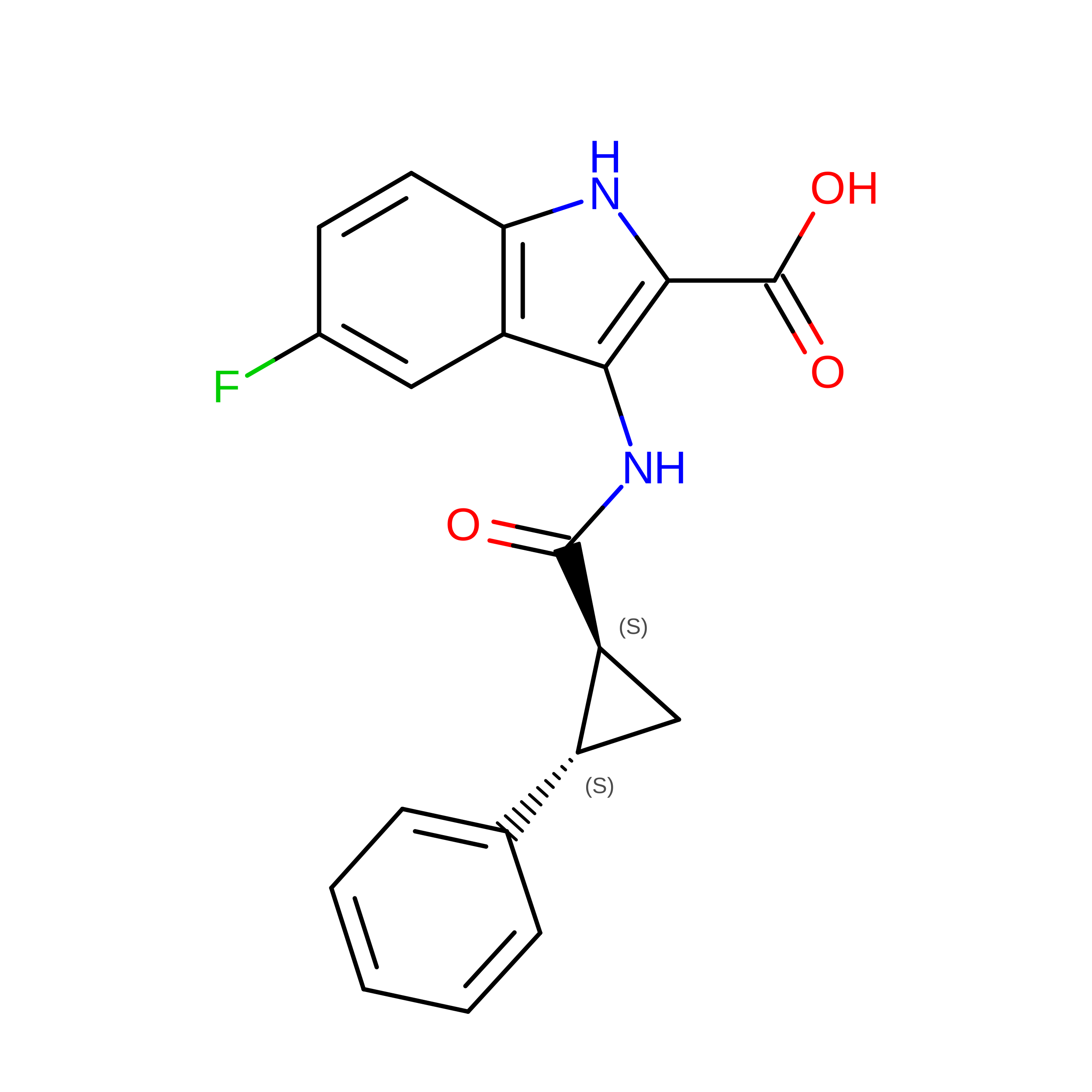
B [auth A]5-fluoranyl-3-[[(1~{S},2~{S})-2-phenylcyclopropyl]carbonylamino]-1~{H}-indole-2-carboxylic acid
C19 H15 F N2 O3
LBCNHUJFDVBZDB-OLZOCXBDSA-N
SO4

Query on SO4


Download:Ideal Coordinates CCD File
C [auth A]SULFATE ION
O4 S
QAOWNCQODCNURD-UHFFFAOYSA-L

Experimental Data & Validation

Experimental Data

  • Method: X-RAY DIFFRACTION
  • Resolution: 1.29 Å
  • R-Value Free:  0.196 (Depositor), 0.194 (DCC) 
  • R-Value Work:  0.154 (Depositor), 0.152 (DCC) 
Space Group: P 1 21 1
Unit Cell:
Length ( Å )Angle ( ˚ )
a = 55.477α = 90
b = 49.527β = 106.36
c = 39.263γ = 90
Software Package:
Software NamePurpose
XDSdata reduction
XSCALEdata scaling
REFMACphasing
REFMACrefinement

Structure Validation

View Full Validation Report


Ligand Structure Quality Assessment 


Entry History 

Deposition Data

Revision History  (Full details and data files)

  • Version 1.0: 2017-02-15
    Type: Initial release
  • Version 1.1: 2017-03-22
    Changes: Database references
  • Version 1.2: 2019-02-20
    Changes: Advisory, Data collection, Derived calculations
  • Version 1.3: 2024-05-01
    Changes: Data collection, Database references, Refinement description
  • Version 1.4: 2024-10-09
    Changes: Structure summary