5GN0 | pdb_00005gn0

Structure of TAZ-TEAD complex


Experimental Data Snapshot

  • Method: X-RAY DIFFRACTION
  • Resolution: 2.90 Å
  • R-Value Free: 
    0.260 (Depositor), 0.270 (DCC) 
  • R-Value Work: 
    0.200 (Depositor), 0.217 (DCC) 
  • R-Value Observed: 
    0.203 (Depositor) 

Starting Model: experimental
View more details

wwPDB Validation 3D Report Full Report

Validation slider image for 5GN0

Ligand Structure Quality Assessment 


This is version 1.2 of the entry. See complete history

Literature

Crystal structure of TAZ-TEAD complex reveals a distinct interaction mode from that of YAP-TEAD complex

Kaan, H.Y.K.Chan, S.W.Tan, S.K.J.Guo, F.Lim, C.J.Hong, W.Song, H.

(2017) Sci Rep 7: 2035-2035

  • DOI: https://doi.org/10.1038/s41598-017-02219-9
  • Primary Citation Related Structures: 
    5GN0

  • PubMed Abstract: 

    The Hippo pathway is a tumor suppressor pathway that is implicated in the regulation of organ size. The pathway has three components: the upstream regulatory factors, the kinase core, and the downstream transcriptional machinery, which consists of YAP, TAZ (transcription co-activators) and TEAD (transcription factor). Formation of YAP/TAZ-TEAD complexes leads to the transcription of growth-promoting genes. Herein, we report the crystal structure of TAZ-TEAD4 complex, which reveals two binding modes. The first is similar to the published YAP-TEAD structure. The second is a unique binding mode, whereby two molecules of TAZ bind to and bridge two molecules of TEAD4. We validated the latter using cross-linking and multi-angle light scattering. Using siRNA, we showed that TAZ knockdown leads to a decrease in TEAD4 dimerization. Lastly, results from luciferase assays, using YAP/TAZ transfected or knockdown cells, give support to the non-redundancy of YAP/TAZ co-activators in regulating gene expression in the Hippo pathway.


  • Organizational Affiliation
    • Institute of Molecular and Cell Biology, A*STAR (Agency for Science, Technology and Resesarch), 61 Biopolis Drive, Singapore, 138673, Singapore.

Macromolecule Content 

  • Total Structure Weight: 123.15 kDa 
  • Atom Count: 8,228 
  • Modeled Residue Count: 1,014 
  • Deposited Residue Count: 1,040 
  • Unique protein chains: 2

Macromolecules

Find similar proteins by:|  3D Structure
Entity ID: 1
MoleculeChains  Sequence LengthOrganismDetailsImage
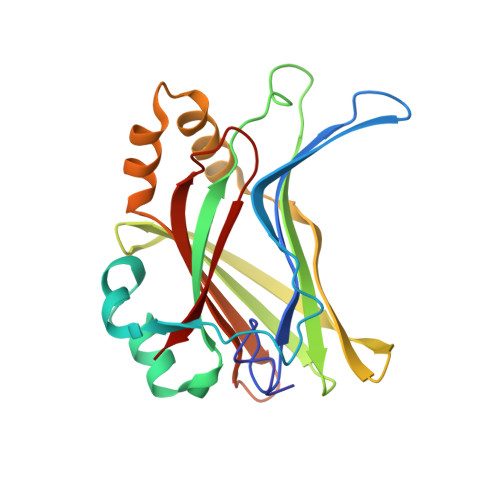
Transcriptional enhancer factor TEF-3
A, B, C, D
225Mus musculusMutation(s): 0 
Gene Names: TEAD4
UniProt
Find proteins for Q62296 (Mus musculus)
Explore Q62296 
Go to UniProtKB:  Q62296
Entity Groups
Sequence Clusters30% Identity50% Identity70% Identity90% Identity95% Identity100% Identity
UniProt GroupQ62296
Sequence Annotations
Expand
Reference Sequence
Find similar proteins by:|  3D Structure
Entity ID: 2
MoleculeChains  Sequence LengthOrganismDetailsImage
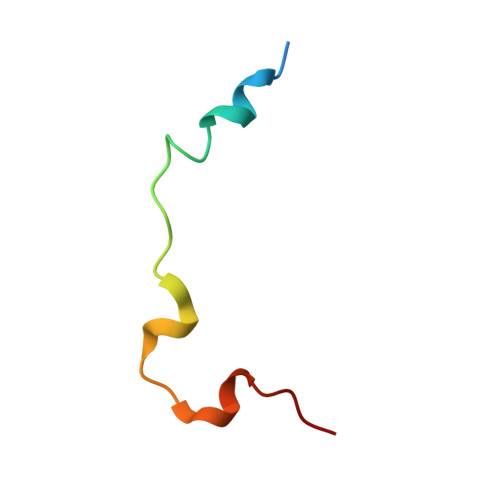
WW domain-containing transcription regulator protein 1
E, F, G, H
35Mus musculusMutation(s): 0 
Gene Names: Taz
UniProt & NIH Common Fund Data Resources
Find proteins for Q9EPK5 (Mus musculus)
Explore Q9EPK5 
Go to UniProtKB:  Q9EPK5
IMPC:  MGI:1917649
Entity Groups
Sequence Clusters30% Identity50% Identity70% Identity90% Identity95% Identity100% Identity
UniProt GroupQ9EPK5
Sequence Annotations
Expand
Reference Sequence

Experimental Data & Validation

Experimental Data

  • Method: X-RAY DIFFRACTION
  • Resolution: 2.90 Å
  • R-Value Free:  0.260 (Depositor), 0.270 (DCC) 
  • R-Value Work:  0.200 (Depositor), 0.217 (DCC) 
  • R-Value Observed: 0.203 (Depositor) 
Space Group: P 21 21 21
Unit Cell:
Length ( Å )Angle ( ˚ )
a = 79.66α = 90
b = 120.9β = 90
c = 196.58γ = 90
Software Package:
Software NamePurpose
REFMACrefinement
iMOSFLMdata reduction
SCALAdata scaling
PHASERphasing

Structure Validation

View Full Validation Report


Ligand Structure Quality Assessment 


Entry History 

Deposition Data

Revision History  (Full details and data files)

  • Version 1.0: 2017-05-31
    Type: Initial release
  • Version 1.1: 2023-11-08
    Changes: Data collection, Database references, Refinement description
  • Version 1.2: 2024-11-20
    Changes: Structure summary