Download Mendeley
Solution structure of the catalytic domain of GCN5 histone acetyltransferase bound to coenzyme A
Lin, Y., Fletcher, C.M., Zhou, J., Allis, C.D., Wagner, G.(1999) Nature 400: 86-89
- PubMed: 10403255 Search on PubMed
- DOI: https://doi.org/10.1038/21922
- Primary Citation Related Structures:
5GCN - PubMed Abstract:
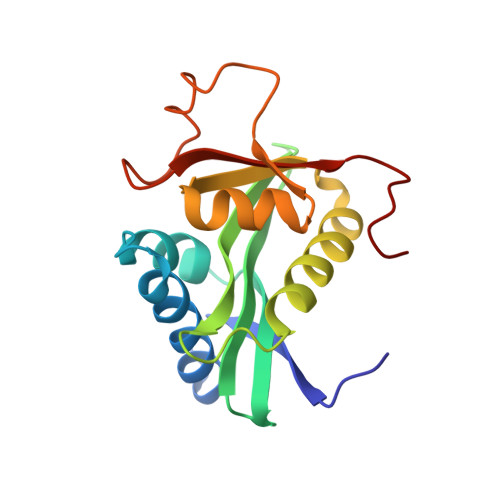
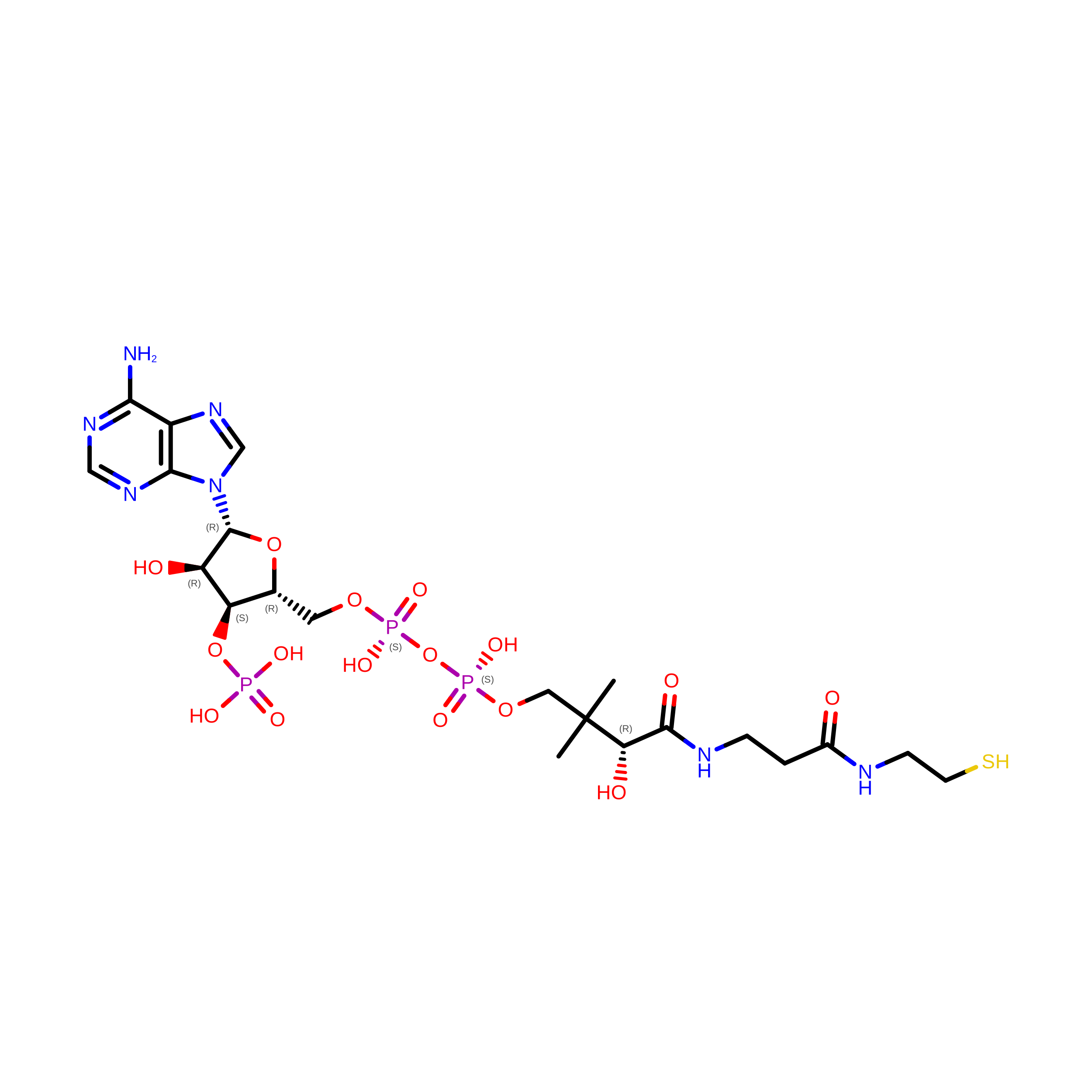
Gene transcription requires the release of inactive DNA from its packaging of histone proteins. Following the discovery of the first transcription-associated histone acetyltransferase, tetrahymena GCN5, it was shown that yeast GCN5 is recruited to the promoter and causes hyper-acetylation of histones and transcriptional activation of target genes, establishing a direct connection between histone acetylation and transcriptional activation. Many other important transcription regulators have been found to have histone acetyltransferase activity, including TAFII230/250, p300/CBP and its associated factor PCAF. Here we present the solution structure of the catalytic domain of tGCN5 (residues 47-210) in complex with coenzyme A. The structure contains two domains; the amino-terminal domain is similar to those of other GCN5-related N-acetyltransferases but the carboxy-terminal domain is not. Coenzyme A binds in a deep hydrophobic pocket between the two domains. Chemical shift changes upon titration with histone H3 peptides indicate a binding site at the domain boundary opposite to the coenzyme A site. The structural data indicate a single-step acetyl-transfer reaction mechanism catalysed by a hydrogen bond to the backbone amide group of leucine 126 and the side-chain carboxyl group of a conserved acidic residue.
- Department of Biological Chemistry and Molecular Pharmacology, Harvard Medical School, Boston, Massachusetts 02115, USA.
Organizational Affiliation: