5F03 | pdb_00005f03

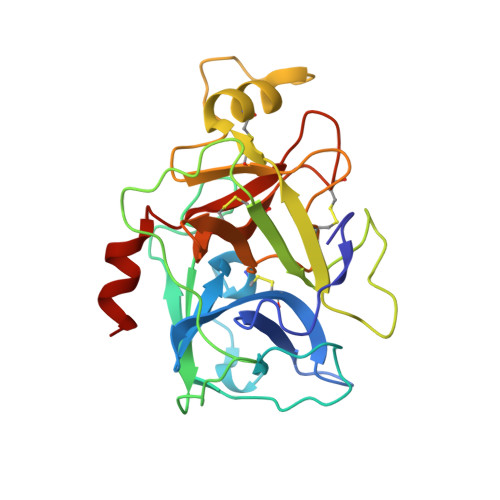
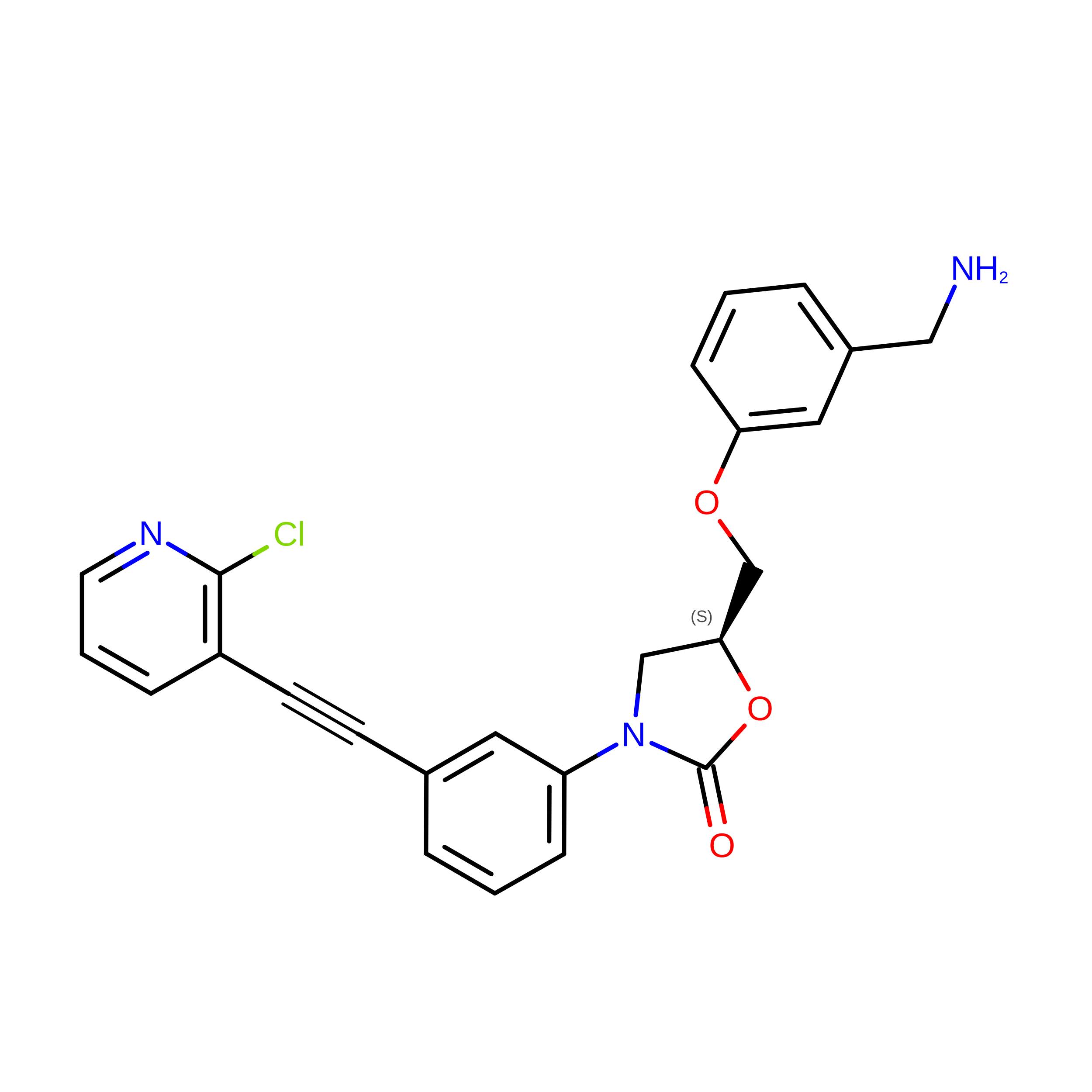
TRYPTASE B2 IN COMPLEX WITH 5-(3-Aminomethyl-phenoxymethyl)-3-[3-(2-chloro-pyridin-3-ylethynyl)-phenyl]-oxazolidin-2-one; compound with trifluoro-acetic acid


Experimental Data Snapshot

  • Method: X-RAY DIFFRACTION
  • Resolution: 1.94 Å
  • R-Value Free: 
    0.200 (Depositor), 0.204 (DCC) 
  • R-Value Work: 
    0.155 (Depositor), 0.163 (DCC) 
  • R-Value Observed: 
    0.157 (Depositor) 

Starting Model: other
View more details

wwPDB Validation 3D Report Full Report

Validation slider image for 5F03

Ligand Structure Quality Assessment 


This is version 1.4 of the entry. See complete history

Literature

A Real-World Perspective on Molecular Design.

Kuhn, B.Guba, W.Hert, J.Banner, D.Bissantz, C.Ceccarelli, S.Haap, W.Korner, M.Kuglstatter, A.Lerner, C.Mattei, P.Neidhart, W.Pinard, E.Rudolph, M.G.Schulz-Gasch, T.Woltering, T.Stahl, M.

(2016) J Med Chem 59: 4087-4102

  • DOI: https://doi.org/10.1021/acs.jmedchem.5b01875
  • Primary Citation Related Structures: 
    5EDB, 5EDC, 5EDE, 5EDG, 5EDH, 5EDI, 5EZX, 5EZZ, 5F00, 5F01, 5F02, 5F03, 5I2R

  • PubMed Abstract: 

    We present a series of small molecule drug discovery case studies where computational methods were prospectively employed to impact Roche research projects, with the aim of highlighting those methods that provide real added value. Our brief accounts encompass a broad range of methods and techniques applied to a variety of enzymes and receptors. Most of these are based on judicious application of knowledge about molecular conformations and interactions: filling of lipophilic pockets to gain affinity or selectivity, addition of polar substituents, scaffold hopping, transfer of SAR, conformation analysis, and molecular overlays. A case study of sequence-driven focused screening is presented to illustrate how appropriate preprocessing of information enables effective exploitation of prior knowledge. We conclude that qualitative statements enabling chemists to focus on promising regions of chemical space are often more impactful than quantitative prediction.


  • Organizational Affiliation
    • Roche Pharmaceutical Research and Early Development, Roche Innovation Center Basel, F. Hoffmann-La Roche Ltd. , Grenzacherstrasse 124, 4070 Basel, Switzerland.

Macromolecule Content 

  • Total Structure Weight: 55.85 kDa 
  • Atom Count: 4,704 
  • Modeled Residue Count: 485 
  • Deposited Residue Count: 490 
  • Unique protein chains: 1

Macromolecules

Find similar proteins by:|  3D Structure
Entity ID: 1
MoleculeChains  Sequence LengthOrganismDetailsImage
Tryptase beta-2
A, B
245Homo sapiensMutation(s): 0 
Gene Names: TPSB2TPS2
EC: 3.4.21.59
UniProt & NIH Common Fund Data Resources
Find proteins for Q15661 (Homo sapiens)
Explore Q15661 
Go to UniProtKB:  Q15661
PHAROS:  Q15661
GTEx:  ENSG00000172236 
Entity Groups
Sequence Clusters30% Identity50% Identity70% Identity90% Identity95% Identity100% Identity
UniProt GroupQ15661
Sequence Annotations
Expand
Reference Sequence

Small Molecules

Ligands 1 Unique
IDChains Name / Formula / InChI Key2D Diagram3D Interactions
5TA

Query on 5TA


Download:Ideal Coordinates CCD File
C [auth A],
D [auth B]
(5~{S})-5-[[3-(aminomethyl)phenoxy]methyl]-3-[3-[2-(2-chloranylpyridin-3-yl)ethynyl]phenyl]-1,3-oxazolidin-2-one
C24 H20 Cl N3 O3
DALBYXAUBIFWAM-QFIPXVFZSA-N

Experimental Data & Validation

Experimental Data

  • Method: X-RAY DIFFRACTION
  • Resolution: 1.94 Å
  • R-Value Free:  0.200 (Depositor), 0.204 (DCC) 
  • R-Value Work:  0.155 (Depositor), 0.163 (DCC) 
  • R-Value Observed: 0.157 (Depositor) 
Space Group: P 31 2 1
Unit Cell:
Length ( Å )Angle ( ˚ )
a = 78.34α = 90
b = 78.34β = 90
c = 165.95γ = 120
Software Package:
Software NamePurpose
REFMACrefinement
XDSdata reduction
XPREPdata scaling
REFMACphasing

Structure Validation

View Full Validation Report


Ligand Structure Quality Assessment 


Entry History 

Deposition Data

Revision History  (Full details and data files)

  • Version 1.0: 2016-02-24
    Type: Initial release
  • Version 1.1: 2016-05-25
    Changes: Database references
  • Version 1.2: 2019-03-20
    Changes: Data collection, Database references, Source and taxonomy, Structure summary
  • Version 1.3: 2024-05-01
    Changes: Data collection, Database references, Refinement description
  • Version 1.4: 2024-11-13
    Changes: Structure summary