5AGX | pdb_00005agx

Bcl-2 alpha beta-1 LINEAR complex


Experimental Data Snapshot

  • Method: X-RAY DIFFRACTION
  • Resolution: 2.24 Å
  • R-Value Free: 
    0.245 (Depositor), 0.250 (DCC) 
  • R-Value Work: 
    0.188 (Depositor), 0.201 (DCC) 
  • R-Value Observed: 
    0.191 (Depositor) 

Starting Model: other
View more details

wwPDB Validation 3D Report Full Report

Validation slider image for 5AGX

This is version 2.1 of the entry. See complete history

Literature

Alpha Beta Peptide Foldamers Targeting Intracellular Protein-Protein Interactions with Activity on Living Cells

Checco, J.W.Lee, E.F.Evangelista, M.Sleebs, N.Rodgers, K.Pettikiriarachchi, A.Kershaw, N.Eddinger, G.A.Belair, D.G.Wilson, J.L.Eller, C.H.Raines, R.T.Murphy, W.L.Smith, B.J.Gellman, S.H.Fairlie, W.D.

(2015) J Am Chem Soc 137: 11365

  • DOI: https://doi.org/10.1021/jacs.5b05896
  • Primary Citation Related Structures: 
    5AGW, 5AGX

  • PubMed Abstract: 

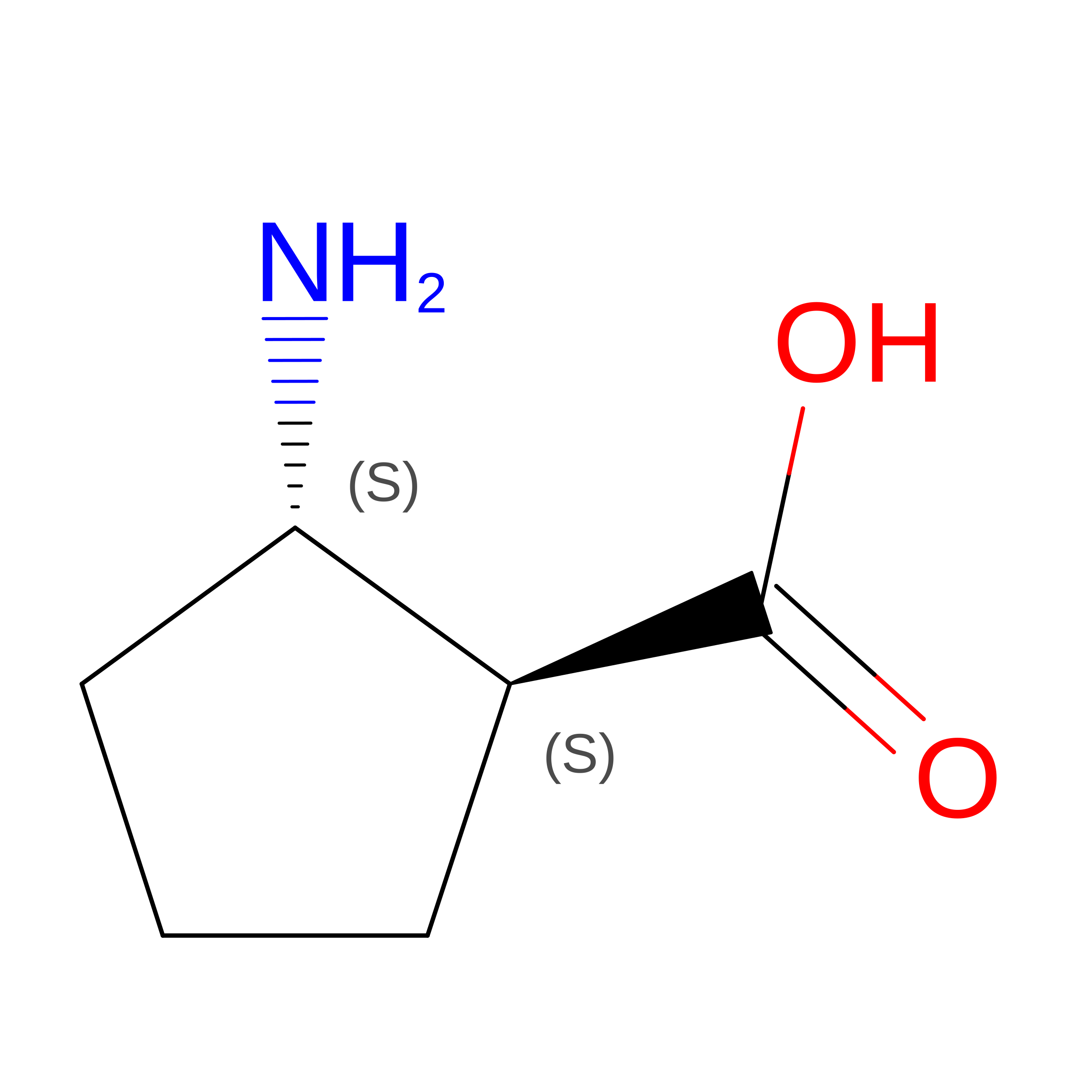
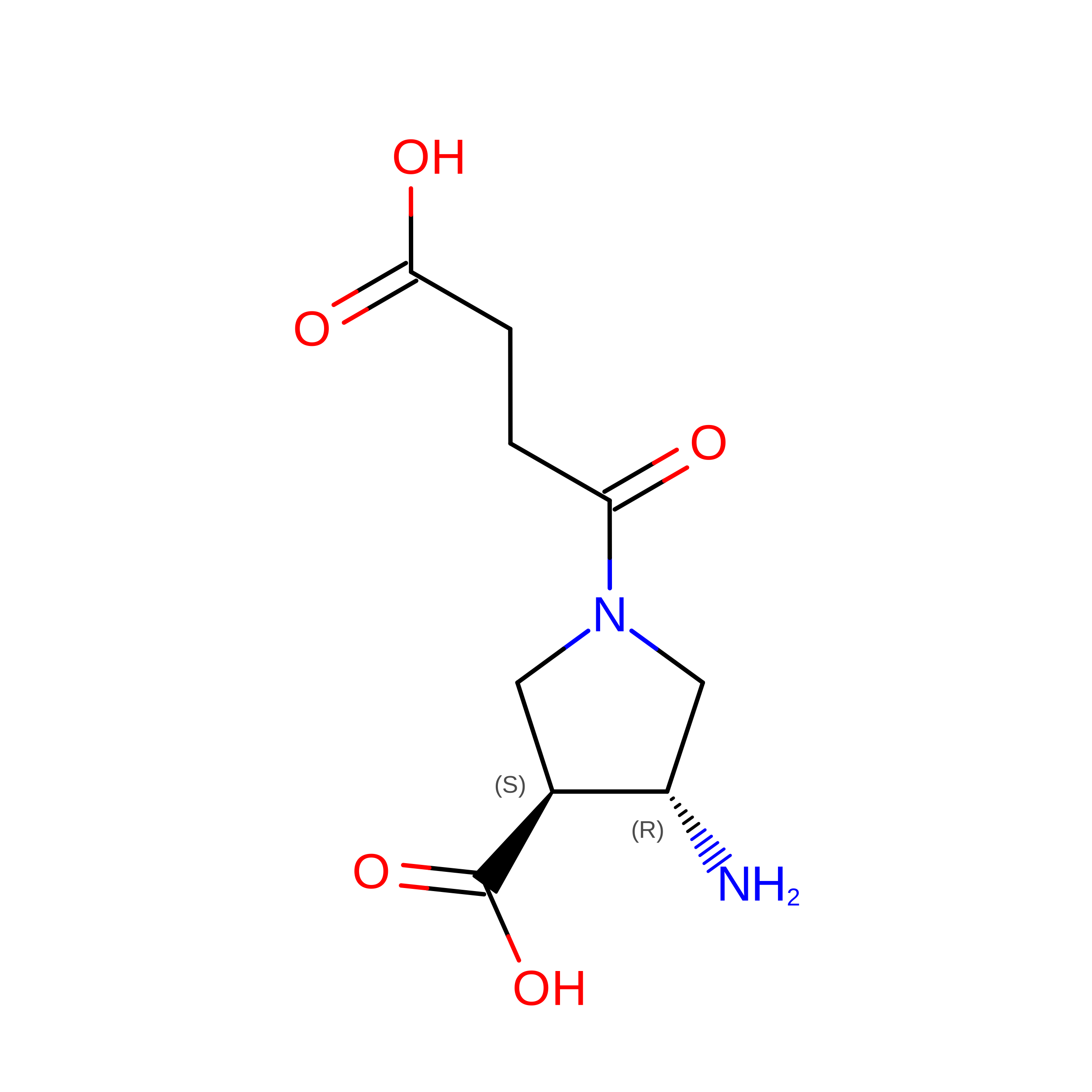
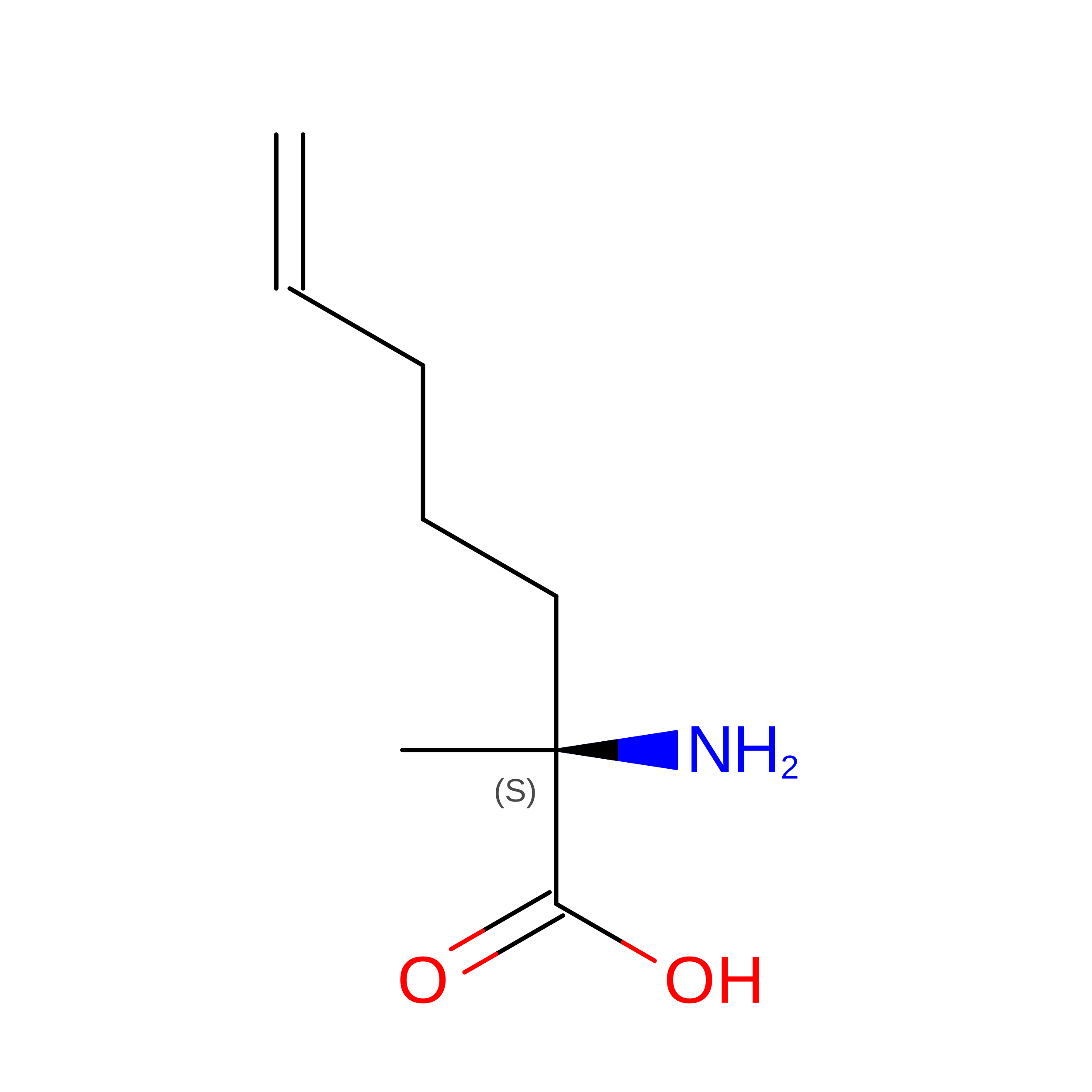
    Peptides can be developed as effective antagonists of protein-protein interactions, but conventional peptides (i.e., oligomers of l-α-amino acids) suffer from significant limitations in vivo. Short half-lives due to rapid proteolytic degradation and an inability to cross cell membranes often preclude biological applications of peptides. Oligomers that contain both α- and β-amino acid residues ("α/β-peptides") manifest decreased susceptibility to proteolytic degradation, and when properly designed these unnatural oligomers can mimic the protein-recognition properties of analogous "α-peptides". This report documents an extension of the α/β-peptide approach to target intracellular protein-protein interactions. Specifically, we have generated α/β-peptides based on a "stapled" Bim BH3 α-peptide, which contains a hydrocarbon cross-link to enhance α-helix stability. We show that a stapled α/β-peptide can structurally and functionally mimic the parent stapled α-peptide in its ability to enter certain types of cells and block protein-protein interactions associated with apoptotic signaling. However, the α/β-peptide is nearly 100-fold more resistant to proteolysis than is the parent stapled α-peptide. These results show that backbone modification, a strategy that has received relatively little attention in terms of peptide engineering for biomedical applications, can be combined with more commonly deployed peripheral modifications such as side chain cross-linking to produce synergistic benefits.


  • Organizational Affiliation
    • The Walter and Eliza Hall Institute of Medical Research , Parkville, Victoria 3052, Australia.

Macromolecule Content 

  • Total Structure Weight: 44.14 kDa 
  • Atom Count: 2,741 
  • Modeled Residue Count: 325 
  • Deposited Residue Count: 376 
  • Unique protein chains: 3

Macromolecules

Find similar proteins by:|  3D Structure
Entity ID: 1
MoleculeChains  Sequence LengthOrganismDetailsImage
APOPTOSIS REGULATOR BCL-2, BCL-2-LIKE PROTEIN 1, APOPTOSIS REGULATOR BCL-2166Homo sapiensMutation(s): 0 
UniProt & NIH Common Fund Data Resources
Find proteins for P10415 (Homo sapiens)
Explore P10415 
Go to UniProtKB:  P10415
PHAROS:  P10415
GTEx:  ENSG00000171791 
Find proteins for Q07817 (Homo sapiens)
Explore Q07817 
Go to UniProtKB:  Q07817
PHAROS:  Q07817
GTEx:  ENSG00000171552 
Entity Groups
Sequence Clusters30% Identity50% Identity70% Identity90% Identity95% Identity100% Identity
UniProt GroupsQ07817P10415
Sequence Annotations
Expand
Reference Sequence
Find similar proteins by:|  3D Structure
Entity ID: 2
MoleculeChains  Sequence LengthOrganismDetailsImage
APOPTOSIS REGULATOR BCL-2, BCL-2-LIKE PROTEIN 1, APOPTOSIS REGULATOR BCL-2166Homo sapiensMutation(s): 0 
UniProt & NIH Common Fund Data Resources
Find proteins for P10415 (Homo sapiens)
Explore P10415 
Go to UniProtKB:  P10415
PHAROS:  P10415
GTEx:  ENSG00000171791 
Find proteins for Q07817 (Homo sapiens)
Explore Q07817 
Go to UniProtKB:  Q07817
PHAROS:  Q07817
GTEx:  ENSG00000171552 
Entity Groups
Sequence Clusters30% Identity50% Identity70% Identity90% Identity95% Identity100% Identity
UniProt GroupsQ07817P10415
Sequence Annotations
Expand
Reference Sequence
Find similar proteins by:  Sequence   |   3D Structure  
Entity ID: 3
MoleculeChains  Sequence LengthOrganismDetailsImage
BCL-2-LIKE PROTEIN 11
C, D
22Homo sapiensMutation(s): 5 
UniProt & NIH Common Fund Data Resources
Find proteins for O43521 (Homo sapiens)
Explore O43521 
Go to UniProtKB:  O43521
PHAROS:  O43521
GTEx:  ENSG00000153094 
Entity Groups
Sequence Clusters30% Identity50% Identity70% Identity90% Identity95% Identity100% Identity
UniProt GroupO43521
Sequence Annotations
Expand
Reference Sequence

Experimental Data & Validation

Experimental Data

  • Method: X-RAY DIFFRACTION
  • Resolution: 2.24 Å
  • R-Value Free:  0.245 (Depositor), 0.250 (DCC) 
  • R-Value Work:  0.188 (Depositor), 0.201 (DCC) 
  • R-Value Observed: 0.191 (Depositor) 
Space Group: P 43 21 2
Unit Cell:
Length ( Å )Angle ( ˚ )
a = 86.054α = 90
b = 86.054β = 90
c = 108.739γ = 90
Software Package:
Software NamePurpose
PHENIXrefinement
XDSdata scaling
PHASERphasing

Structure Validation

View Full Validation Report


Entry History 

Deposition Data

Revision History  (Full details and data files)

  • Version 1.0: 2015-09-09
    Type: Initial release
  • Version 1.1: 2015-09-23
    Changes: Database references
  • Version 2.0: 2023-11-15
    Changes: Atomic model, Data collection, Database references, Derived calculations, Other
  • Version 2.1: 2024-05-01
    Changes: Refinement description