4MRA | pdb_00004mra

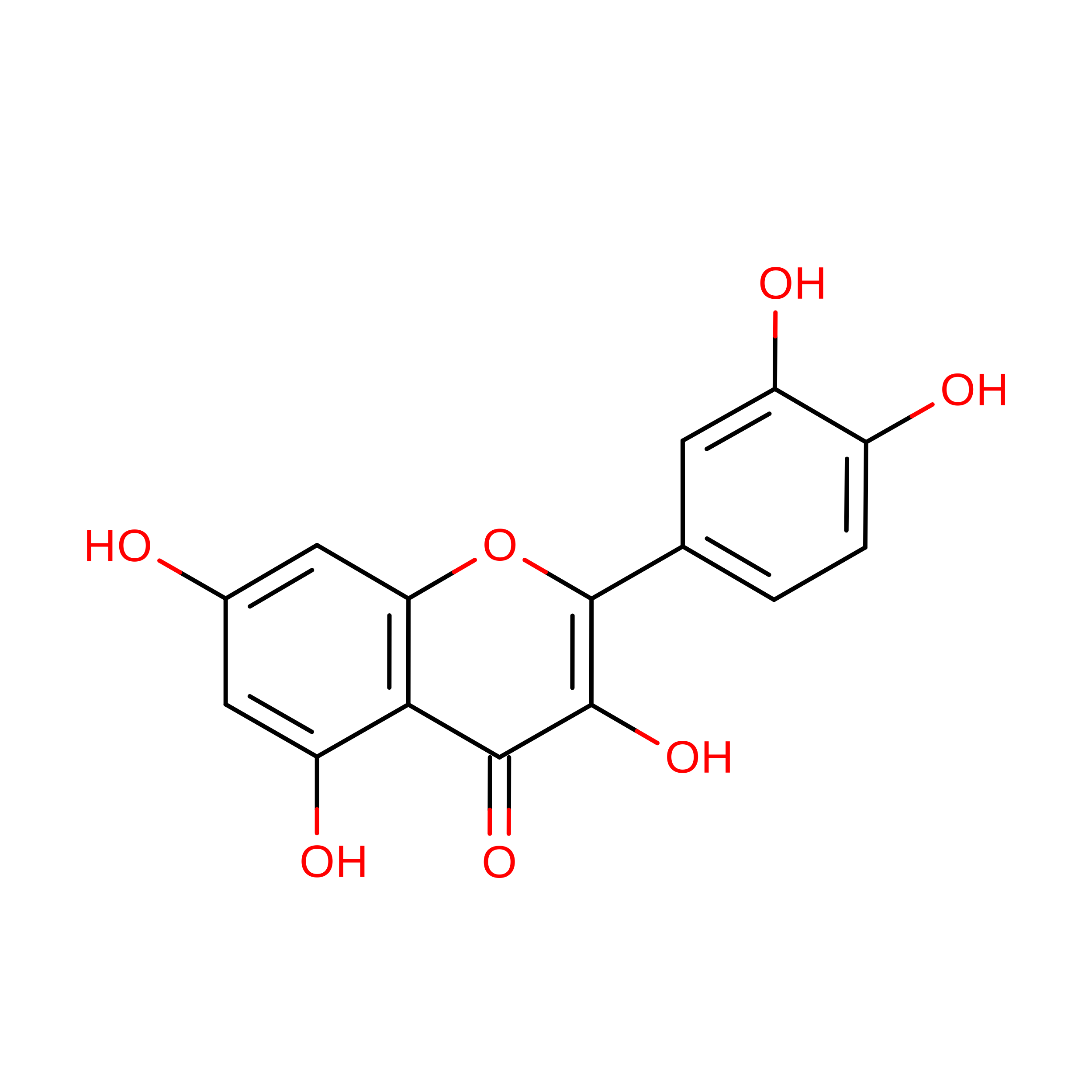
Crystal structure of Gpb in complex with QUERCETIN


Experimental Data Snapshot

  • Method: X-RAY DIFFRACTION
  • Resolution: 2.34 Å
  • R-Value Free: 
    0.244 (Depositor), 0.250 (DCC) 
  • R-Value Work: 
    0.179 (Depositor), 0.185 (DCC) 
  • R-Value Observed: 
    0.182 (Depositor) 

Starting Model: experimental
View more details

wwPDB Validation 3D Report Full Report

Validation slider image for 4MRA

Ligand Structure Quality Assessment 


This is version 1.2 of the entry. See complete history

Literature

Biochemical and biological assessment of the inhibitory potency of extracts from vinification byproducts of Vitis vinifera extracts against glycogen phosphorylase.

Kantsadi, A.L.Apostolou, A.Theofanous, S.Stravodimos, G.A.Kyriakis, E.Gorgogietas, V.A.Chatzileontiadou, D.S.Pegiou, K.Skamnaki, V.T.Stagos, D.Kouretas, D.Psarra, A.M.Haroutounian, S.A.Leonidas, D.D.

(2014) Food Chem Toxicol 67: 35-43

  • DOI: https://doi.org/10.1016/j.fct.2014.01.055
  • Primary Citation Related Structures: 
    4MRA

  • PubMed Abstract: 

    The inhibitory potency of thirteen polyphenolic extracts obtained from vinification byproducts of Greek varieties of Vitis vinifera against glycogen phosphorylase (GP) has been studied by kinetic experiments. GP is an enzyme involved in glucose homeostasis and a molecular target for the discovery of new hypoglycemic agents. Studies have shown that all extracts display significant inhibitory potency for GP in vitro with IC50 values in the range of low μg/mL. X-ray crystallographic analysis of GP crystals soaked with two of these extracts revealed that the most active ingredient is quercetin which binds at novel binding site, distinct from the other known sites of the enzyme. One of the most potent of the studied extracts had also a moderate effect on glycogenolysis in the cellular lever with an IC50 value of 17.35 μg/mL. These results highlight the importance of natural resources in the quest for the discovery of new hypoglycemic agents, while at the same time they can serve as the starting point for their exploitation for antidiabetic usage and the development of novel biofunctional foods.


  • Organizational Affiliation
    • Department of Biochemistry and Biotechnology, University of Thessaly, 26 Ploutonos Str., 41221 Larissa, Greece.

Macromolecule Content 

  • Total Structure Weight: 95.89 kDa 
  • Atom Count: 6,964 
  • Modeled Residue Count: 807 
  • Deposited Residue Count: 825 
  • Unique protein chains: 1

Macromolecules

Find similar proteins by:|  3D Structure
Entity ID: 1
MoleculeChains  Sequence LengthOrganismDetailsImage
Glycogen phosphorylase, muscle form825Oryctolagus cuniculusMutation(s): 0 
EC: 2.4.1.1
UniProt
Find proteins for P00489 (Oryctolagus cuniculus)
Explore P00489 
Go to UniProtKB:  P00489
Entity Groups
Sequence Clusters30% Identity50% Identity70% Identity90% Identity95% Identity100% Identity
UniProt GroupP00489
Sequence Annotations
Expand
Reference Sequence

Small Molecules

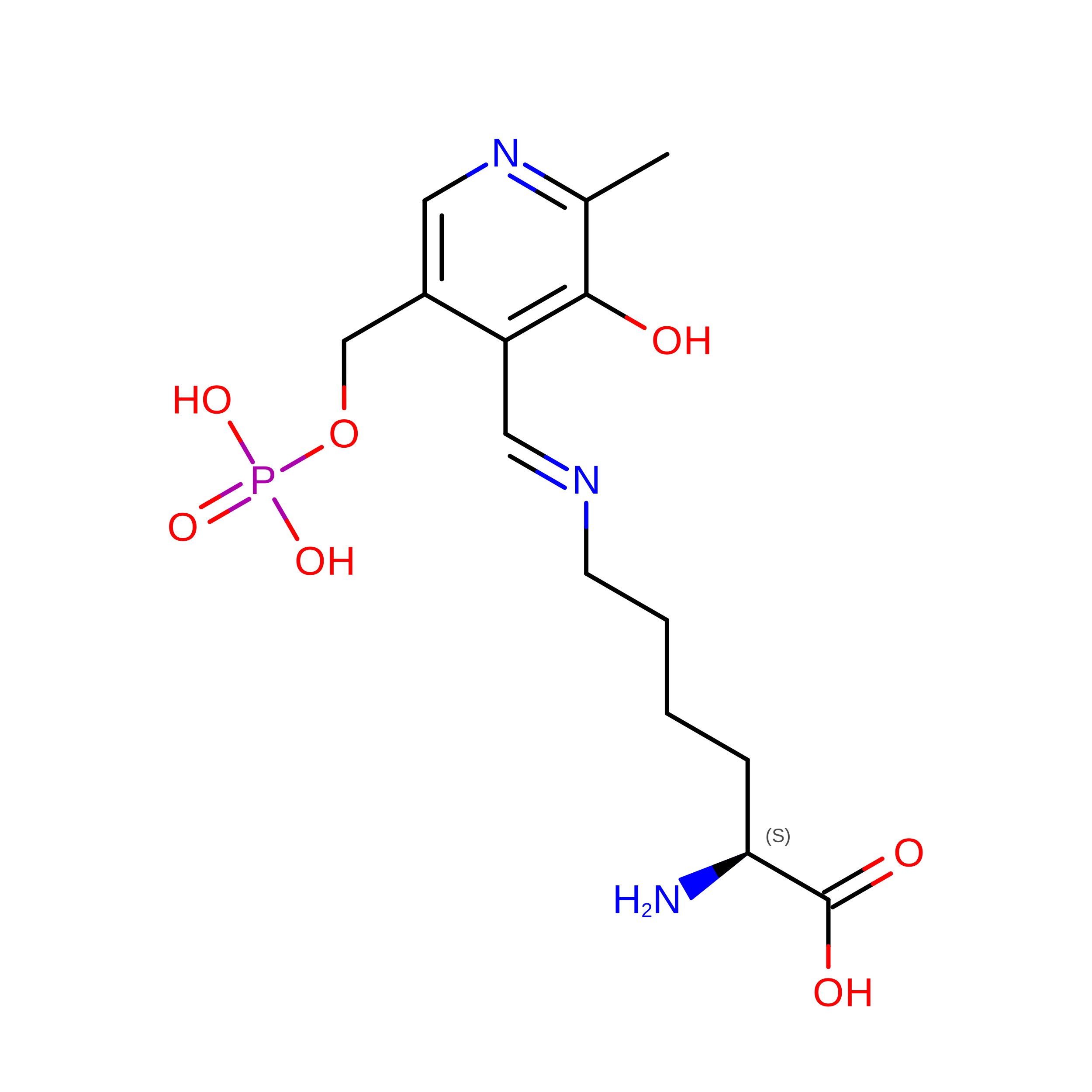
Modified Residues  1 Unique
IDChains TypeFormula2D DiagramParent
LLP
Query on LLP
A
L-PEPTIDE LINKINGC14 H22 N3 O7 PLYS

Experimental Data & Validation

Experimental Data

  • Method: X-RAY DIFFRACTION
  • Resolution: 2.34 Å
  • R-Value Free:  0.244 (Depositor), 0.250 (DCC) 
  • R-Value Work:  0.179 (Depositor), 0.185 (DCC) 
  • R-Value Observed: 0.182 (Depositor) 
Space Group: P 43 21 2
Unit Cell:
Length ( Å )Angle ( ˚ )
a = 126.6α = 90
b = 126.6β = 90
c = 115.821γ = 90
Software Package:
Software NamePurpose
DNAdata collection
REFMACrefinement
DENZOdata reduction
SCALEPACKdata scaling
REFMACphasing

Structure Validation

View Full Validation Report


Ligand Structure Quality Assessment 


Entry History 

Deposition Data

Revision History  (Full details and data files)

  • Version 1.0: 2014-05-07
    Type: Initial release
  • Version 1.1: 2023-09-20
    Changes: Data collection, Database references, Derived calculations, Refinement description
  • Version 1.2: 2023-12-06
    Changes: Data collection