3W6V | pdb_00003w6v

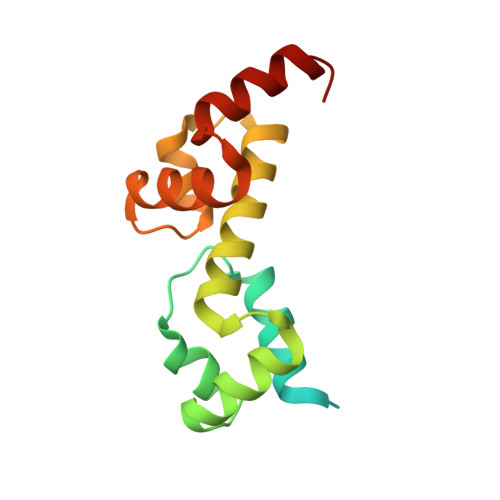
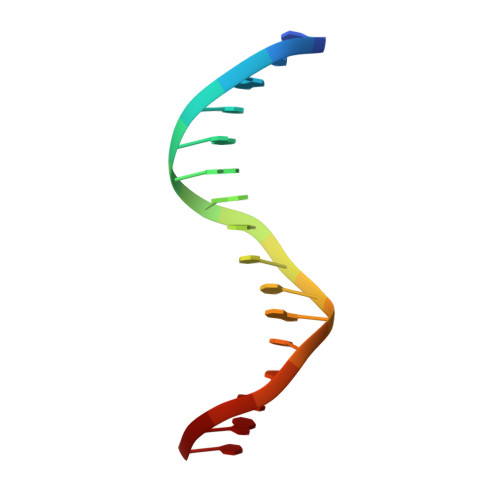
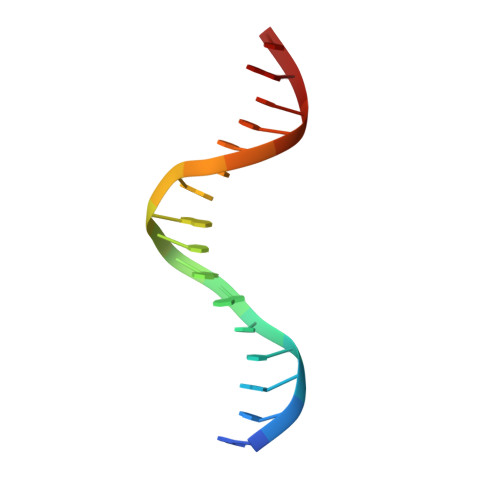
Crystal structure of the DNA-binding domain of AdpA, the global transcriptional factor, in complex with a target DNA


Experimental Data Snapshot

  • Method: X-RAY DIFFRACTION
  • Resolution: 2.95 Å
  • R-Value Free: 
    0.278 (Depositor), 0.273 (DCC) 
  • R-Value Work: 
    0.236 (Depositor), 0.229 (DCC) 
  • R-Value Observed: 
    0.238 (Depositor) 

Starting Models: experimental
View more details

wwPDB Validation 3D Report Full Report

Validation slider image for 3W6V

This is version 1.2 of the entry. See complete history

Literature

Complex Structure of the DNA-binding Domain of AdpA, the Global Transcription Factor in Streptomyces griseus, and a Target Duplex DNA Reveals the Structural Basis of Its Tolerant DNA Sequence Specificity

Yao, M.D.Ohtsuka, J.Nagata, K.Miyazono, K.Zhi, Y.Ohnishi, Y.Tanokura, M.

(2013) J Biological Chem 288: 31019-31029

  • DOI: https://doi.org/10.1074/jbc.M113.473611
  • Primary Citation Related Structures: 
    3W6V

  • PubMed Abstract: 

    AdpA serves as the global transcription factor in the A-factor regulatory cascade, controlling the secondary metabolism and morphological differentiation of the filamentous bacterium Streptomyces griseus. AdpA binds to over 500 operator regions with the consensus sequence 5'-TGGCSNGWWY-3' (where S is G or C, W is A or T, Y is T or C, and N is any nucleotide). However, it is still obscure how AdpA can control hundreds of genes. To elucidate the structural basis of this tolerant DNA recognition by AdpA, we focused on the interaction between the DNA-binding domain of AdpA (AdpA-DBD), which consists of two helix-turn-helix motifs, and a target duplex DNA containing the consensus sequence 5'-TGGCGGGTTC-3'. The crystal structure of the AdpA-DBD-DNA complex and the mutant analysis of AdpA-DBD revealed its unique manner of DNA recognition, whereby only two arginine residues directly recognize the consensus sequence, explaining the strict recognition of G and C at positions 2 and 4, respectively, and the tolerant recognition of other positions of the consensus sequence. AdpA-DBD confers tolerant DNA sequence specificity to AdpA, allowing it to control hundreds of genes as a global transcription factor.


  • Organizational Affiliation
    • From the Departments of Applied Biological Chemistry and.

Macromolecule Content 

  • Total Structure Weight: 26.54 kDa 
  • Atom Count: 1,555 
  • Modeled Residue Count: 143 
  • Deposited Residue Count: 179 
  • Unique protein chains: 1
  • Unique nucleic acid chains: 2

Macromolecules


Find similar proteins by:|  3D Structure
Entity ID: 1
MoleculeChains  Sequence LengthOrganismDetailsImage
AdpA147Streptomyces griseusMutation(s): 0 
Gene Names: adpA
UniProt
Find proteins for Q9S166 (Streptomyces griseus)
Explore Q9S166 
Go to UniProtKB:  Q9S166
Entity Groups
Sequence Clusters30% Identity50% Identity70% Identity90% Identity95% Identity100% Identity
UniProt GroupQ9S166
Sequence Annotations
Expand
Reference Sequence
Find similar nucleic acids by:  Sequence
Entity ID: 2
MoleculeChains LengthOrganismImage
DNA (5'-D(*CP*TP*GP*TP*GP*AP*AP*CP*CP*CP*GP*CP*CP*AP*AP*C)-3')16N/A
Sequence Annotations
Expand
Reference Sequence
Find similar nucleic acids by:  Sequence
Entity ID: 3
MoleculeChains LengthOrganismImage
DNA (5'-D(*AP*GP*GP*TP*TP*GP*GP*CP*GP*GP*GP*TP*TP*CP*AP*C)-3')16N/A
Sequence Annotations
Expand
Reference Sequence

Experimental Data & Validation

Experimental Data

  • Method: X-RAY DIFFRACTION
  • Resolution: 2.95 Å
  • R-Value Free:  0.278 (Depositor), 0.273 (DCC) 
  • R-Value Work:  0.236 (Depositor), 0.229 (DCC) 
  • R-Value Observed: 0.238 (Depositor) 
Space Group: C 2 2 21
Unit Cell:
Length ( Å )Angle ( ˚ )
a = 76.51α = 90
b = 100.64β = 90
c = 100.91γ = 90
Software Package:
Software NamePurpose
ADSCdata collection
XDSdata scaling
REFMACrefinement
HKL-2000data reduction

Structure Validation

View Full Validation Report


Entry History 

Deposition Data

Revision History  (Full details and data files)

  • Version 1.0: 2013-09-18
    Type: Initial release
  • Version 1.1: 2013-11-20
    Changes: Database references
  • Version 1.2: 2023-11-08
    Changes: Data collection, Database references, Refinement description