3RJ7 | pdb_00003rj7

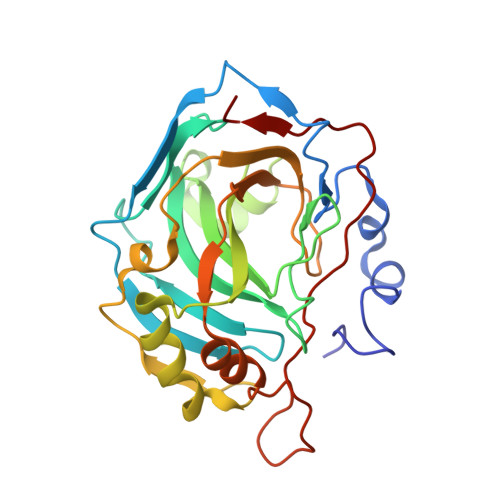
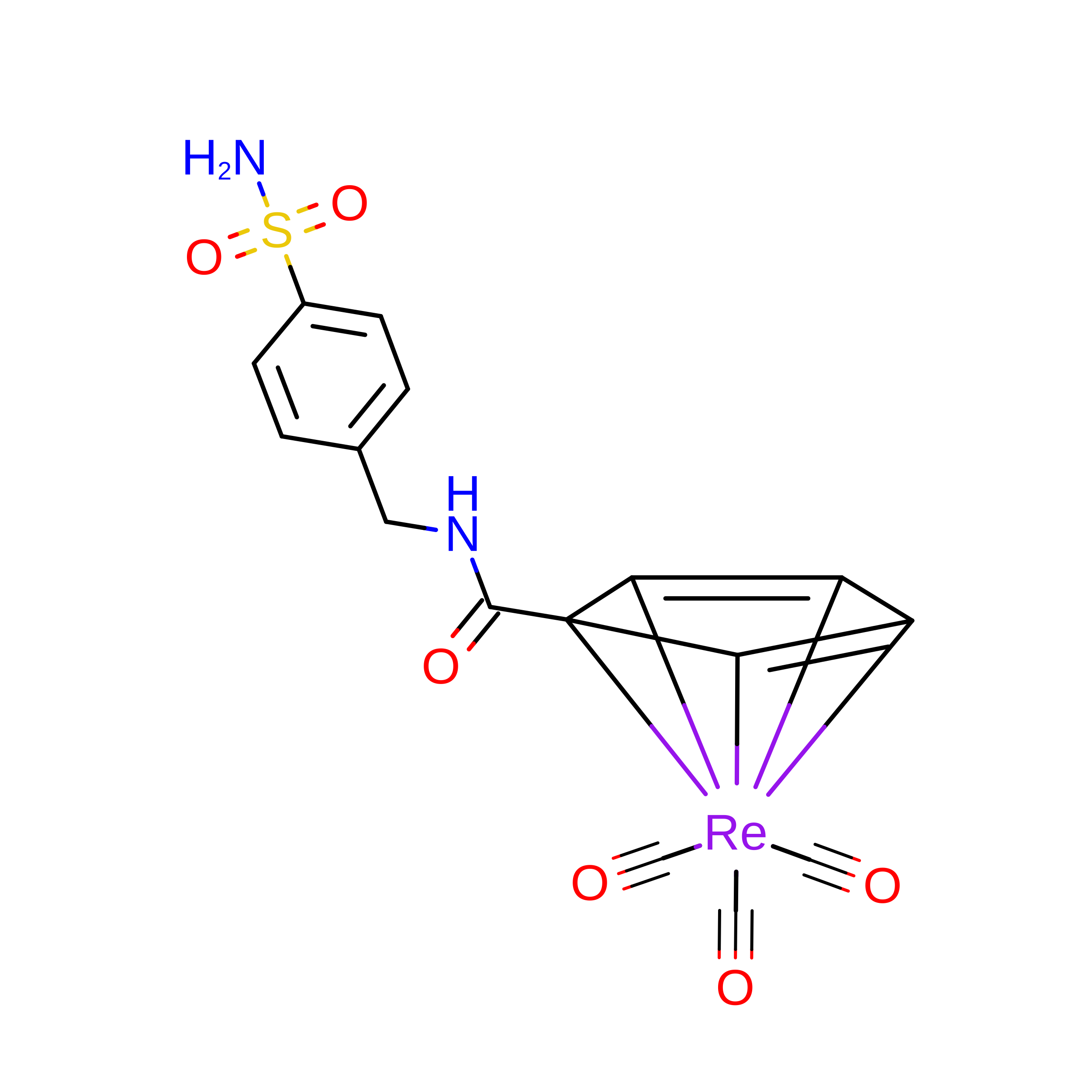
Human carbonic anhydrase II complexed with its inhibitor rhenium(I)triscarbonyl-cyclopentadienyl-carboxy-4-aminomethylbenzene-sulfonamide


Experimental Data Snapshot

  • Method: X-RAY DIFFRACTION
  • Resolution: 1.20 Å
  • R-Value Free: 
    0.190 (Depositor), 0.186 (DCC) 
  • R-Value Work: 
    0.166 (Depositor), 0.166 (DCC) 

Starting Model: experimental
View more details

wwPDB Validation 3D Report Full Report

Validation slider image for 3RJ7

Ligand Structure Quality Assessment 


This is version 1.5 of the entry. See complete history. 

Literature

[(Cp-R)M(CO)(3) ] (M=Re or (99m) Tc) Arylsulfonamide, Arylsulfamide, and Arylsulfamate Conjugates for Selective Targeting of Human Carbonic Anhydrase IX.

Can, D., Spingler, B., Schmutz, P., Mendes, F., Raposinho, P., Fernandes, C., Carta, F., Innocenti, A., Santos, I., Supuran, C.T., Alberto, R.

(2012) Angew Chem Int Ed Engl 51: 3354-3357

  • DOI: https://doi.org/10.1002/anie.201107333
  • Primary Citation Related Structures: 
    3RJ7

  • PubMed Abstract: 

    Enhanced receptor selectivity: carbonic anhydrase inhibitors are relevant for both cancer diagnosis and therapy. Combining non-radioactive Re compounds with their radioactive (99m)Tc homologs enables the use of identical molecules for therapy and imaging (theragnostic). The syntheses and in vitro evaluation of [(Cp-R)M(CO)(3)] (Cp=cyclopentadienyl, M=Re, (99m)Tc) with R being a highly potent carbonic-anhydrase-targeting vector is reported.


  • Organizational Affiliation: 
    • Institute of Inorganic Chemistry, University of Zurich, Switzerland.

Macromolecule Content 

  • Total Structure Weight: 30.63 kDa 
  • Atom Count: 2,509 
  • Modeled Residue Count: 258 
  • Deposited Residue Count: 258 
  • Unique protein chains: 1

Macromolecules

Find similar proteins by:|  3D Structure
Entity ID: 1
MoleculeChains  Sequence LengthOrganismDetailsImage
Carbonic anhydrase 2258Homo sapiensMutation(s): 0 
EC: 4.2.1.1 (PDB Primary Data), 4.2.1.69 (UniProt)
UniProt & NIH Common Fund Data Resources
Find proteins for P00918 (Homo sapiens)
Explore P00918 
Go to UniProtKB:  P00918
PHAROS:  P00918
GTEx:  ENSG00000104267 
Entity Groups
Sequence Clusters30% Identity50% Identity70% Identity90% Identity95% Identity100% Identity
UniProt GroupP00918
Sequence Annotations
Expand
Reference Sequence

Small Molecules

Ligands 4 Unique
IDChains Name / Formula / InChI Key2D Diagram3D Interactions
RCS

Query on RCS


Download:Ideal Coordinates CCD File
D [auth A],
E [auth A]
triscarbonyl-cyclopentadienyl-carboxy-4-aminomethylbenzene-sulfonamide rhenium(I)
C16 H13 N2 O6 Re S
RMIPOUPNRFHFRY-UHFFFAOYSA-N
MBO

Query on MBO


Download:Ideal Coordinates CCD File
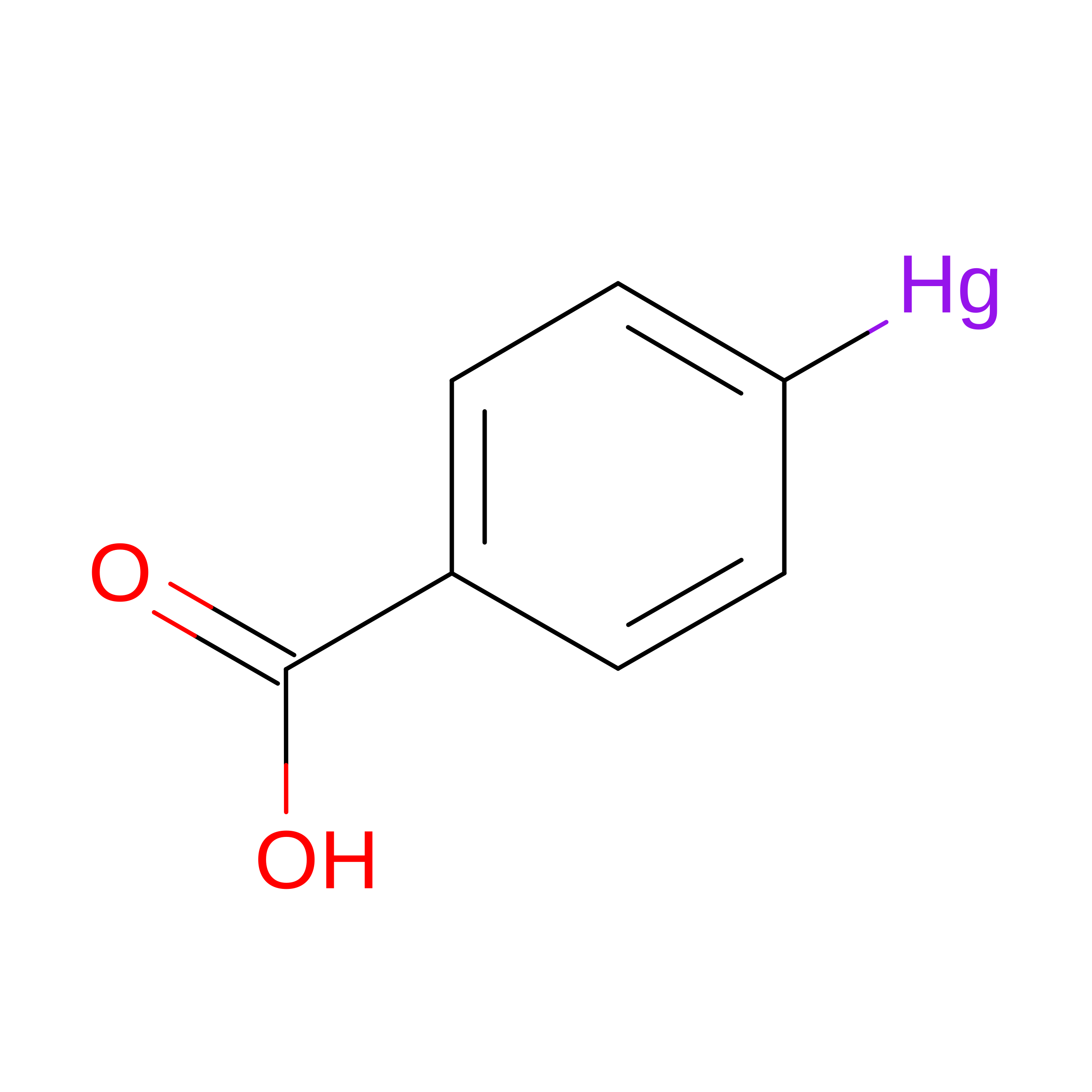
C [auth A]MERCURIBENZOIC ACID
C7 H5 Hg O2
FVFZSVRSDNUCGG-UHFFFAOYSA-N
DMS

Query on DMS


Download:Ideal Coordinates CCD File
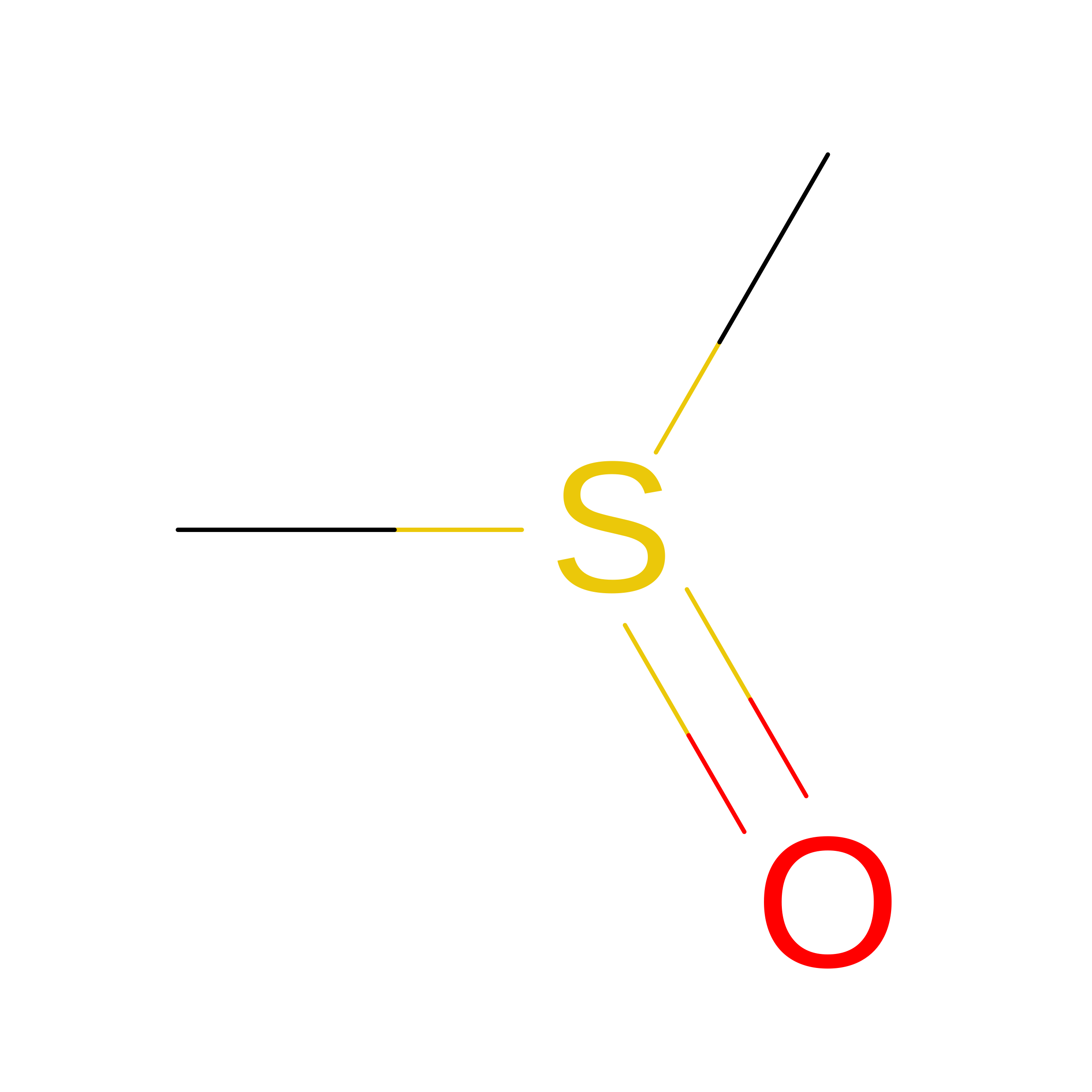
F [auth A]DIMETHYL SULFOXIDE
C2 H6 O S
IAZDPXIOMUYVGZ-UHFFFAOYSA-N
ZN

Query on ZN


Download:Ideal Coordinates CCD File
B [auth A]ZINC ION
Zn
PTFCDOFLOPIGGS-UHFFFAOYSA-N

Experimental Data & Validation

Experimental Data

  • Method: X-RAY DIFFRACTION
  • Resolution: 1.20 Å
  • R-Value Free:  0.190 (Depositor), 0.186 (DCC) 
  • R-Value Work:  0.166 (Depositor), 0.166 (DCC) 
Space Group: P 1 21 1
Unit Cell:
Length ( Å )Angle ( ˚ )
a = 42.243α = 90
b = 41.639β = 104.55
c = 72.107γ = 90
Software Package:
Software NamePurpose
RemDAqdata collection
PHASERphasing
SHELXL-97refinement
XDSdata reduction
XDSdata scaling

Structure Validation

View Full Validation Report


Ligand Structure Quality Assessment 


Entry History 

Deposition Data

Revision History  (Full details and data files)

  • Version 1.0: 2012-02-29
    Type: Initial release
  • Version 1.1: 2012-03-07
    Changes: Database references
  • Version 1.2: 2012-10-17
    Changes: Database references
  • Version 1.3: 2017-11-08
    Changes: Refinement description
  • Version 1.4: 2023-09-13
    Changes: Data collection, Database references, Derived calculations, Refinement description
  • Version 1.5: 2026-08-12
    Type: Remediation
    Reason: Metalloprotein remediation
    Changes: Derived calculations, Structure summary