3O9H | pdb_00003o9h

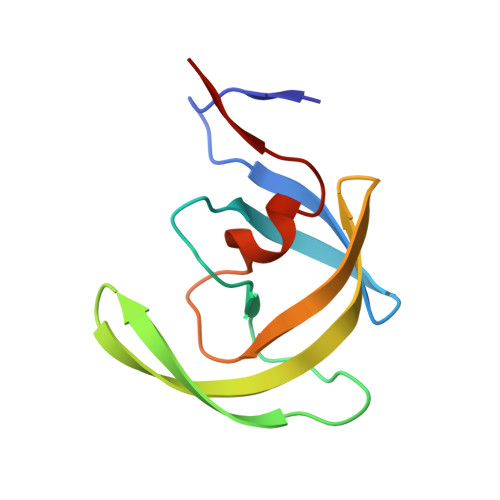
Crystal Structure of wild-type HIV-1 Protease in complex with kd26


Experimental Data Snapshot

  • Method: X-RAY DIFFRACTION
  • Resolution: 1.70 Å
  • R-Value Free: 
    0.208 (Depositor), 0.225 (DCC) 
  • R-Value Work: 
    0.166 (Depositor), 0.181 (DCC) 
  • R-Value Observed: 
    0.168 (Depositor) 

Starting Model: experimental
View more details

wwPDB Validation 3D Report Full Report

Validation slider image for 3O9H

Ligand Structure Quality Assessment 


This is version 1.5 of the entry. See complete history

Literature

Substrate envelope-designed potent HIV-1 protease inhibitors to avoid drug resistance.

Nalam, M.N.Ali, A.Reddy, G.S.Cao, H.Anjum, S.G.Altman, M.D.Yilmaz, N.K.Tidor, B.Rana, T.M.Schiffer, C.A.

(2013) Chem Biol 20: 1116-1124

  • DOI: https://doi.org/10.1016/j.chembiol.2013.07.014
  • Primary Citation Related Structures: 
    3O99, 3O9A, 3O9B, 3O9C, 3O9D, 3O9E, 3O9F, 3O9G, 3O9H, 3O9I

  • PubMed Abstract: 

    The rapid evolution of HIV under selective drug pressure has led to multidrug resistant (MDR) strains that evade standard therapies. We designed highly potent HIV-1 protease inhibitors (PIs) using the substrate envelope model, which confines inhibitors within the consensus volume of natural substrates, providing inhibitors less susceptible to resistance because a mutation affecting such inhibitors will simultaneously affect viral substrate processing. The designed PIs share a common chemical scaffold but utilize various moieties that optimally fill the substrate envelope, as confirmed by crystal structures. The designed PIs retain robust binding to MDR protease variants and display exceptional antiviral potencies against different clades of HIV as well as a panel of 12 drug-resistant viral strains. The substrate envelope model proves to be a powerful strategy to develop potent and robust inhibitors that avoid drug resistance.


  • Organizational Affiliation
    • Department of Biochemistry and Molecular Pharmacology, University of Massachusetts Medical School, Worcester, MA 01605, USA.

Macromolecule Content 

  • Total Structure Weight: 22.68 kDa 
  • Atom Count: 1,745 
  • Modeled Residue Count: 198 
  • Deposited Residue Count: 198 
  • Unique protein chains: 1

Macromolecules

Find similar proteins by:|  3D Structure
Entity ID: 1
MoleculeChains  Sequence LengthOrganismDetailsImage
Protease
A, B
99Human immunodeficiency virus 1Mutation(s): 1 
Gene Names: gag-polpol
UniProt
Find proteins for P03369 (Human immunodeficiency virus type 1 group M subtype B (isolate ARV2/SF2))
Explore P03369 
Go to UniProtKB:  P03369
Entity Groups
Sequence Clusters30% Identity50% Identity70% Identity90% Identity95% Identity100% Identity
UniProt GroupP03369
Sequence Annotations
Expand
Reference Sequence

Small Molecules

Ligands 3 Unique
IDChains Name / Formula / InChI Key2D Diagram3D Interactions
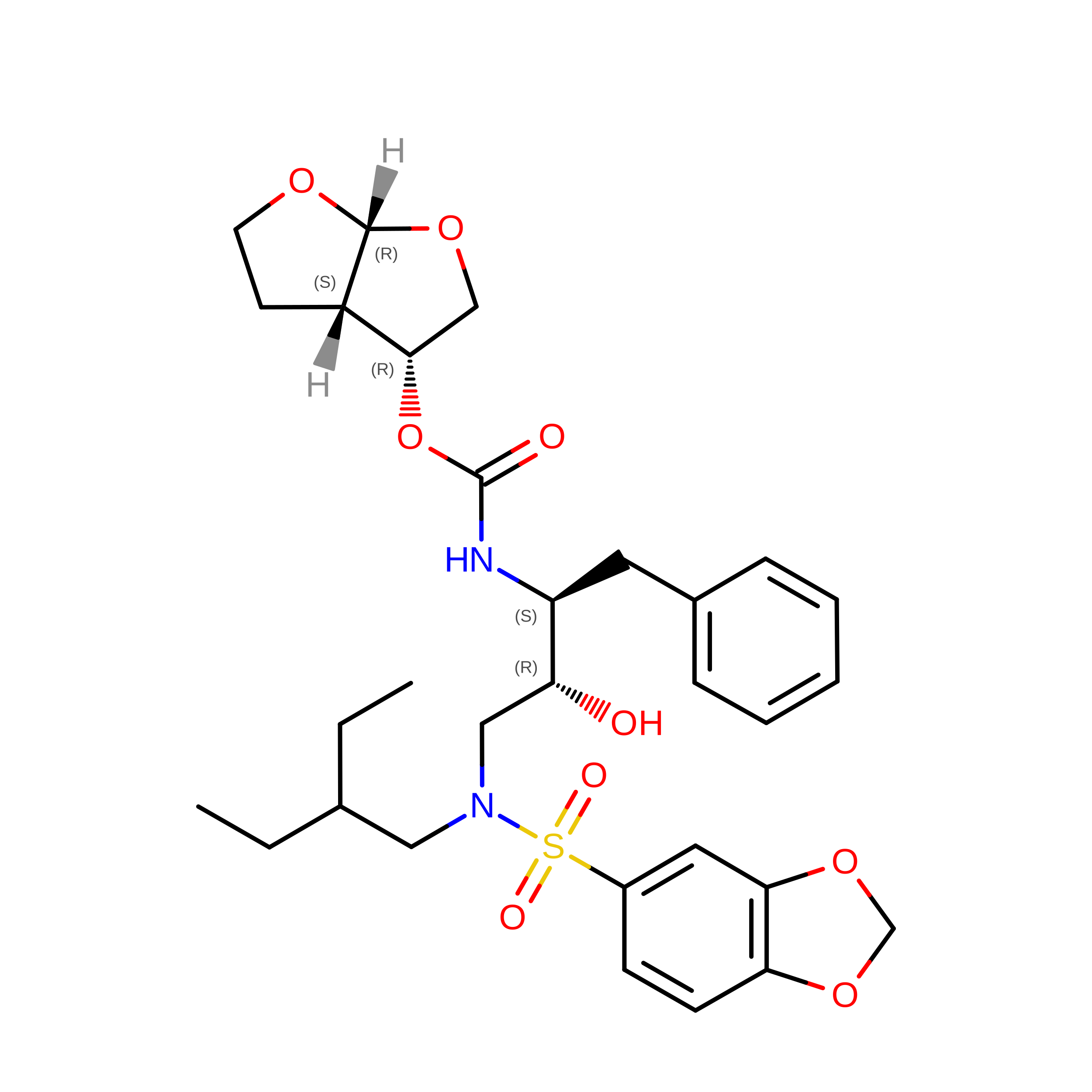
K2E

Query on K2E


Download:Ideal Coordinates CCD File
H [auth B](3R,3aS,6aR)-hexahydrofuro[2,3-b]furan-3-yl {(1S,2R)-3-[(1,3-benzodioxol-5-ylsulfonyl)(2-ethylbutyl)amino]-1-benzyl-2-hydroxypropyl}carbamate
C30 H40 N2 O9 S
ZLBAIBYBEYCDIE-KTJDEMTHSA-N
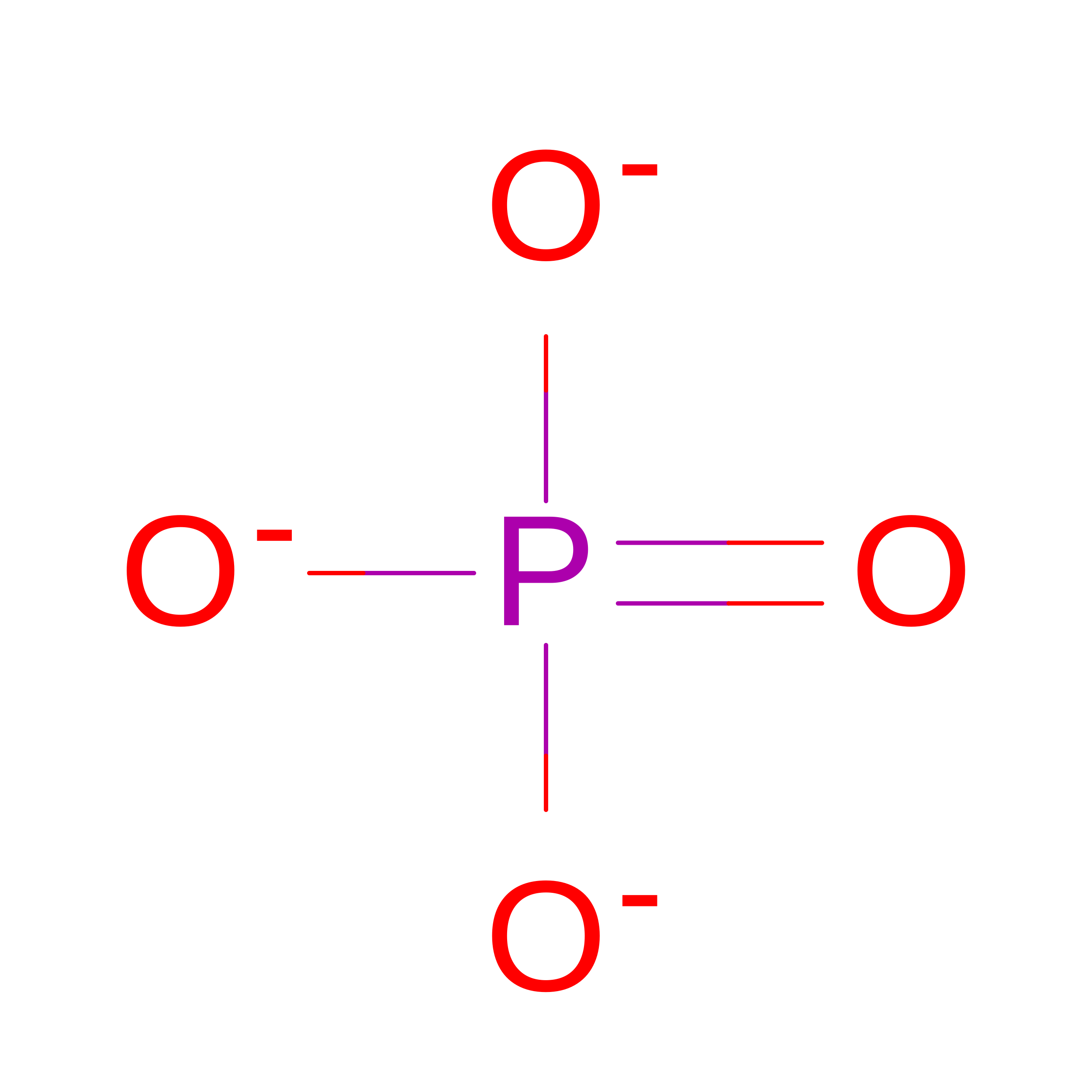
PO4

Query on PO4


Download:Ideal Coordinates CCD File
C [auth A],
D [auth A],
E [auth A],
F [auth A]
PHOSPHATE ION
O4 P
NBIIXXVUZAFLBC-UHFFFAOYSA-K
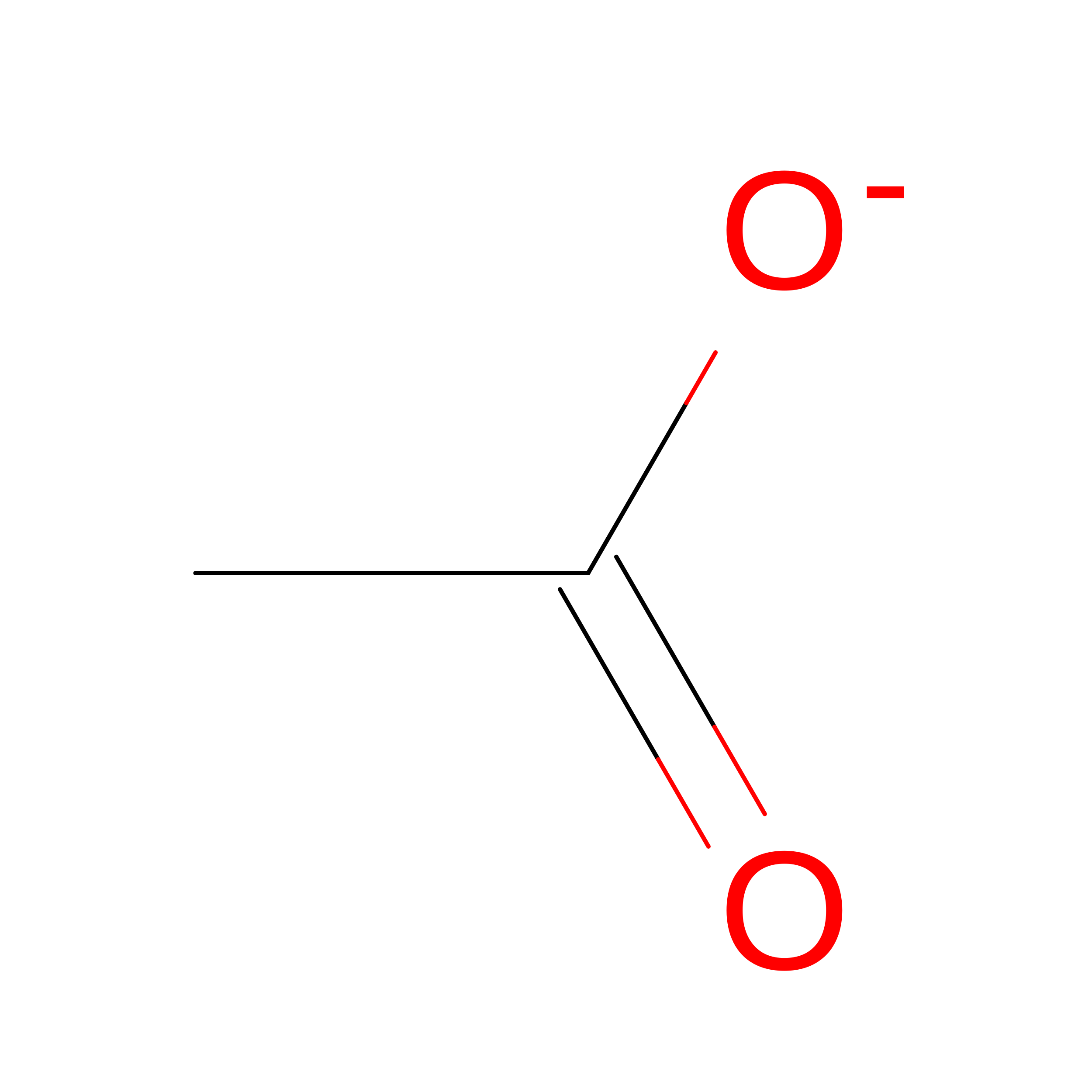
ACT

Query on ACT


Download:Ideal Coordinates CCD File
G [auth A]ACETATE ION
C2 H3 O2
QTBSBXVTEAMEQO-UHFFFAOYSA-M

Experimental Data & Validation

Experimental Data

  • Method: X-RAY DIFFRACTION
  • Resolution: 1.70 Å
  • R-Value Free:  0.208 (Depositor), 0.225 (DCC) 
  • R-Value Work:  0.166 (Depositor), 0.181 (DCC) 
  • R-Value Observed: 0.168 (Depositor) 
Space Group: P 21 21 21
Unit Cell:
Length ( Å )Angle ( ˚ )
a = 50.735α = 90
b = 57.634β = 90
c = 61.795γ = 90
Software Package:
Software NamePurpose
SCALEPACKdata scaling
REFMACrefinement
PDB_EXTRACTdata extraction
DENZOdata reduction
AMoREphasing

Structure Validation

View Full Validation Report


Ligand Structure Quality Assessment 


Entry History 

Deposition Data

Revision History  (Full details and data files)

  • Version 1.0: 2011-08-10
    Type: Initial release
  • Version 1.1: 2011-11-23
    Changes: Structure summary
  • Version 1.2: 2013-11-27
    Changes: Database references
  • Version 1.3: 2017-11-08
    Changes: Refinement description
  • Version 1.4: 2024-02-21
    Changes: Data collection, Database references, Derived calculations
  • Version 1.5: 2024-04-03
    Changes: Refinement description