3L82 | pdb_00003l82

X-ray Crystal structure of TRF1 and Fbx4 complex


Experimental Data Snapshot

  • Method: X-RAY DIFFRACTION
  • Resolution: 2.40 Å
  • R-Value Free: 
    0.263 (Depositor), 0.268 (DCC) 
  • R-Value Work: 
    0.237 (Depositor), 0.247 (DCC) 

wwPDB Validation 3D Report Full Report

Validation slider image for 3L82

This is version 1.3 of the entry. See complete history

Literature

Structural Basis of Selective Ubiquitination of TRF1 by SCF(Fbx4)

Zeng, Z.Wang, W.Yang, Y.Chen, Y.Yang, X.Diehl, J.A.Liu, X.Lei, M.

(2010) Dev Cell 18: 214-225

  • DOI: https://doi.org/10.1016/j.devcel.2010.01.007
  • Primary Citation Related Structures: 
    3L82

  • PubMed Abstract: 

    TRF1 is a critical regulator of telomere length. As such, TRF1 levels are regulated by ubiquitin-dependent proteolysis via an SCF E3 ligase where Fbx4 contributes to substrate specification. Here, we report the crystal structure of the Fbx4-TRF1 complex at 2.4 A resolution. Fbx4 contains an unusual substrate-binding domain that adopts a small GTPase fold. Strikingly, this atypical GTPase domain of Fbx4 binds to a globular domain of TRF1 through an intermolecular beta sheet, instead of recognizing short peptides/degrons as often seen in other F-box protein-substrate complexes. Importantly, mutations in this interface abrogate Fbx4-dependent TRF1 binding and ubiquitination. Furthermore, the data demonstrate that recognition of TRF1 by SCF(Fbx4) is regulated by another telomere protein, TIN2. Our results reveal an atypical small GTPase domain within Fbx4 as a substrate-binding motif for SCF(Fbx4) and uncover a mechanism for selective ubiquitination and degradation of TRF1 in telomere homeostasis control.


  • Organizational Affiliation
    • Howard Hughes Medical Institute, University of Michigan Medical School, 1150 West Medical Center Drive, Ann Arbor, MI 48109, USA.

Macromolecule Content 

  • Total Structure Weight: 50.92 kDa 
  • Atom Count: 3,137 
  • Modeled Residue Count: 387 
  • Deposited Residue Count: 442 
  • Unique protein chains: 2

Macromolecules

Find similar proteins by:|  3D Structure
Entity ID: 1
MoleculeChains  Sequence LengthOrganismDetailsImage
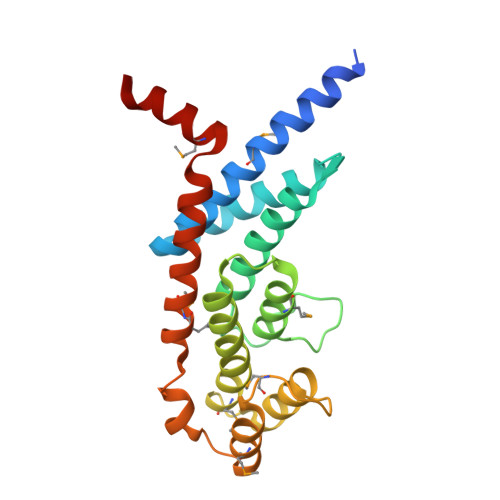
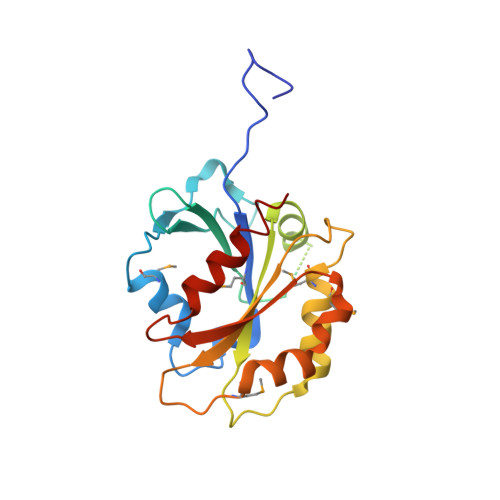
Telomeric repeat-binding factor 1215Homo sapiensMutation(s): 0 
Gene Names: TERF1PIN2TRBF1TRFTRF1
UniProt & NIH Common Fund Data Resources
Find proteins for P54274 (Homo sapiens)
Explore P54274 
Go to UniProtKB:  P54274
PHAROS:  P54274
GTEx:  ENSG00000147601 
Entity Groups
Sequence Clusters30% Identity50% Identity70% Identity90% Identity95% Identity100% Identity
UniProt GroupP54274
Sequence Annotations
Expand
Reference Sequence
Find similar proteins by:|  3D Structure
Entity ID: 2
MoleculeChains  Sequence LengthOrganismDetailsImage
F-box only protein 4227Homo sapiensMutation(s): 0 
Gene Names: FBXO4FBX4
UniProt & NIH Common Fund Data Resources
Find proteins for Q9UKT5 (Homo sapiens)
Explore Q9UKT5 
Go to UniProtKB:  Q9UKT5
PHAROS:  Q9UKT5
GTEx:  ENSG00000151876 
Entity Groups
Sequence Clusters30% Identity50% Identity70% Identity90% Identity95% Identity100% Identity
UniProt GroupQ9UKT5
Sequence Annotations
Expand
Reference Sequence

Small Molecules

Modified Residues  1 Unique
IDChains TypeFormula2D DiagramParent
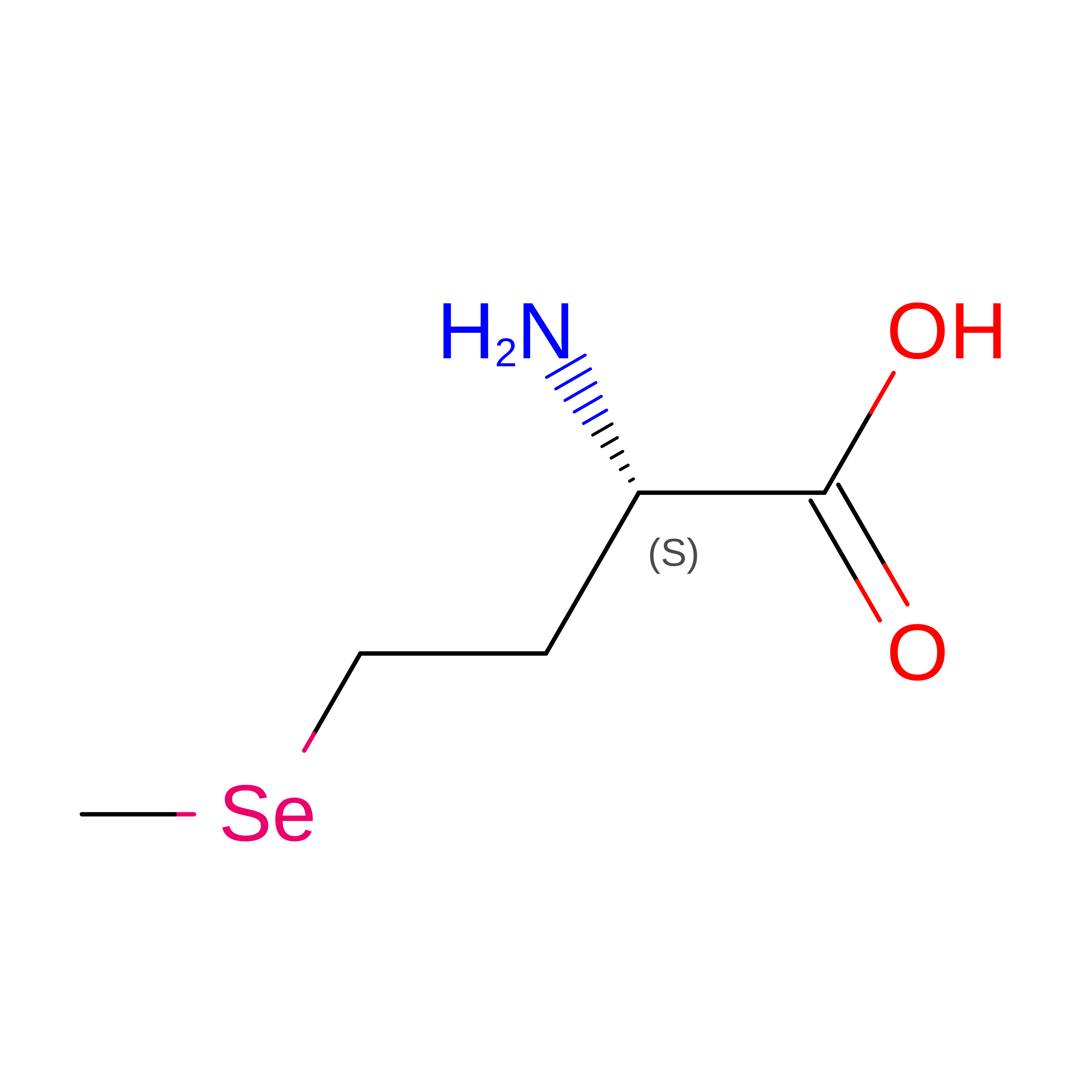
MSE
Query on MSE
A
L-PEPTIDE LINKINGC5 H11 N O2 SeMET

Experimental Data & Validation

Experimental Data

  • Method: X-RAY DIFFRACTION
  • Resolution: 2.40 Å
  • R-Value Free:  0.263 (Depositor), 0.268 (DCC) 
  • R-Value Work:  0.237 (Depositor), 0.247 (DCC) 
Space Group: P 43 21 2
Unit Cell:
Length ( Å )Angle ( ˚ )
a = 68.097α = 90
b = 68.097β = 90
c = 234.421γ = 90
Software Package:
Software NamePurpose
SHARPphasing
CNSrefinement
HKL-2000data reduction
HKL-2000data scaling

Structure Validation

View Full Validation Report


Entry History 

Deposition Data

Revision History  (Full details and data files)

  • Version 1.0: 2010-03-09
    Type: Initial release
  • Version 1.1: 2011-07-13
    Changes: Version format compliance
  • Version 1.2: 2013-09-25
    Changes: Derived calculations
  • Version 1.3: 2024-10-30
    Changes: Data collection, Database references, Derived calculations, Structure summary