Download Mendeley
Tet Repressor Induction by Tetracycline: A Molecular Dynamics, Continuum Electrostatics, and Crystallographic Study
Aleksandrov, A., Schuldt, L., Hinrichs, W., Simonson, T.(2008) J Mol Biol 378: 896
- PubMed: 18395746 Search on PubMed
- DOI: https://doi.org/10.1016/j.jmb.2008.03.022
- Primary Citation Related Structures:
2VPR - PubMed Abstract:
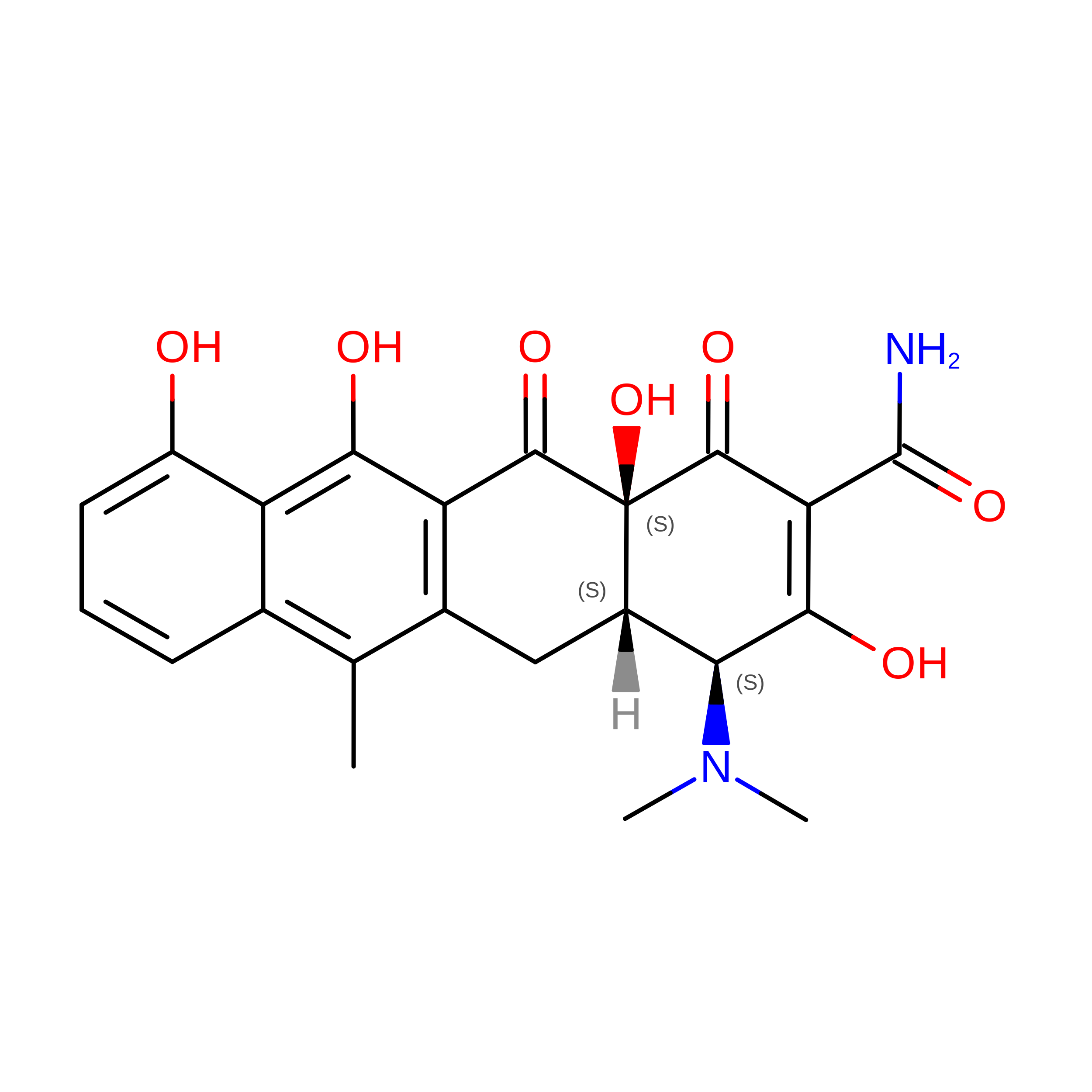
The Tet repressor (TetR) mediates the most important mechanism of bacterial resistance against tetracycline (Tc) antibiotics. In the absence of Tc, TetR is tightly bound to its operator DNA; upon binding of Tc with an associated Mg(2+) ion, it dissociates from the DNA, allowing expression of the repressed genes. Its tight control by Tc makes TetR broadly useful in genetic engineering. The Tc binding site is over 20 A from the DNA, so the binding signal must propagate a long distance. We use molecular dynamics simulations and continuum electrostatic calculations to test two models of the allosteric mechanism. We simulate the TetR:DNA complex, the Tc-bound, "induced" TetR, and the transition pathway between them. The simulations support the model inferred previously from the crystal structures and reveal new details. When [Tc:Mg](+) binds, the Mg(2+) ion makes direct and water-mediated interactions with helix 8 of one TetR monomer and helix 6 of the other monomer, and helix 6 is pulled in towards the central core of the structure. Hydrophobic interactions with helix 6 then pull helix 4 in a pendulum motion, with a maximal displacement at its N-terminus: the DNA interface. The crystal structure of an additional TetR reported here corroborates this motion. The N-terminal residue of helix 4, Lys48, is highly conserved in DNA-binding regulatory proteins of the TetR class and makes the largest contribution of any amino acid to the TetR:DNA binding free energy. Thus, the conformational changes lead to a drastic reduction in the TetR:DNA binding affinity, allowing TetR to detach itself from the DNA. Tc plays the role of a specific Mg(2+) carrier, whereas the Mg(2+) ion itself makes key interactions that trigger the allosteric transition in the TetR:Tc complex.
- Laboratoire de Biochimie (CNRS UMR7654), Department of Biology, Ecole Polytechnique, 91128 Palaiseau, France.
Organizational Affiliation: