2JHS | pdb_00002jhs

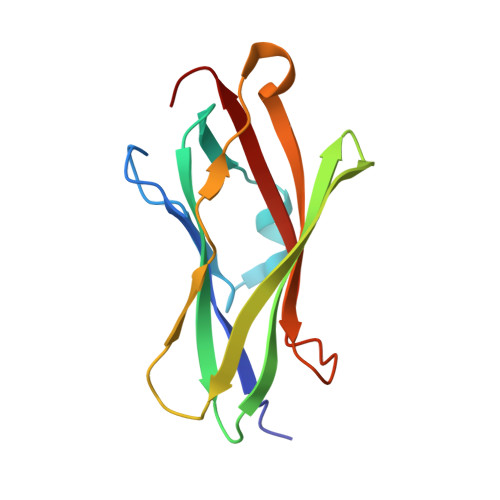
CRYSTAL STRUCTURE OF RHOGDI K135H,K138H,K141H MUTANT


Experimental Data Snapshot

  • Method: X-RAY DIFFRACTION
  • Resolution: 1.95 Å
  • R-Value Free: 
    0.209 (Depositor), 0.222 (DCC) 
  • R-Value Work: 
    0.178 (Depositor), 0.184 (DCC) 
  • R-Value Observed: 
    0.179 (Depositor) 

Starting Model: experimental
View more details

wwPDB Validation 3D Report Full Report

Validation slider image for 2JHS

This is version 1.2 of the entry. See complete history

Literature

Protein Crystallization by Surface Entropy Reduction: Optimization of the Ser Strategy

Cooper, D.R.Boczek, T.Grelewska, K.Pinkowska, M.Sikorska, M.Zawadzki, M.Derewenda, Z.S.

(2007) Acta Crystallogr D Biol Crystallogr 63: 636

  • DOI: https://doi.org/10.1107/S0907444907010931
  • Primary Citation Related Structures: 
    2BXW, 2JHS, 2JHT, 2JHU, 2JHV, 2JHW, 2JHX, 2JHY, 2JHZ, 2JI0

  • PubMed Abstract: 

    A strategy of rationally engineering protein surfaces with the aim of obtaining mutants that are distinctly more susceptible to crystallization than the wild-type protein has previously been suggested. The strategy relies on replacing small clusters of two to three surface residues characterized by high conformational entropy with alanines. This surface entropy reduction (or SER) method has proven to be an effective salvage pathway for proteins that are difficult to crystallize. Here, a systematic comparison of the efficacy of using Ala, His, Ser, Thr and Tyr to replace high-entropy residues is reported. A total of 40 mutants were generated and screened using two different procedures. The results reaffirm that alanine is a particularly good choice for a replacement residue and identify tyrosines and threonines as additional candidates that have considerable potential to mediate crystal contacts. The propensity of these mutants to form crystals in alternative screens in which the normal crystallization reservoir solutions were replaced with 1.5 M NaCl was also examined. The results were impressive: more than half of the mutants yielded a larger number of crystals with salt as the reservoir solution. This method greatly increased the variety of conditions that yielded crystals. Taken together, these results suggest a powerful crystallization strategy that combines surface engineering with efficient screening using standard and alternate reservoir solutions.


  • Organizational Affiliation
    • Department of Molecular Physiology and Biological Physics and Integrated Center for Structure-Function Innovation, University of Virginia, Charlottesville, Virginia 22908-0736, USA.

Macromolecule Content 

  • Total Structure Weight: 16.01 kDa 
  • Atom Count: 1,262 
  • Modeled Residue Count: 137 
  • Deposited Residue Count: 138 
  • Unique protein chains: 1

Macromolecules

Find similar proteins by:|  3D Structure
Entity ID: 1
MoleculeChains  Sequence LengthOrganismDetailsImage
RHO GDP-DISSOCIATION INHIBITOR 1138Homo sapiensMutation(s): 3 
UniProt & NIH Common Fund Data Resources
Find proteins for P52565 (Homo sapiens)
Explore P52565 
Go to UniProtKB:  P52565
PHAROS:  P52565
GTEx:  ENSG00000141522 
Entity Groups
Sequence Clusters30% Identity50% Identity70% Identity90% Identity95% Identity100% Identity
UniProt GroupP52565
Sequence Annotations
Expand
Reference Sequence

Small Molecules

Ligands 1 Unique
IDChains Name / Formula / InChI Key2D Diagram3D Interactions
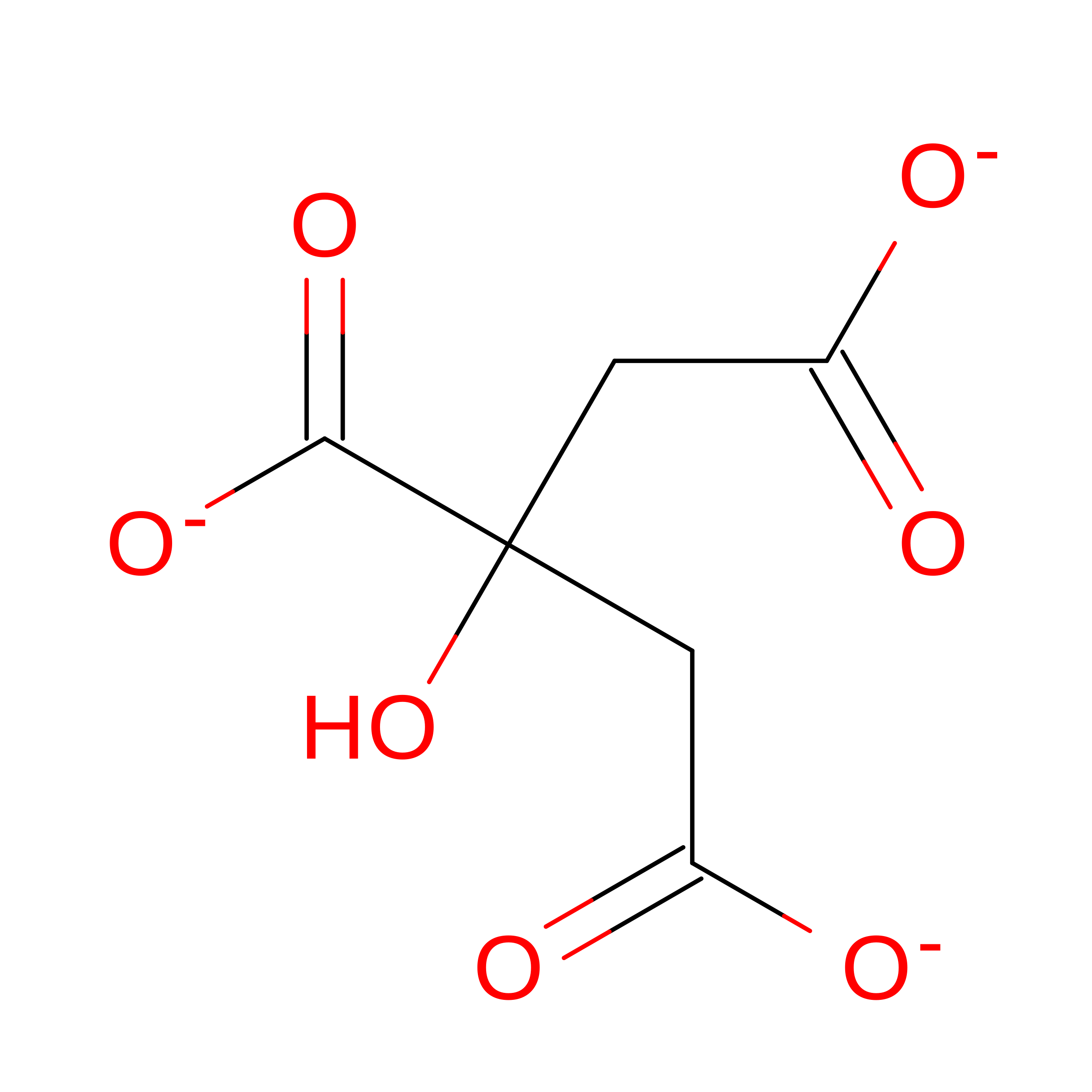
FLC

Query on FLC


Download:Ideal Coordinates CCD File
B [auth A]CITRATE ANION
C6 H5 O7
KRKNYBCHXYNGOX-UHFFFAOYSA-K

Experimental Data & Validation

Experimental Data

  • Method: X-RAY DIFFRACTION
  • Resolution: 1.95 Å
  • R-Value Free:  0.209 (Depositor), 0.222 (DCC) 
  • R-Value Work:  0.178 (Depositor), 0.184 (DCC) 
  • R-Value Observed: 0.179 (Depositor) 
Space Group: P 32 2 1
Unit Cell:
Length ( Å )Angle ( ˚ )
a = 75.316α = 90
b = 75.316β = 90
c = 91.283γ = 120
Software Package:
Software NamePurpose
REFMACrefinement
HKL-2000data reduction
HKL-2000data scaling
AMoREphasing

Structure Validation

View Full Validation Report


Entry History 

Deposition Data

Revision History  (Full details and data files)

  • Version 1.0: 2007-05-08
    Type: Initial release
  • Version 1.1: 2011-07-13
    Changes: Advisory, Version format compliance
  • Version 1.2: 2023-12-13
    Changes: Data collection, Database references, Other, Refinement description