2BOC | pdb_00002boc

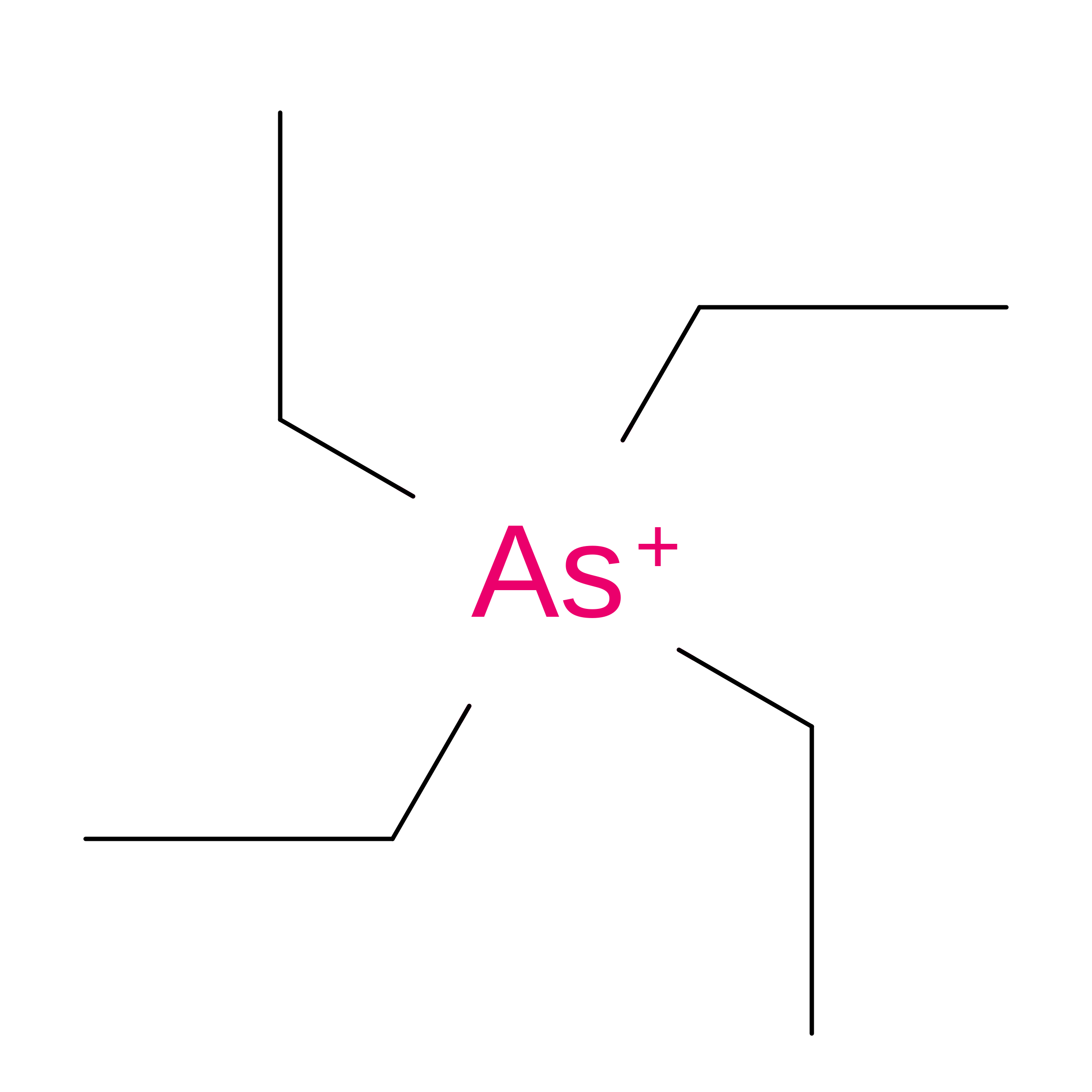
Potassium channel KcsA-Fab complex in thallium with tetraethylarsonium (TEAs)


Experimental Data Snapshot

  • Method: X-RAY DIFFRACTION
  • Resolution: 3.01 Å
  • R-Value Free: 
    0.250 (Depositor) 
  • R-Value Work: 
    0.222 (Depositor) 
  • R-Value Observed: 
    0.223 (Depositor) 

Starting Model: experimental
View more details

wwPDB Validation 3D Report Full Report

Validation slider image for 2BOC

This is version 1.5 of the entry. See complete history

Literature

Structural Basis of Tea Blockade in a Model Potassium Channel

Lenaeus, M.J.Vamvouka, M.Focia, P.J.Gross, A.

(2005) Nat Struct Mol Biol 12: 454

  • DOI: https://doi.org/10.1038/nsmb929
  • Primary Citation Related Structures: 
    2BOB, 2BOC

  • PubMed Abstract: 

    Potassium channels catalyze the selective transfer of potassium across the cell membrane and are essential for setting the resting potential in cells, controlling heart rate and modulating the firing pattern in neurons. Tetraethylammonium (TEA) blocks ion conduction through potassium channels in a voltage-dependent manner from both sides of the membrane. Here we show the structural basis of TEA blockade by cocrystallizing the prokaryotic potassium channel KcsA with two selective TEA analogs. TEA binding at both sites alters ion occupancy in the selectivity filter; these findings underlie the mutual destabilization and voltage-dependence of TEA blockade. We propose that TEA blocks potassium channels by acting as a potassium analog at the dehydration transition step during permeation.


  • Organizational Affiliation
    • Department of Molecular Pharmacology and Biological Chemistry, Northwestern University Medical School, 303 East Chicago Avenue, Chicago, Illinois 60611, USA.

Macromolecule Content 

  • Total Structure Weight: 61.13 kDa 
  • Atom Count: 4,108 
  • Modeled Residue Count: 534 
  • Deposited Residue Count: 555 
  • Unique protein chains: 3

Macromolecules

Find similar proteins by:|  3D Structure
Entity ID: 1
MoleculeChains  Sequence LengthOrganismDetailsImage
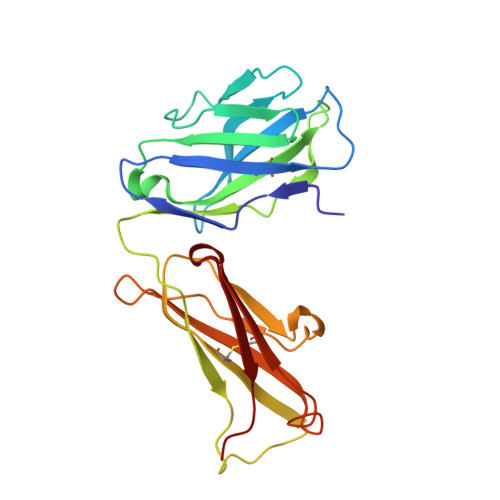
ANTIBODY FAB FRAGMENT HEAVY CHAIN219Mus musculusMutation(s): 0 
Find similar proteins by:|  3D Structure
Entity ID: 2
MoleculeChains  Sequence LengthOrganismDetailsImage
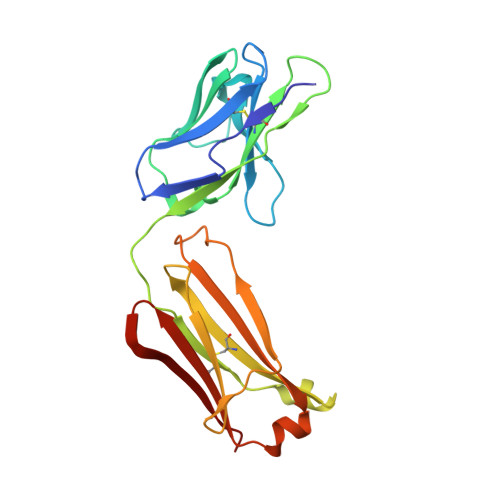
ANTIBODY FAB FRAGMENT LIGHT CHAIN212Mus musculusMutation(s): 0 
UniProt
Find proteins for P01837 (Mus musculus)
Explore P01837 
Go to UniProtKB:  P01837
Entity Groups
Sequence Clusters30% Identity50% Identity70% Identity90% Identity95% Identity100% Identity
UniProt GroupP01837
Sequence Annotations
Expand
Reference Sequence
Find similar proteins by:|  3D Structure
Entity ID: 3
MoleculeChains  Sequence LengthOrganismDetailsImage
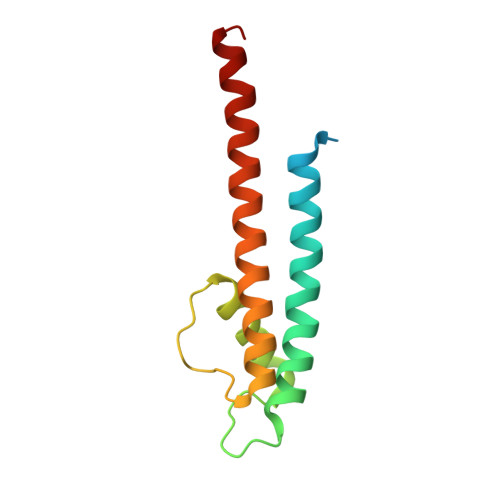
POTASSIUM CHANNEL KCSA124Streptomyces lividansMutation(s): 1 
Membrane Entity: Yes 
UniProt
Find proteins for P0A334 (Streptomyces lividans)
Explore P0A334 
Go to UniProtKB:  P0A334
Entity Groups
Sequence Clusters30% Identity50% Identity70% Identity90% Identity95% Identity100% Identity
UniProt GroupP0A334
Sequence Annotations
Expand
Reference Sequence

Experimental Data & Validation

Experimental Data

  • Method: X-RAY DIFFRACTION
  • Resolution: 3.01 Å
  • R-Value Free:  0.250 (Depositor) 
  • R-Value Work:  0.222 (Depositor) 
  • R-Value Observed: 0.223 (Depositor) 
Space Group: I 4
Unit Cell:
Length ( Å )Angle ( ˚ )
a = 154.68α = 90
b = 154.68β = 90
c = 76.19γ = 90
Software Package:
Software NamePurpose
REFMACrefinement
XDSdata reduction
XDSdata scaling
CNSphasing

Structure Validation

View Full Validation Report


Entry History 

Deposition Data

Revision History  (Full details and data files)

  • Version 1.0: 2005-04-27
    Type: Initial release
  • Version 1.1: 2011-05-08
    Changes: Version format compliance
  • Version 1.2: 2011-07-13
    Changes: Version format compliance
  • Version 1.3: 2017-07-12
    Changes: Derived calculations
  • Version 1.4: 2023-12-13
    Changes: Data collection, Database references, Derived calculations, Other, Refinement description
  • Version 1.5: 2024-10-23
    Changes: Structure summary