Download Mendeley
Refined crystal structure of ascorbate oxidase at 1.9 A resolution.
Messerschmidt, A., Ladenstein, R., Huber, R., Bolognesi, M., Avigliano, L., Petruzzelli, R., Rossi, A., Finazzi-Agro, A.(1992) J Mol Biol 224: 179-205
- PubMed: 1548698 Search on PubMed
- DOI: https://doi.org/10.1016/0022-2836(92)90583-6
- Primary Citation Related Structures:
1AOZ - PubMed Abstract:
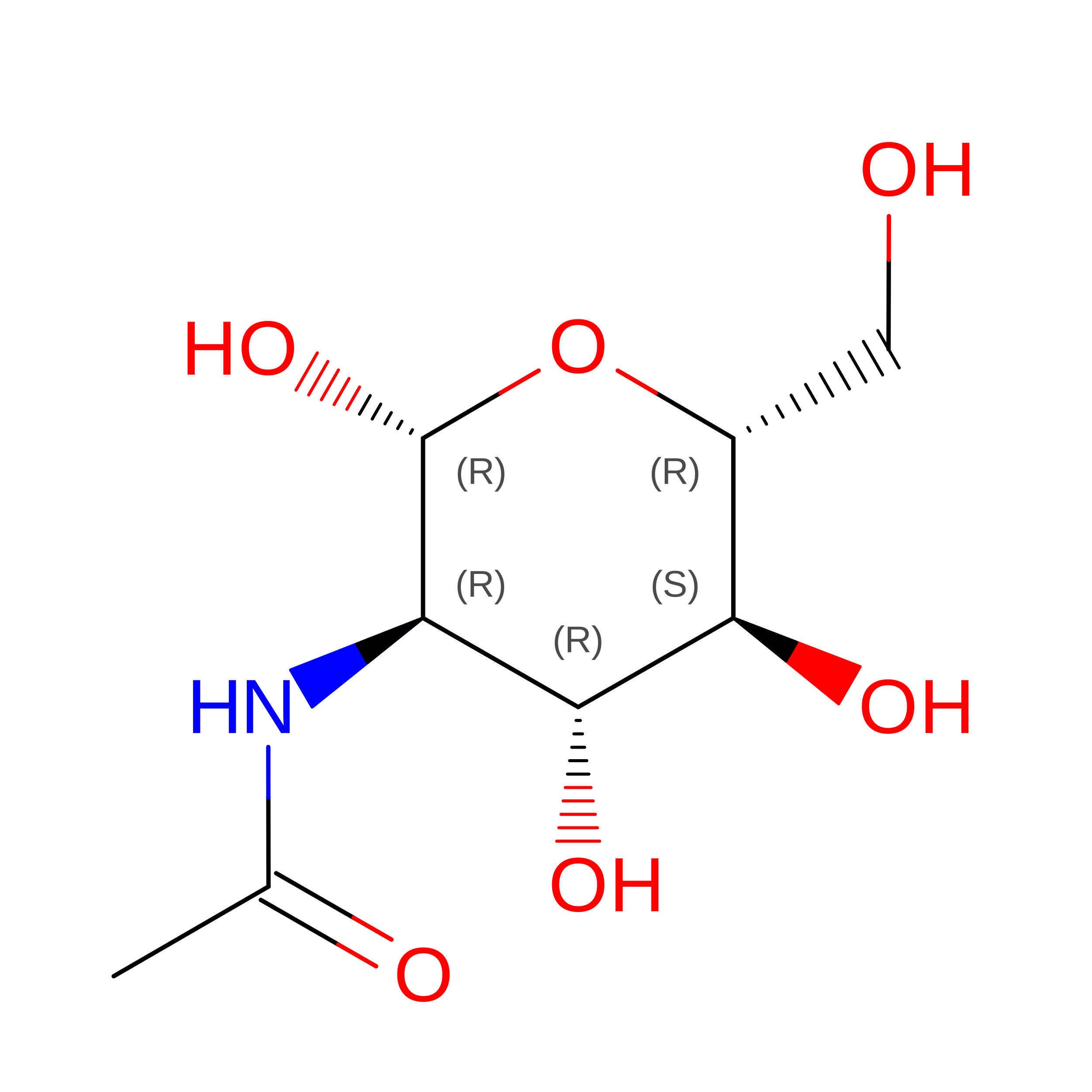
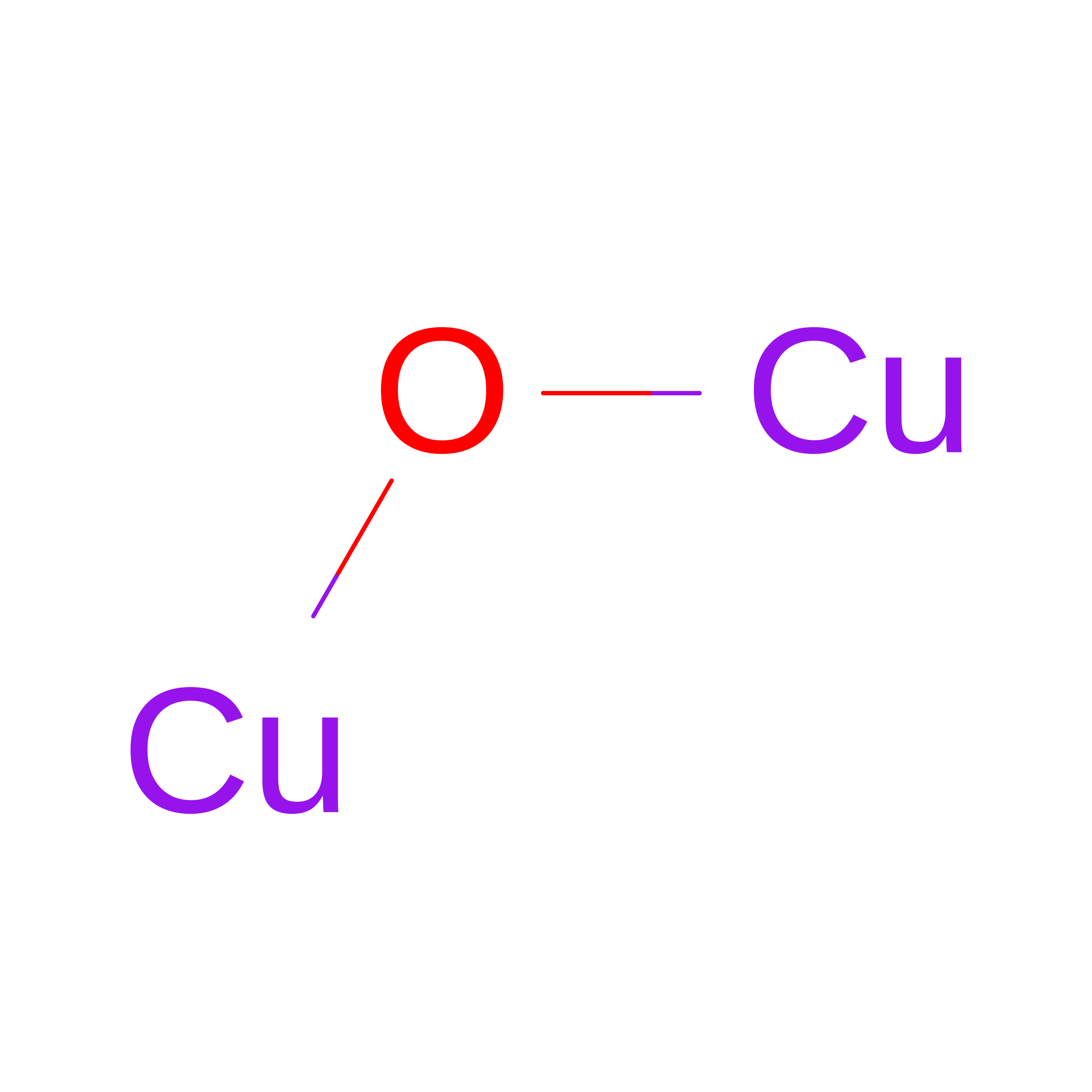
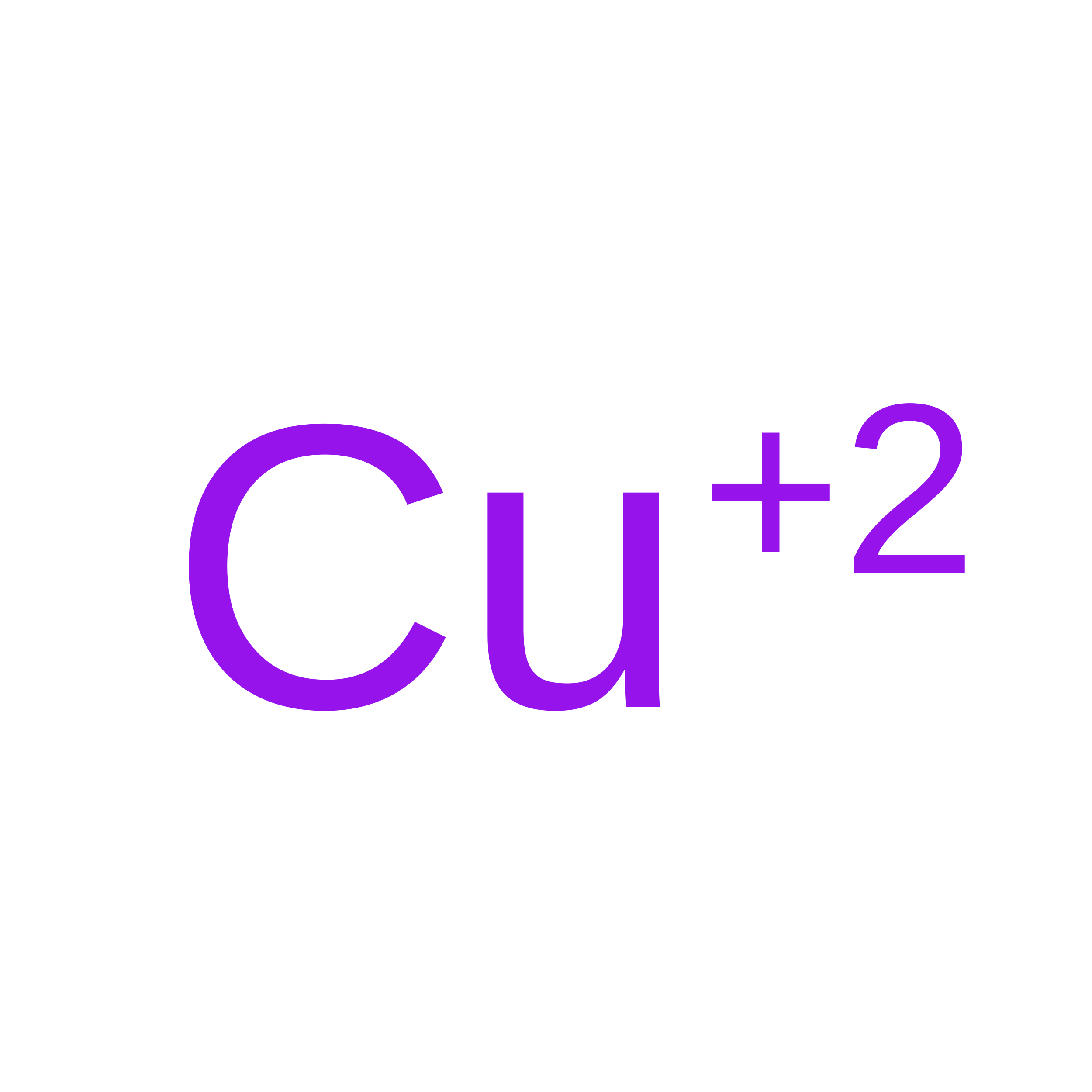
The crystal structure of the fully oxidized form of ascorbate oxidase (EC 1.10.3.3) from Zucchini has been refined at 1.90 A (1 A = 0.1 nm) resolution, using an energy-restrained least-squares refinement procedure. The refined model, which includes 8764 protein atoms, 9 copper atoms and 970 solvent molecules, has a crystallographic R-factor of 20.3% for 85,252 reflections between 8 and 1.90 A resolution. The root-mean-square deviation in bond lengths and bond angles from ideal values is 0.011 A and 2.99 degrees, respectively. The subunits of 552 residues (70,000 Mr) are arranged as tetramers with D2 symmetry. One of the dyads is realized by the crystallographic axis parallel to the c-axis giving one dimer in the asymmetric unit. The dimer related about this crystallographic axis is suggested as the dimer present in solution. Asn92 is the attachment site for one of the two N-linked sugar moieties, which has defined electron density for the N-linked N-acetyl-glucosamine ring. Each subunit is built up by three domains arranged sequentially on the polypeptide chain and tightly associated in space. The folding of all three domains is of a similar beta-barrel type and related to plastocyanin and azurin. An analysis of intra- and intertetramer hydrogen bond and van der Waals interactions is presented. Each subunit has four copper atoms bound as mononuclear and trinuclear species. The mononuclear copper has two histidine, a cysteine and a methionine ligand and represents the type-1 copper. It is located in domain 3. The bond lengths of the type-1 copper centre are comparable to the values for oxidized plastocyanin. The trinuclear cluster has eight histidine ligands symmetrically supplied from domain 1 and 3. It may be subdivided into a pair of copper atoms with histidine ligands whose ligating N-atoms (5 NE2 atoms and one ND1 atom) are arranged trigonal prismatic. The pair is the putative type-3 copper. The remaining copper has two histidine ligands and is the putative spectroscopic type-2 copper. Two oxygen atoms are bound to the trinuclear species as OH- or O2- and bridging the putative type-3 copper pair and as OH- or H2O bound to the putative type-2 copper trans to the copper pair. The bond lengths within the trinuclear copper site are similar to comparable binuclear model compounds. The putative binding site for the reducing substrate is close to the type-1 copper.(ABSTRACT TRUNCATED AT 400 WORDS)
- Max-Planck-Institut für Biochemie, Martinsried, F.R.G.
Organizational Affiliation: