1QHY | pdb_00001qhy

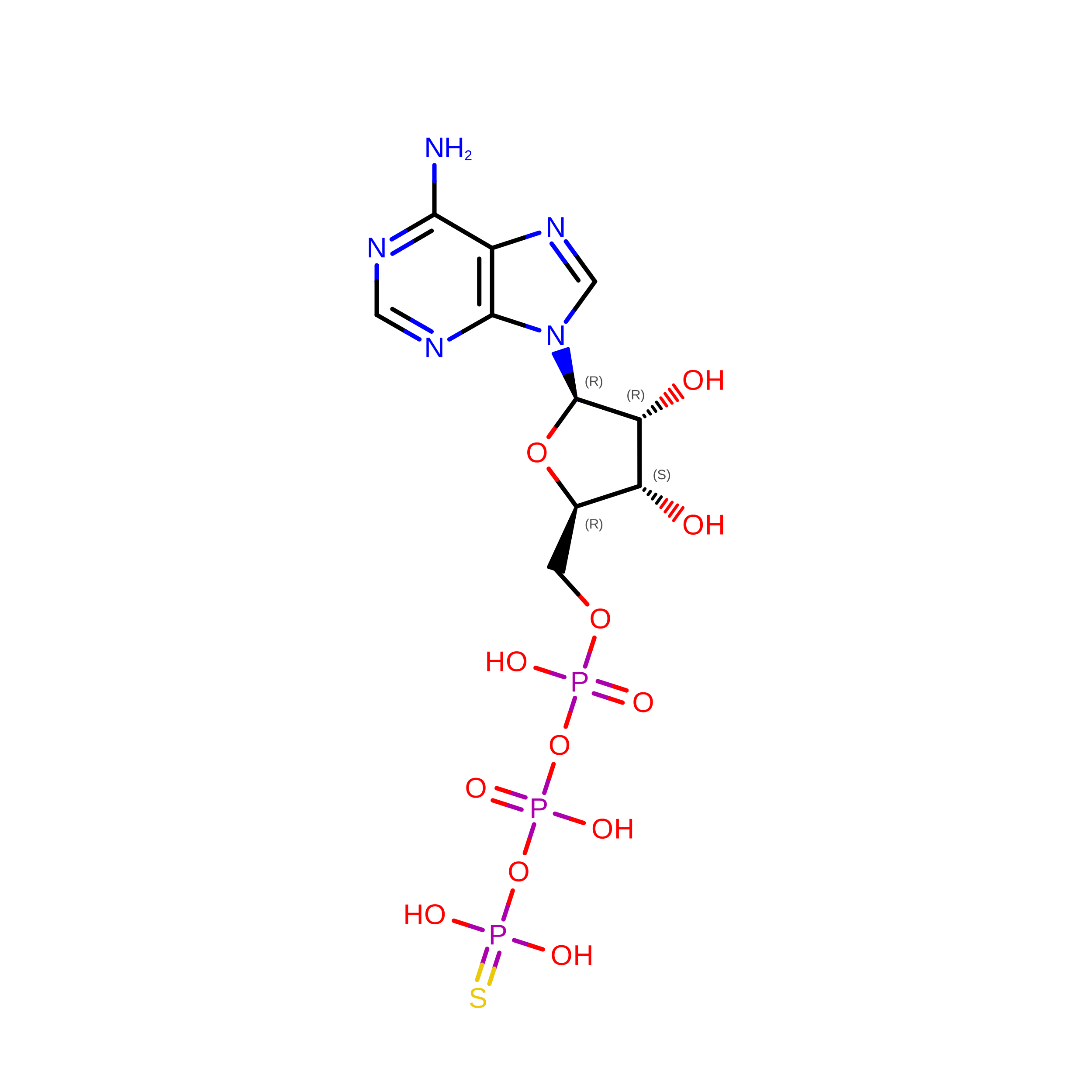
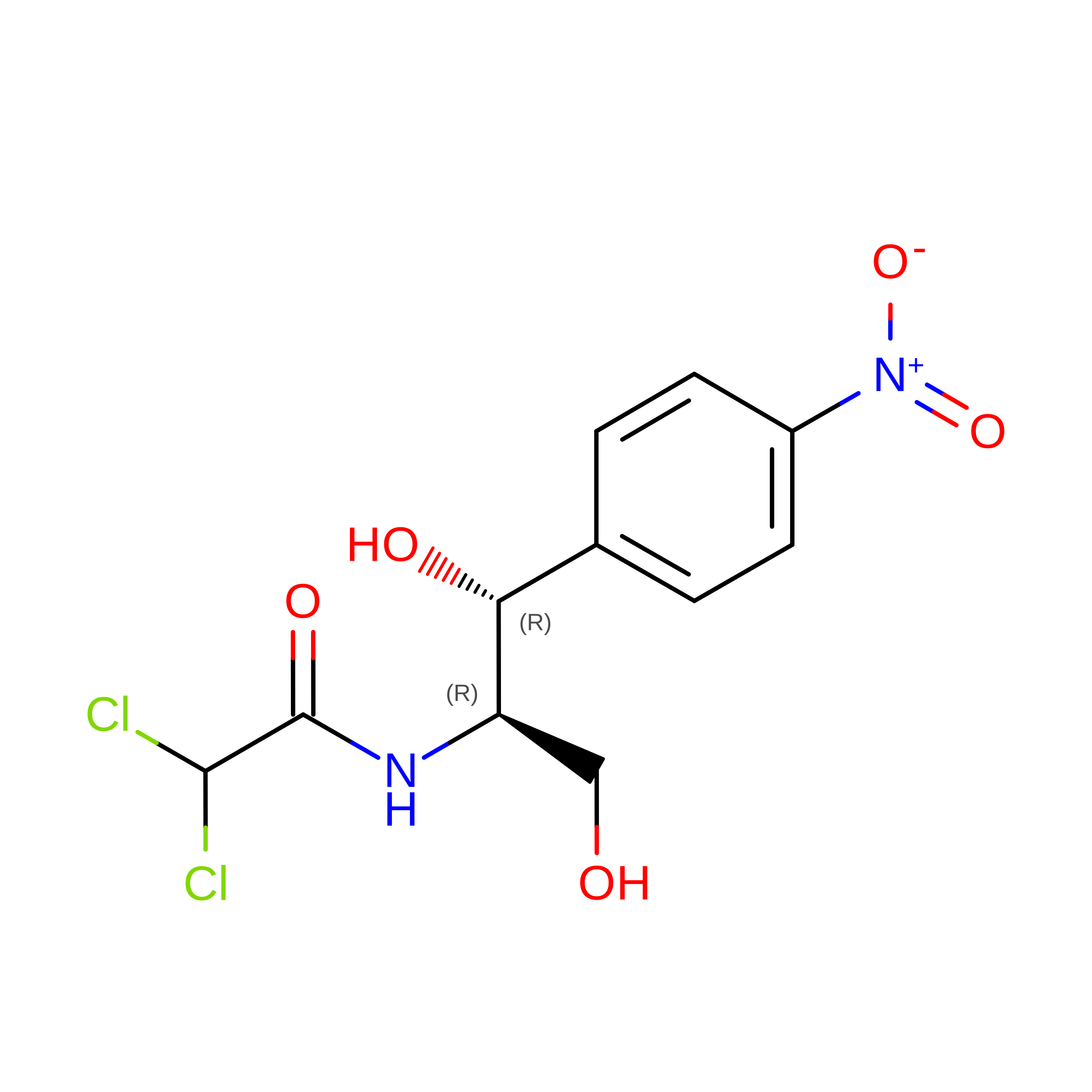
CHLORAMPHENICOL PHOSPHOTRANSFERASE FROM STREPTOMYCES VENEZUELAE IN COMPLEX WITH ATPGAMMAS AND CHLORAMPHENICOL


Experimental Data Snapshot

  • Method: X-RAY DIFFRACTION
  • Resolution: 2.60 Å
  • R-Value Free: 
    0.247 (Depositor) 
  • R-Value Work: 
    0.233 (Depositor) 
  • R-Value Observed: 
    0.233 (Depositor) 

Starting Model: experimental
View more details

wwPDB Validation 3D Report Full Report

Validation slider image for 1QHY

This is version 1.3 of the entry. See complete history

Literature

The Crystal Structures of Chloramphenicol Phosphotransferase Reveal a Novel Inactivation Mechanism

Izard, T.Ellis, J.

(2000) EMBO J 19: 2690-2700

  • DOI: https://doi.org/10.1093/emboj/19.11.2690
  • Primary Citation Related Structures: 
    1QHN, 1QHS, 1QHX, 1QHY

  • PubMed Abstract: 

    Chloramphenicol (Cm), produced by the soil bacterium Streptomyces venezuelae, is an inhibitor of bacterial ribosomal peptidyltransferase activity. The Cm-producing streptomycete modifies the primary (C-3) hydroxyl of the antibiotic by a novel Cm-inactivating enzyme, chloramphenicol 3-O-phosphotransferase (CPT). Here we describe the crystal structures of CPT in the absence and presence of bound substrates. The enzyme is dimeric in a sulfate-free solution and tetramerization is induced by ammonium sulfate, the crystallization precipitant. The tetrameric quaternary structure exhibits crystallographic 222 symmetry and has ATP binding pockets located at a crystallographic 2-fold axis. Steric hindrance allows only one ATP to bind per dimer within the tetramer. In addition to active site binding by Cm, an electron-dense feature resembling the enzyme's product is found at the other subunit interface. The structures of CPT suggest that an aspartate acts as a general base to accept a proton from the 3-hydroxyl of Cm, concurrent with nucleophilic attack of the resulting oxyanion on the gamma-phosphate of ATP. Comparison between liganded and substrate-free CPT structures highlights side chain movements of the active site's Arg136 guanidinium group of >9 A upon substrate binding.


  • Organizational Affiliation
    • Department of Biochemistry, University of Leicester, Leicester LE1 7RH, UK. Tina.Izard@stjude.org

Macromolecule Content 

  • Total Structure Weight: 20.12 kDa 
  • Atom Count: 1,441 
  • Modeled Residue Count: 178 
  • Deposited Residue Count: 178 
  • Unique protein chains: 1

Macromolecules

Find similar proteins by:|  3D Structure
Entity ID: 1
MoleculeChains  Sequence LengthOrganismDetailsImage
CHLORAMPHENICOL PHOSPHOTRANSFERASE178Streptomyces venezuelaeMutation(s): 0 
EC: 2.7.1
UniProt
Find proteins for Q56148 (Streptomyces venezuelae (strain ATCC 10712 / CBS 650.69 / DSM 40230 / JCM 4526 / NBRC 13096 / PD 04745))
Explore Q56148 
Go to UniProtKB:  Q56148
Entity Groups
Sequence Clusters30% Identity50% Identity70% Identity90% Identity95% Identity100% Identity
UniProt GroupQ56148
Sequence Annotations
Expand
Reference Sequence

Experimental Data & Validation

Experimental Data

  • Method: X-RAY DIFFRACTION
  • Resolution: 2.60 Å
  • R-Value Free:  0.247 (Depositor) 
  • R-Value Work:  0.233 (Depositor) 
  • R-Value Observed: 0.233 (Depositor) 
Space Group: I 41 3 2
Unit Cell:
Length ( Å )Angle ( ˚ )
a = 200α = 90
b = 200β = 90
c = 200γ = 90
Software Package:
Software NamePurpose
CNSrefinement
DENZOdata reduction
SCALEPACKdata scaling

Structure Validation

View Full Validation Report


Entry History 

Deposition Data

  • Released Date: 2000-06-07 
  • Deposition Author(s): Izard, T.

Revision History  (Full details and data files)

  • Version 1.0: 2000-06-07
    Type: Initial release
  • Version 1.1: 2008-04-26
    Changes: Version format compliance
  • Version 1.2: 2011-07-13
    Changes: Derived calculations, Version format compliance
  • Version 1.3: 2023-08-02
    Changes: Database references, Derived calculations, Refinement description