1EBV | pdb_00001ebv

OVINE PGHS-1 COMPLEXED WITH SALICYL HYDROXAMIC ACID


Experimental Data Snapshot

  • Method: X-RAY DIFFRACTION
  • Resolution: 3.20 Å
  • R-Value Free: 
    0.248 (Depositor), 0.403 (DCC) 
  • R-Value Work: 
    0.218 (Depositor), 0.400 (DCC) 
  • R-Value Observed: 
    0.225 (Depositor) 

wwPDB Validation 3D Report Full Report

Validation slider image for 1EBV

Ligand Structure Quality Assessment 


This is version 2.1 of the entry. See complete history

Literature

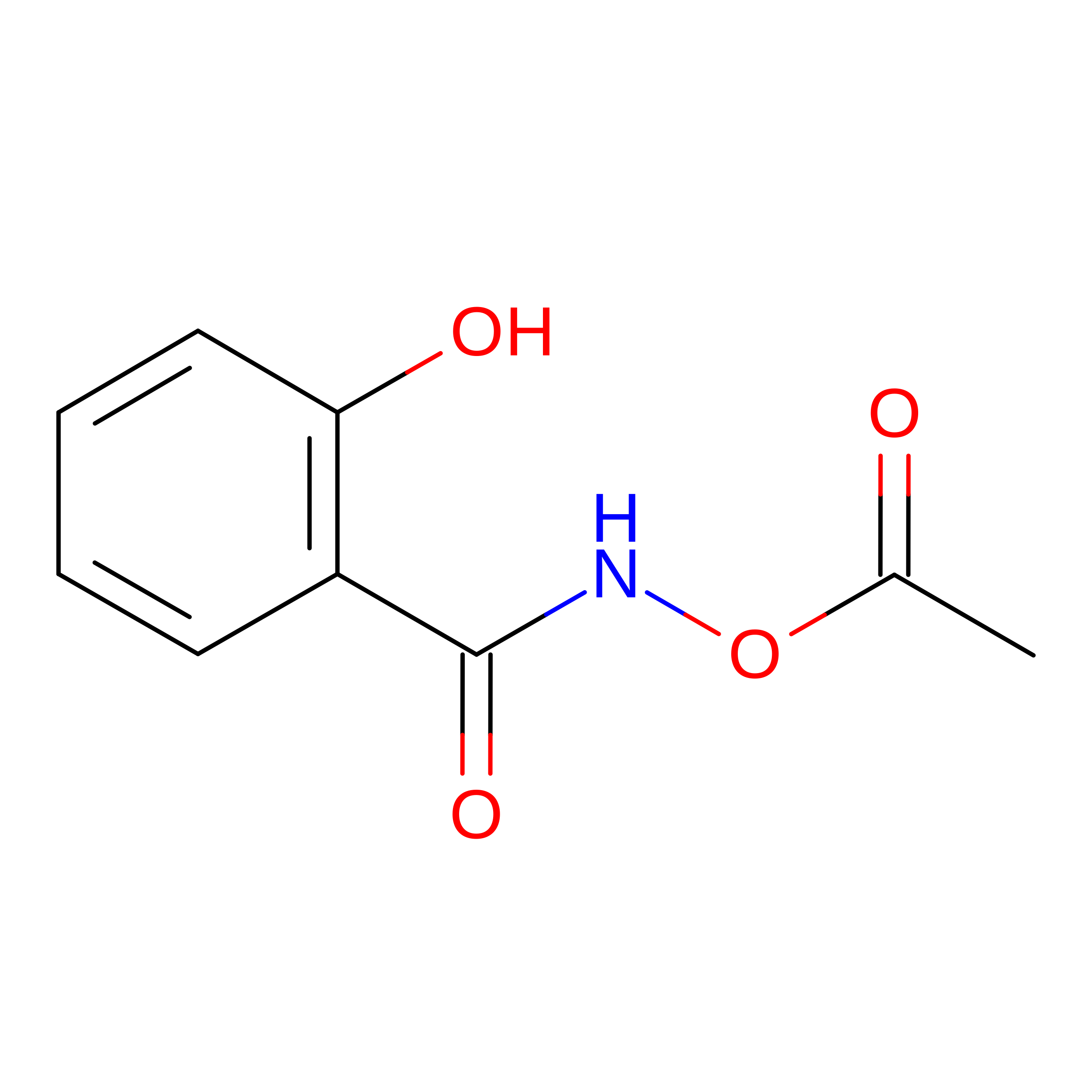
O-acetylsalicylhydroxamic acid, a novel acetylating inhibitor of prostaglandin H2 synthase: structural and functional characterization of enzyme-inhibitor interactions.

Loll, P.J.Sharkey, C.T.O'Connor, S.J.Dooley, C.M.O'Brien, E.Devocelle, M.Nolan, K.B.Selinsky, B.S.Fitzgerald, D.J.

(2001) Mol Pharmacol 60: 1407-1413

  • DOI: https://doi.org/10.1124/mol.60.6.1407
  • Primary Citation Related Structures: 
    1EBV

  • PubMed Abstract: 

    Aspirin is unique among clinically used nonsteroidal antiinflammatory drugs in that it irreversibly inactivates prostaglandin (PG) H2 synthase (PGHS) via acetylation of an active-site serine residue. We report the synthesis and characterization of a novel acetylating agent, O-acetylsalicylhydroxamic acid (AcSHA), which inhibits PGE2 synthesis in vivo and blocks the cyclooxygenase activity of PGHS in vitro. AcSHA requires the presence of the active-site residue Ser-529 to be active against human PGHS-1; the S529A mutant is resistant to inactivation by the inhibitor. Analysis of PGHS inactivation by AcSHA, coupled with the X-ray crystal structure of the complex of ovine PGHS-1 with AcSHA, confirms that the inhibitor elicits its effects via acetylation of Ser-529 in the cyclooxygenase active site. The crystal structure reveals an intact inhibitor molecule bound in the enzyme's cyclooxygenase active-site channel, hydrogen bonding with Arg-119 of the enzyme. The structure-activity profile of AcSHA can be rationalized in terms of the crystal structure of the enzyme-ligand complex. AcSHA may prove useful as a lead compound to facilitate the development of new acetylating inhibitors.


  • Organizational Affiliation
    • Department of Pharmacology, University of Pennsylvania School of Medicine, Philadelphia, PA, USA.

Macromolecule Content 

  • Total Structure Weight: 65.23 kDa 
  • Atom Count: 4,594 
  • Modeled Residue Count: 551 
  • Deposited Residue Count: 551 
  • Unique protein chains: 1

Macromolecules

Find similar proteins by:|  3D Structure
Entity ID: 1
MoleculeChains  Sequence LengthOrganismDetailsImage
PROSTAGLANDIN H2 SYNTHASE551Ovis ariesMutation(s): 1 
EC: 1.14.99.1
Membrane Entity: Yes 
UniProt
Find proteins for P05979 (Ovis aries)
Explore P05979 
Go to UniProtKB:  P05979
Entity Groups
Sequence Clusters30% Identity50% Identity70% Identity90% Identity95% Identity100% Identity
UniProt GroupP05979
Glycosylation
Glycosylation Sites: 3
Sequence Annotations
Expand
Reference Sequence

Oligosaccharides

Help  
Entity ID: 2
MoleculeChains Length2D Diagram GlycosylationD Interactions
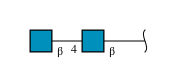
2-acetamido-2-deoxy-beta-D-glucopyranose-(1-4)-2-acetamido-2-deoxy-beta-D-glucopyranose
B
2N-Glycosylation
Glycosylation Resources
GlyTouCan: G42666HT
GlyCosmos: G42666HT
GlyGen: G42666HT

Small Molecules

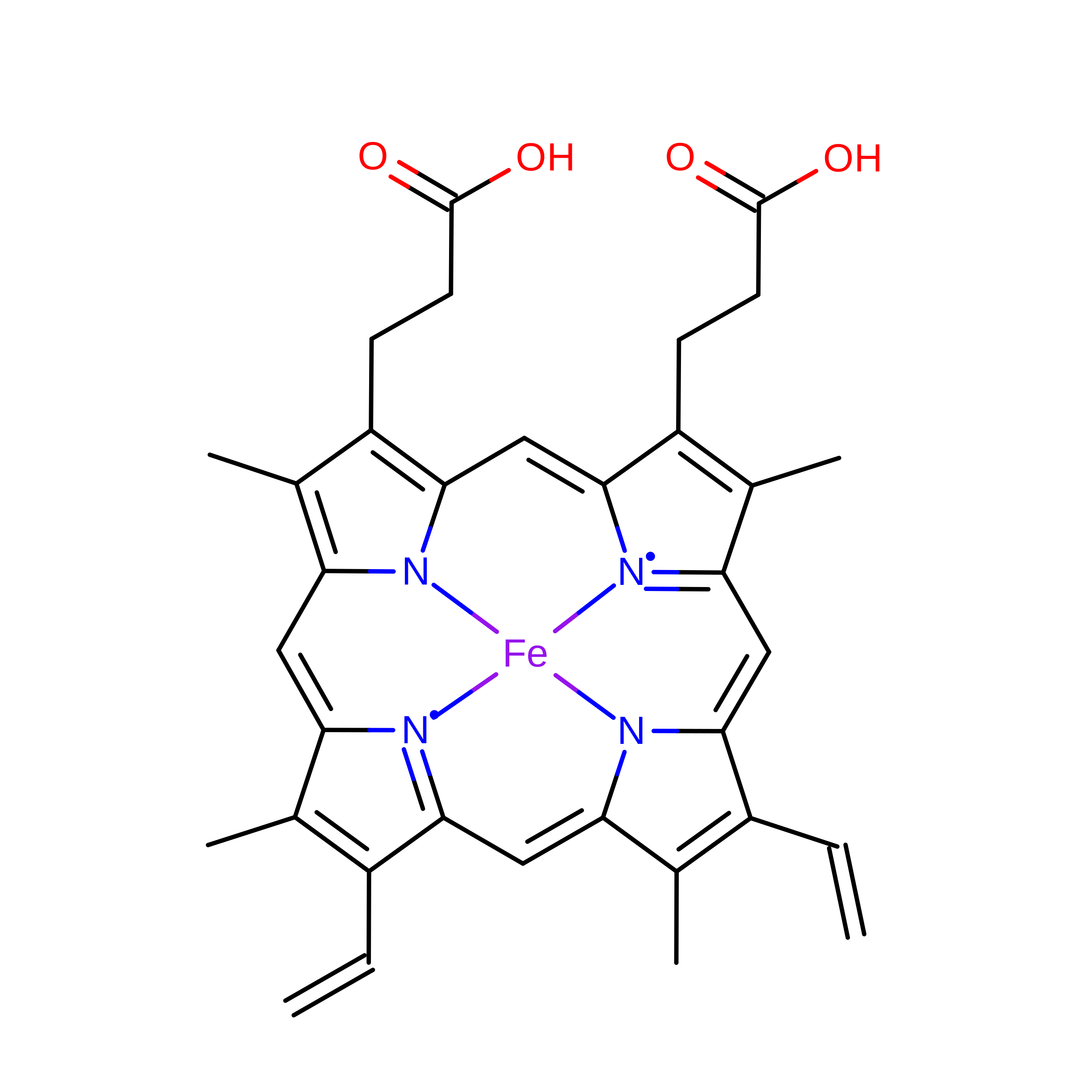
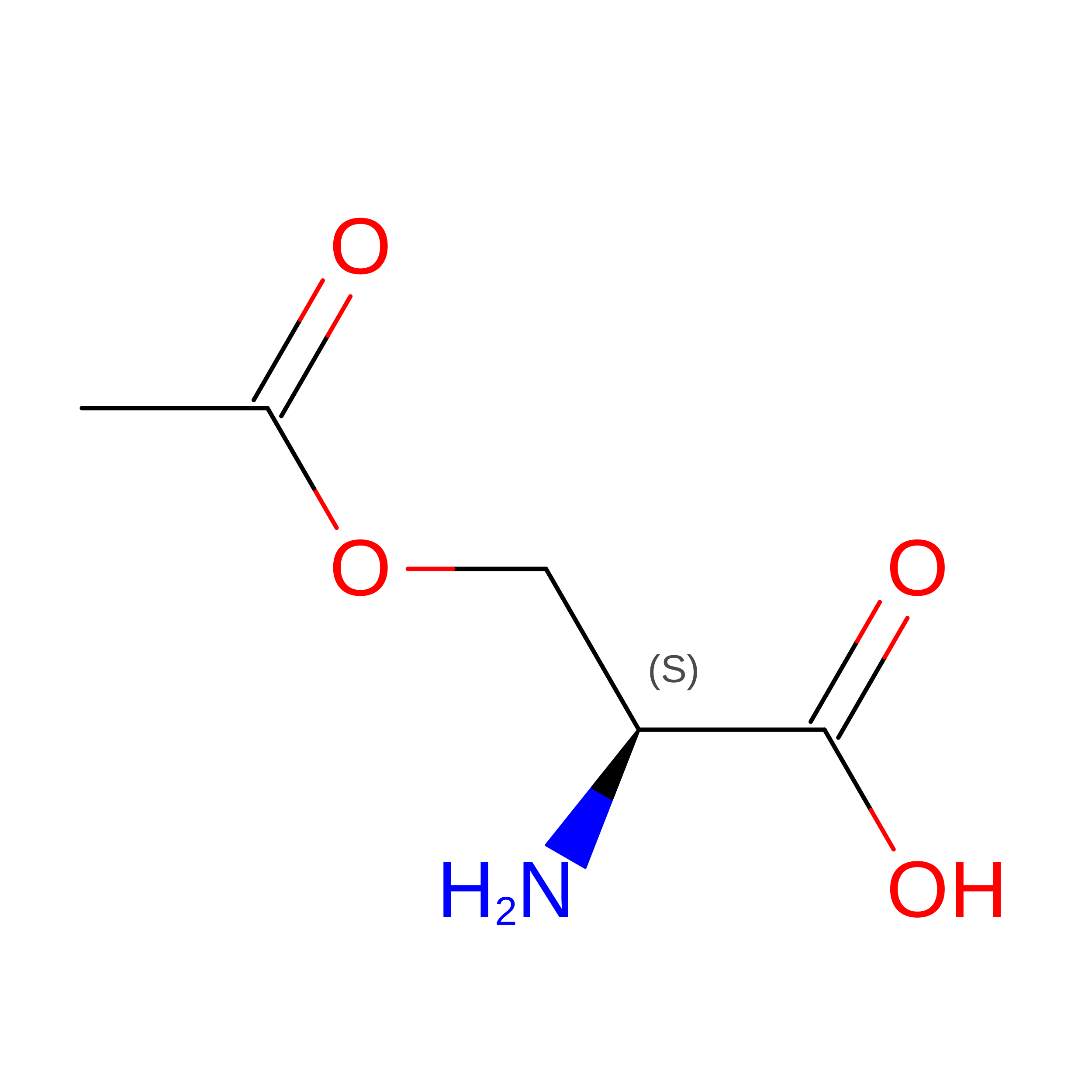
Modified Residues  1 Unique
IDChains TypeFormula2D DiagramParent
OAS
Query on OAS
A
L-PEPTIDE LINKINGC5 H9 N O4SER

Experimental Data & Validation

Experimental Data

  • Method: X-RAY DIFFRACTION
  • Resolution: 3.20 Å
  • R-Value Free:  0.248 (Depositor), 0.403 (DCC) 
  • R-Value Work:  0.218 (Depositor), 0.400 (DCC) 
  • R-Value Observed: 0.225 (Depositor) 
Space Group: I 2 2 2
Unit Cell:
Length ( Å )Angle ( ˚ )
a = 98.87α = 90
b = 207.46β = 90
c = 221.98γ = 90
Software Package:
Software NamePurpose
MAR345data collection
SCALEPACKdata scaling
X-PLORmodel building
CNSrefinement
X-PLORphasing

Structure Validation

View Full Validation Report


Ligand Structure Quality Assessment 


Entry History 

Deposition Data

Revision History  (Full details and data files)

  • Version 1.0: 2000-02-24
    Type: Initial release
  • Version 1.1: 2008-04-27
    Changes: Version format compliance
  • Version 1.2: 2011-07-13
    Changes: Non-polymer description, Version format compliance
  • Version 1.3: 2017-10-04
    Changes: Refinement description
  • Version 2.0: 2020-07-29
    Type: Remediation
    Reason: Carbohydrate remediation
    Changes: Atomic model, Data collection, Database references, Derived calculations, Structure summary
  • Version 2.1: 2024-10-16
    Changes: Data collection, Database references, Structure summary