Download Mendeley
Induced ubiquitination of the partially disordered estrogen receptor alpha via a 14-3-3 directed molecular glue-PROTAC.
Verhoef, C.J.A., Crowe, C., Nakasone, M.A., DeLaCuadra-Baste, A., Harzing, T., Span, N.A.S., Sathe, G., Demmers, L.C., Iso, K., Ottmann, C., Brunsveld, L., Ciulli, A., Cossar, P.J.(2026) Nat Commun 17
- PubMed: 42457718 Search on PubMed
- DOI: https://doi.org/10.1038/s41467-026-75333-w
- Primary Citation Related Structures:
9SV3 - PubMed Abstract:
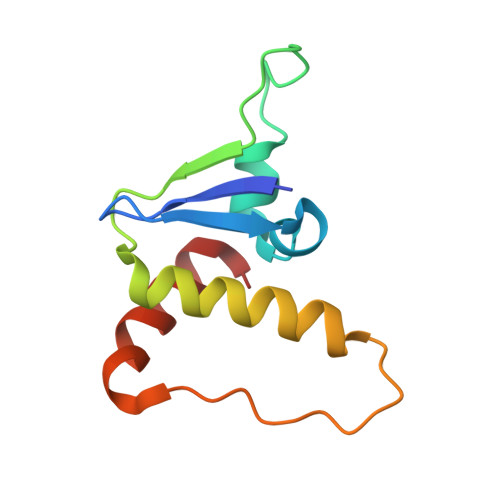
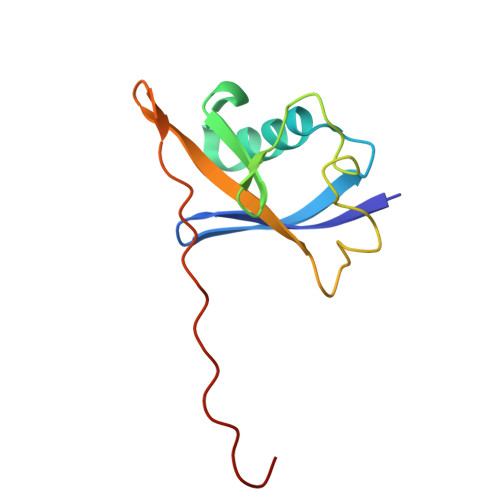
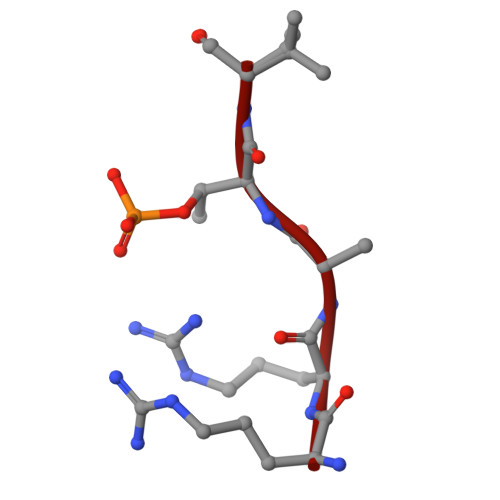
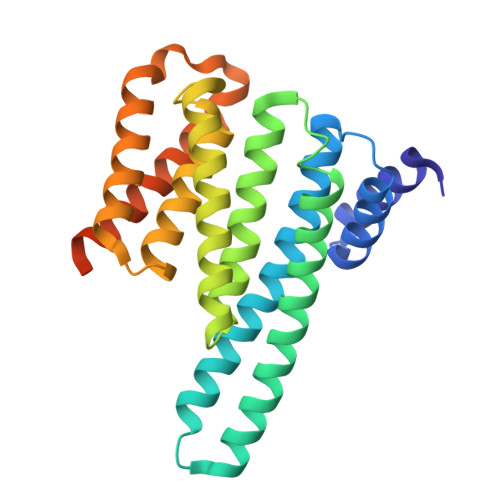
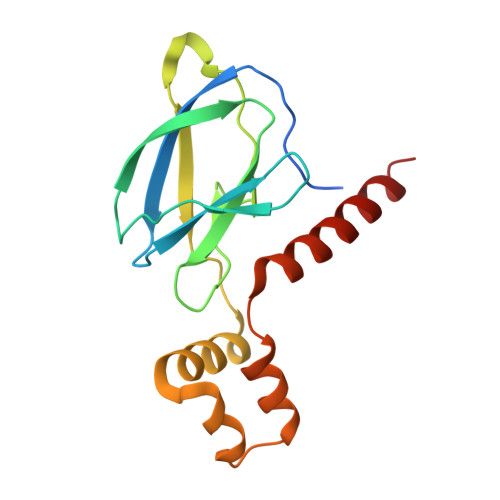
Proteins lacking defined ligandable pockets remain challenging drug targets. Here, we develop a molecular glue-based PROTAC ( MG PROTAC) approach that chemically conjugates a molecular glue stabilizer to a VHL-recruiting ligand to capture and ubiquitinate the 14-3-3/Estrogen receptor α (ERα) complex. Our designed MG PROTACs engage a composite interface between 14-3-3 and the disordered F-domain of ERα, promoting cooperative complex formation and targeted ubiquitination. Biophysical characterization revealed distinct linker-dependent cooperativities across the MG PROTAC series, which influenced both cellular permeability and ubiquitination efficiency. Cryo-EM of the most cooperative MG PROTAC uncovered de novo VHL-14-3-3ζ contacts, while molecular dynamics simulations rationalize the stabilizing interactions underlying cooperativity. Strikingly, fine-tuning linker design enables selective ubiquitination of distinct complex subunits. These findings establish a structural and mechanistic framework for integrating molecular glue and PROTAC principles, expanding the scope of drug discovery to previously intractable protein complexes.
- Laboratory of Chemical Biology, Department of Biomedical Engineering and Institute for Complex Molecular Systems, Eindhoven University of Technology, Eindhoven, Netherlands.
Organizational Affiliation: