Download Mendeley
Shotgun metagenomic mining reveals a new FAD-dependent D-lactate dehydrogenase in an isopod gut microbiome.
Coelho, C., Taborda, A., Lorena, C., Frazao, T., Verissimo, A., Borges, P.T., Brissos, V., Tiago, I., Martins, L.O.(2025) Appl Environ Microbiol 91: e0148025-e0148025
- PubMed: 41231970 Search on PubMedSearch on PubMed Central
- DOI: https://doi.org/10.1128/aem.01480-25
- Primary Citation Related Structures:
9QGZ, 9QIT - PubMed Abstract:
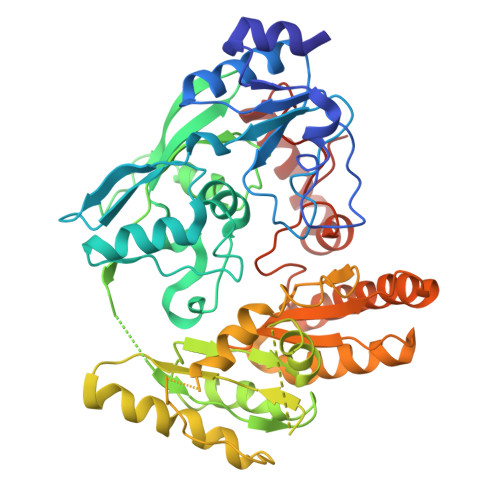
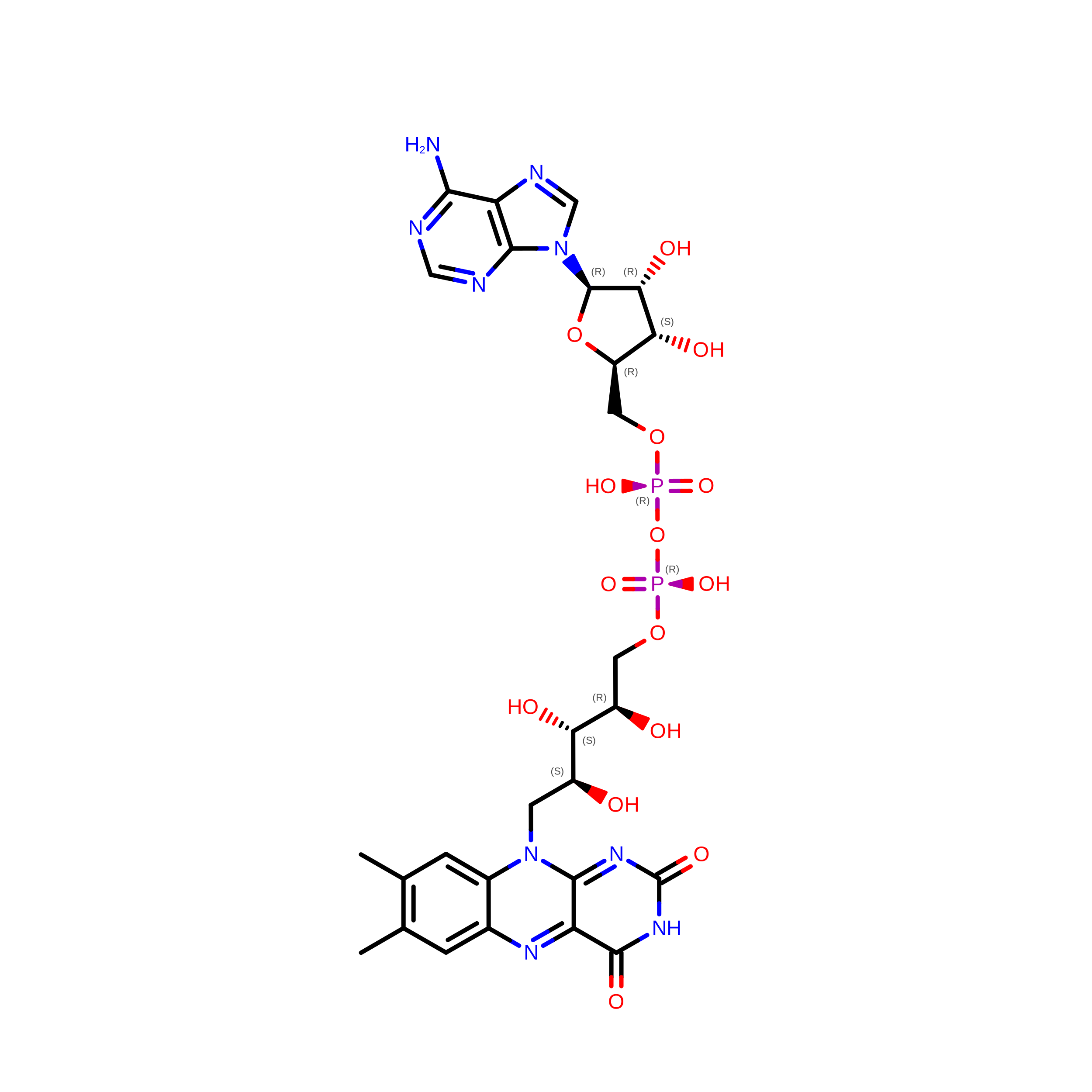
Shotgun metagenomic sequencing has emerged as a powerful tool for exploring microbial diversity and uncovering genes encoding novel biocatalysts from complex environments. Here, we report the discovery and characterization of a new FAD-dependent D-lactate dehydrogenase (PdG-D-LDH) from the gut microbiome of the isopod Porcellio dilatatus . The enzyme was identified through in silico screening using BLAST and AlphaFold3 and functionally characterized as a homodimeric, thermoactive, and thermostable protein, demonstrating the robustness required for biotechnological applications. PdG-D-LDH exhibits a strong catalytic preference toward D-lactate and preferentially reduces quinones over cytochrome c or molecular oxygen. X-ray crystallography revealed a VAO/PCMH-like fold with a solvent-accessible active site that harbors both a FAD cofactor and an Fe(II) ion. Molecular docking studies provided insights into the structural determinants of its stereoselective substrate recognition. Under mild conditions, the enzyme catalyzed the oxidation of D-lactate to pyruvate with a 90% yield after 24 h of reaction, using molecular oxygen as the electron acceptor. This study illustrates how metagenomics, structural biology, and computational tools can jointly drive the discovery of new enzymes with valuable biotechnological applications aligned with circular economic principles. The newly identified D-lactate dehydrogenase, PdG-D-LDH, exhibits thermostability, stereoselectivity, and high catalytic efficiency, providing new insights into the structure-function relationships of lactate-metabolizing enzymes.
- Instituto de Tecnologia Química e Biológica António Xavier, Universidade Nova de Lisboa, Oeiras, Portugal.
Organizational Affiliation: