Download Mendeley
Discovery of Macrocyclic Myeloid Cell Leukemia 1 (Mcl-1) Inhibitors that Demonstrate Potent Cellular Efficacy and In Vivo Activity in a Mouse Solid Tumor Xenograft Model.
Tarr, J.C., Jeon, K., Veerasamy, N., Aichinger, M., Salovich, J.M., Zhao, B., Sensintaffar, J.L., Arnhof, H., Wunberg, T., Sgubin, D., Arnold, A., Vekariya, R.H., Christov, P.P., Kim, K., Fuchs, J.E., Karier, P., Betzemeier, B., Van Meveren, M., Miriyala, N., Olejniczak, E.T., Engelhardt, H., Lee, T., McConnell, D., Fesik, S.W.(2025) J Med Chem 68: 18553-18578
- PubMed: 40864607 Search on PubMedSearch on PubMed Central
- DOI: https://doi.org/10.1021/acs.jmedchem.5c01376
- Primary Citation Related Structures:
9PW6, 9PW7 - PubMed Abstract:
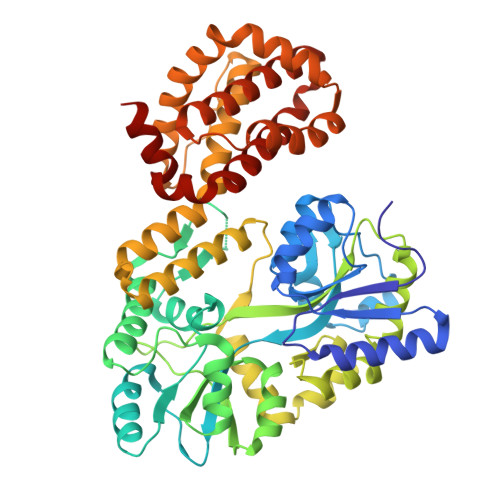
The B cell lymphoma 2 (Bcl-2) family of proteins are key regulators of intrinsic apoptosis. The antiapoptotic protein myeloid cell leukemia 1 (Mcl-1), which is associated with high tumor grade, poor survival, and resistance to treatment, has emerged as a promising candidate for treating hematological and solid cancers. Herein, we report the structure-guided design of small molecule macrocyclic Mcl-1 inhibitors based on the ( R )-methyl-dihydropyrazinoindolone scaffold our group has previously disclosed. The macrocyclic inhibitors bind Mcl-1 with subnanomolar affinity and offer improved potency in cell culture growth inhibition assays. Inhibitor 13 achieved tumor regression in a lung cancer-derived tumor xenograft model in mice as a monotherapy. The improved potency of the macrocyclic series allowed replacement of heretofore conserved indole carboxylic acid moiety, resulting in neutral inhibitors. Amide inhibitor 25 displayed a >10-fold increase in oral bioavailability as compared to acid-containing macrocyclic or acyclic inhibitors.
- Department of Biochemistry, Vanderbilt University School of Medicine, 2215 Garland Avenue, 607 Light Hall, Nashville, Tennessee 37232-0146, United States.
Organizational Affiliation: