Download Mendeley
Azetidine amino acid biosynthesis by non-haem iron-dependent enzymes.
Du, Y., Thanapipatsiri, A., Blancas Cortez, J.J., Salas-Sola, X.E., Lin, C.Y., Boal, A.K., Krebs, C., Bollinger Jr., J.M., Yokoyama, K.(2026) Nat Chem 18: 492-501
- PubMed: 41120677 Search on PubMedSearch on PubMed Central
- DOI: https://doi.org/10.1038/s41557-025-01958-x
- Primary Citation Related Structures:
9PRR - PubMed Abstract:
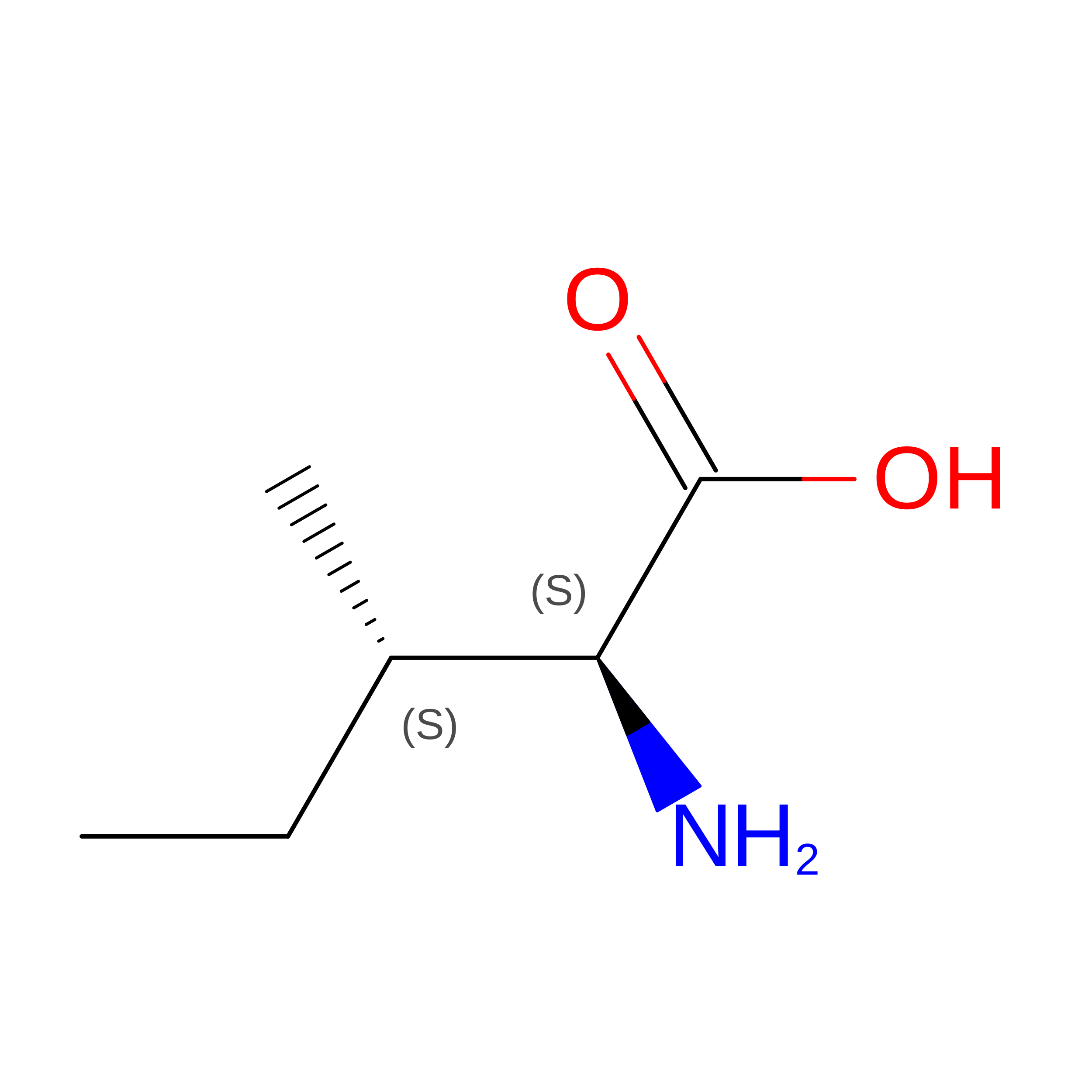
Azetidine, a four-membered aza-cycle, is a crucial structure in many bioactive compounds and drugs. However, their biosynthesis is frequently enigmatic. Here we report the mechanism of azetidine amino acid (polyoximic acid) biosynthesis in the polyoxin antifungal pathway. Genetic, enzymological and structural experiments revealed that PolF is a member of haem-oxygenase-like dimetal oxidase and/or oxygenase (HDO) superfamily, and this enzyme alone is sufficient for the transformation of L-isoleucine (L-Ile) and L-valine to their azetidine derivatives via a 3,4-desaturated intermediate. Mechanistic studies of PolF suggested that a μ-peroxo-Fe(III) 2 intermediate is directly responsible for the unactivated C-H bond cleavage, and the post-H-abstraction reactions, including the C-N bond formation, probably proceed through radical mechanisms. We also found that PolE, a member of the DUF6421 family, is an Fe and pterin-dependent oxidase that catalyses the desaturation of L-Ile, assisting PolF by increasing the flux of L-Ile desaturation. The results provide important insights into azetidine biosynthesis and the catalytic mechanisms of HDO enzymes in general.
- Department of Biochemistry, Duke University School of Medicine, Durham, NC, USA.
Organizational Affiliation: