Download Mendeley
The induced-fit and catalytic mechanisms of human G6PC1
Chen, Q., Wang, Y., Li, R., Bai, Q., Zhao, Y.(2025) Cell Discov 11: 62
- PubMed: 40664655 Search on PubMedSearch on PubMed Central
- DOI: https://doi.org/10.1038/s41421-025-00814-z
- Primary Citation Related Structures:
9JTL, 9JTM, 9JTN, 9JTO - PubMed Abstract:
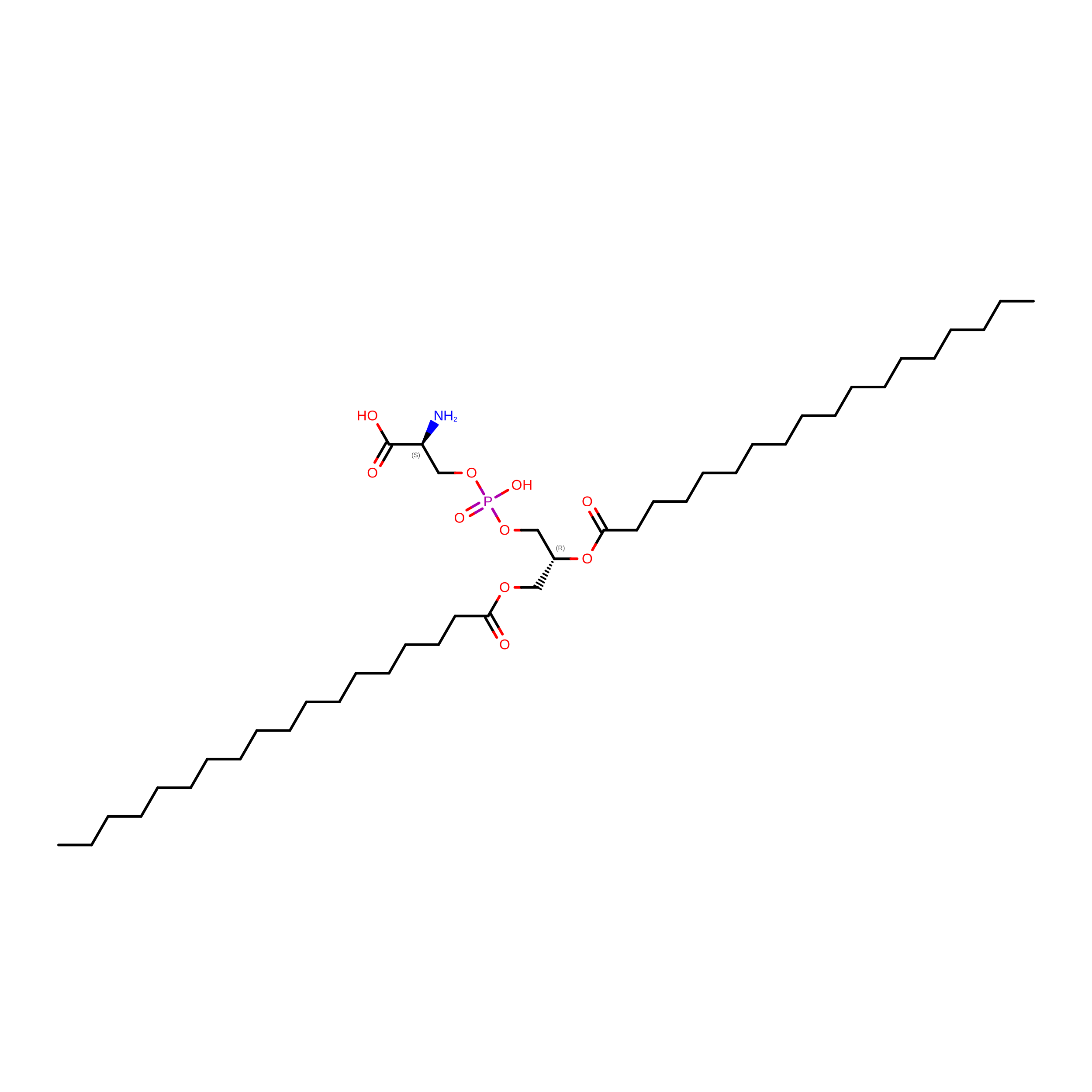
Human glucose-6-phosphatase catalytic subunit 1 (hG6PC1) is a key enzyme in glucose metabolism, governing the final common step of gluconeogenesis and glycogenolysis, and directly regulating energy homeostasis. Aberrant mutations in G6PC1 directly cause glycogen storage disease type 1a, which is characterized by chronic hypoglycemia and glycogen accumulation. Additionally, abnormal G6PC1 function leads to increased fasting blood glucose. Consequently, it is a critical target for treating glucose metabolism disorders. In this study, we determine the cryo-EM structures of G6PC1 in both the partially open and fully open states, in either the apo form or in complex with the substrates G6P or F6P and the product phosphate. These structures offer distinct insights into the mechanism of hydrolysis and induced-fit, providing a structural foundation for the diagnostic analysis of disease-causing mutations in G6PC1. Moreover, we propose a potential mechanism by which phosphatidylserine regulates G6PC1 activity, providing a novel perspective on its role and implications.
- Key Laboratory of Biomacromolecules (CAS), National Laboratory of Biomacromolecules, CAS Center for Excellence in Biomacromolecules, Institute of Biophysics, Chinese Academy of Sciences, Beijing, China.
Organizational Affiliation: