Find PDB structures and Computed Structure Models (CSM) by combining queries from tools in this suite: Attribute Search, Sequence Similarity, Sequence Motif, 3D Similarity, and 3D Motif with 'AND' logic.
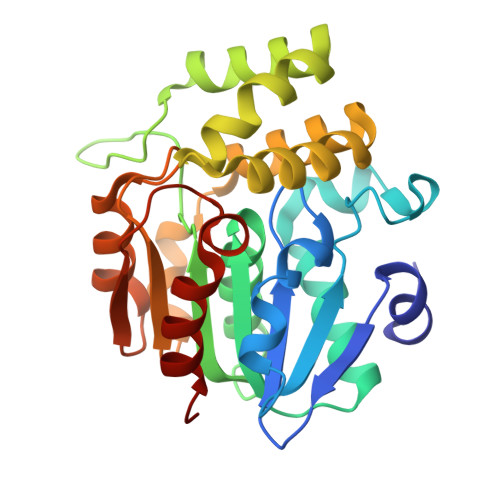
Rice tillering is an important agronomic trait regulated by plant genetic and environmental factors. However, the role and mechanism of the root microbiota in modulating rice tillering have not been explored. Here, we examined the root microbiota composition and tiller numbers of 182 genome-sequenced rice varieties grown under field conditions and uncovered a significant correlation between root microbiota composition and rice tiller number. Using cultivated bacterial isolates, we demonstrated that various members of the root microbiota can regulate rice tillering in both laboratory and field conditions. Genetic, biochemical, and structural analyses revealed that cyclo(Leu-Pro), produced by the tiller-inhibiting bacterium Exiguobacterium R2567, activates the rice strigolactone (SL) signaling pathway by binding to the SL receptor OsD14, thus regulating tillering. The present work provides insight into how the root microbiota regulates key agronomic traits and offers a promising strategy for optimizing crop growth by harnessing the root microbiota in sustainable agriculture.
Organizational Affiliation:
Institute of Genetics and Developmental Biology, Chinese Academy of Sciences, Beijing 100101, China; Peking-Tsinghua Center for Life Sciences, State Key Laboratory of Gene Function and Modulation Research, Peking-Tsinghua-NIBS Graduate Program, School of Life Sciences, Peking University, Beijing 100871, China; CAS-JIC Centre of Excellence for Plant and Microbial Science, Institute of Genetics and Developmental Biology, Chinese Academy of Sciences, Beijing 100101, China.
Institute of Genetics and Developmental Biology, Chinese Academy of Sciences, Beijing 100101, China.
Institute of Genetics and Developmental Biology, Chinese Academy of Sciences, Beijing 100101, China; CAS-JIC Centre of Excellence for Plant and Microbial Science, Institute of Genetics and Developmental Biology, Chinese Academy of Sciences, Beijing 100101, China; College of Advanced Agricultural Sciences, University of Chinese Academy of Sciences, Beijing 100101, China.
Institute of Genetics and Developmental Biology, Chinese Academy of Sciences, Beijing 100101, China; Peking-Tsinghua Center for Life Sciences, State Key Laboratory of Gene Function and Modulation Research, Peking-Tsinghua-NIBS Graduate Program, School of Life Sciences, Peking University, Beijing 100871, China; CAS-JIC Centre of Excellence for Plant and Microbial Science, Institute of Genetics and Developmental Biology, Chinese Academy of Sciences, Beijing 100101, China; College of Advanced Agricultural Sciences, University of Chinese Academy of Sciences, Beijing 100101, China.
Shenzhen Key Laboratory of Plant Genetic Engineering and Molecular Design, Institute of Plant and Food Science, School of Life Sciences, Southern University of Science and Technology, Shenzhen 518055, China.
State Key Laboratory of Oncology in South China, Collaborative Innovation Center for Cancer Medicine, Integrated Traditional Chinese and Western Medicine Research Center, Sun Yat-sen University Cancer Center, Guangzhou 510060, China.
Yazhouwan National Laboratory, Sanya 572024, China.
Institute of Genetics and Developmental Biology, Chinese Academy of Sciences, Beijing 100101, China; School of Life Sciences, Yunnan University, Kunming 650504, China.
Institute of Genetics and Developmental Biology, Chinese Academy of Sciences, Beijing 100101, China; College of Advanced Agricultural Sciences, University of Chinese Academy of Sciences, Beijing 100101, China.
Peking-Tsinghua Center for Life Sciences, State Key Laboratory of Gene Function and Modulation Research, Peking-Tsinghua-NIBS Graduate Program, School of Life Sciences, Peking University, Beijing 100871, China.
Guangdong Basic Research Center of Excellence for Precise Breeding of Future Crops and Guangdong Laboratory for Lingnan Modern Agriculture, South China Agricultural University, Guangzhou 510642, China; Key Laboratory for Enhancing Resource Use Efficiency of Crops in South China, Ministry of Agriculture and Rural Affairs, South China Agricultural University, Guangzhou 510642, China.
State Key Laboratory of Chemo/Biosensing and Chemometrics, College of Biology, Hunan University, Changsha 410082, China.
Department of Plant-Microbe Interactions, Max Planck Institute for Plant Breeding Research, 50829 Cologne, Germany; Cluster of Excellence on Plant Sciences (CEPLAS), 40225 Düsseldorf, Germany.
Plant Genetics, TUM School of Life Sciences, Technical University of Munich, 85354 Freising, Germany.
Swammerdam Institute for Life Sciences, University of Amsterdam, 1098 XH Amsterdam, the Netherlands.
State Key Laboratory of Oncology in South China, Collaborative Innovation Center for Cancer Medicine, Integrated Traditional Chinese and Western Medicine Research Center, Sun Yat-sen University Cancer Center, Guangzhou 510060, China. Electronic address: gaosong@sysucc.org.cn.
Shenzhen Key Laboratory of Plant Genetic Engineering and Molecular Design, Institute of Plant and Food Science, School of Life Sciences, Southern University of Science and Technology, Shenzhen 518055, China. Electronic address: huangac@sustech.edu.cn.
Guangdong Basic Research Center of Excellence for Precise Breeding of Future Crops and Guangdong Laboratory for Lingnan Modern Agriculture, South China Agricultural University, Guangzhou 510642, China; Key Laboratory for Enhancing Resource Use Efficiency of Crops in South China, Ministry of Agriculture and Rural Affairs, South China Agricultural University, Guangzhou 510642, China. Electronic address: ccchu@scau.edu.cn.
Institute of Genetics and Developmental Biology, Chinese Academy of Sciences, Beijing 100101, China; Yazhouwan National Laboratory, Sanya 572024, China. Electronic address: jyli@genetics.ac.cn.
Peking-Tsinghua Center for Life Sciences, State Key Laboratory of Gene Function and Modulation Research, Peking-Tsinghua-NIBS Graduate Program, School of Life Sciences, Peking University, Beijing 100871, China; CAS-JIC Centre of Excellence for Plant and Microbial Science, Institute of Genetics and Developmental Biology, Chinese Academy of Sciences, Beijing 100101, China. Electronic address: ybai@pku.edu.cn.

 Download Mendeley