Download Mendeley
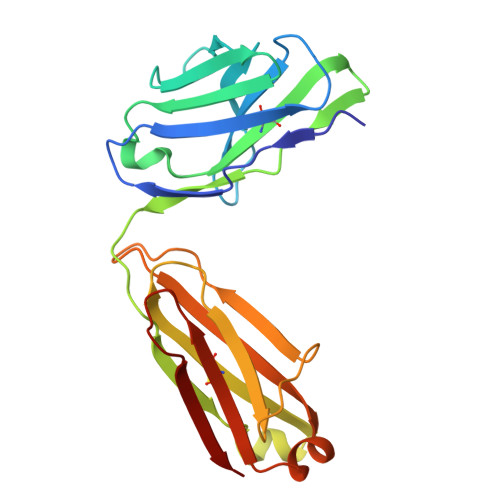
Structural insights into the selective recognition of RF-amide peptides by neuropeptide FF receptor 2.
Kim, J., Hong, S., Lee, H., Lee, H.S., Park, C., Kim, J., Im, W., Choi, H.J.(2025) EMBO Rep 26: 2413-2434
- PubMed: 40128413 Search on PubMedSearch on PubMed Central
- DOI: https://doi.org/10.1038/s44319-025-00428-2
- Primary Citation Related Structures:
9JFY, 9JG0 - PubMed Abstract:
Neuropeptide FF Receptor 2 (NPFFR2), a G-protein-coupled receptor, plays a role in pain modulation and diet-induced thermogenesis. While NPFFR2 is strongly activated by neuropeptides FF (NPFFs), it shows low activity in response to RF-amide-related peptides (RFRPs), despite the peptides belonging to a shared family. In contrast, NPFFR1, which shares high sequence similarity with NPFFR2, is activated by RFRPs and regulates reproductive hormone balance. The molecular basis for these receptor-specific interactions with their RF-amide peptides remains unclear. Here, we present cryo-electron microscopy structures of NPFFR2 in its active state bound to the agonist RF-amide peptide hNPSF, and in its ligand-free state. Structural analysis reveals that the C-terminal RF-amide moiety engages conserved residues in the transmembrane domain, while the N-terminal segment interacts in a receptor subtype-specific manner. Key selectivity-determining residues in NPFFR2 are also identified. A homology model of NPFFR1 bound to RFRP, supported by mutagenesis studies, further validates this selectivity mechanism. Additionally, structural comparison between the inactive and active states of NPFFR2 suggests a TM3-mediated activation mechanism. These findings provide insights into RF-amide peptide recognition by NPFF receptors.
- Department of Biological Sciences, Seoul National University, Seoul, 08826, Republic of Korea.
Organizational Affiliation: