9JFY | pdb_00009jfy

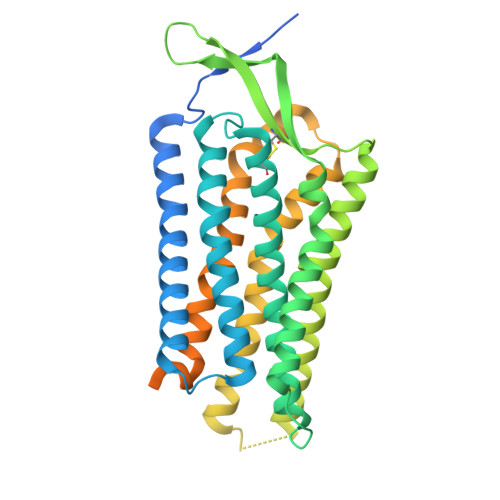
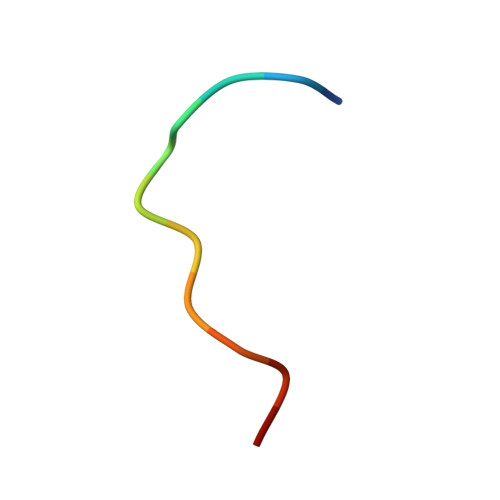
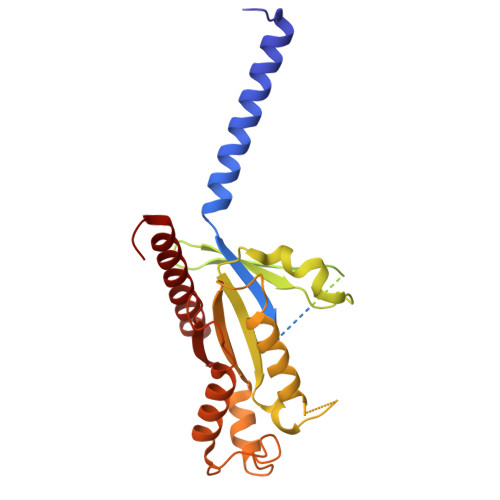
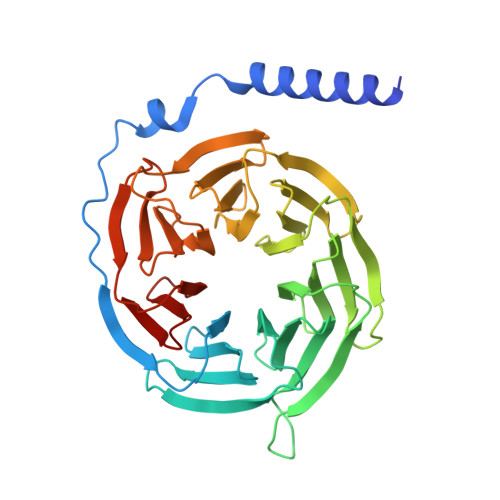
Cryo-EM structure of Neuropeptide FF receptor 2 in complex with hNPSF and Gi


Experimental Data Snapshot

  • Method: ELECTRON MICROSCOPY
  • Resolution: 3.21 Å
  • Aggregation State: PARTICLE 
  • Reconstruction Method: SINGLE PARTICLE 

wwPDB Validation   3D Report Full Report


This is version 1.2 of the entry. See complete history


Literature

Structural insights into the selective recognition of RF-amide peptides by neuropeptide FF receptor 2.

Kim, J.Hong, S.Lee, H.Lee, H.S.Park, C.Kim, J.Im, W.Choi, H.J.

(2025) EMBO Rep 26: 2413-2434

  • DOI: https://doi.org/10.1038/s44319-025-00428-2
  • Primary Citation of Related Structures:  
    9JFY, 9JG0

  • PubMed Abstract: 

    Neuropeptide FF Receptor 2 (NPFFR2), a G-protein-coupled receptor, plays a role in pain modulation and diet-induced thermogenesis. While NPFFR2 is strongly activated by neuropeptides FF (NPFFs), it shows low activity in response to RF-amide-related peptides (RFRPs), despite the peptides belonging to a shared family. In contrast, NPFFR1, which shares high sequence similarity with NPFFR2, is activated by RFRPs and regulates reproductive hormone balance. The molecular basis for these receptor-specific interactions with their RF-amide peptides remains unclear. Here, we present cryo-electron microscopy structures of NPFFR2 in its active state bound to the agonist RF-amide peptide hNPSF, and in its ligand-free state. Structural analysis reveals that the C-terminal RF-amide moiety engages conserved residues in the transmembrane domain, while the N-terminal segment interacts in a receptor subtype-specific manner. Key selectivity-determining residues in NPFFR2 are also identified. A homology model of NPFFR1 bound to RFRP, supported by mutagenesis studies, further validates this selectivity mechanism. Additionally, structural comparison between the inactive and active states of NPFFR2 suggests a TM3-mediated activation mechanism. These findings provide insights into RF-amide peptide recognition by NPFF receptors.


  • Organizational Affiliation
    • Department of Biological Sciences, Seoul National University, Seoul, 08826, Republic of Korea.

Macromolecules
Find similar proteins by:  (by identity cutoff)  |  3D Structure
Entity ID: 1
MoleculeChains Sequence LengthOrganismDetailsImage
Isoform 2 of Neuropeptide FF receptor 2A [auth R]429Homo sapiensMutation(s): 0 
Gene Names: NPFFR2GPR74NPFF2NPGPR
Membrane Entity: Yes 
UniProt & NIH Common Fund Data Resources
Find proteins for Q9Y5X5 (Homo sapiens)
Explore Q9Y5X5 
Go to UniProtKB:  Q9Y5X5
PHAROS:  Q9Y5X5
GTEx:  ENSG00000056291 
Entity Groups  
Sequence Clusters30% Identity50% Identity70% Identity90% Identity95% Identity100% Identity
UniProt GroupQ9Y5X5
Sequence Annotations
Expand
  • Reference Sequence

Find similar proteins by:  Sequence   |   3D Structure  

Entity ID: 2
MoleculeChains Sequence LengthOrganismDetailsImage
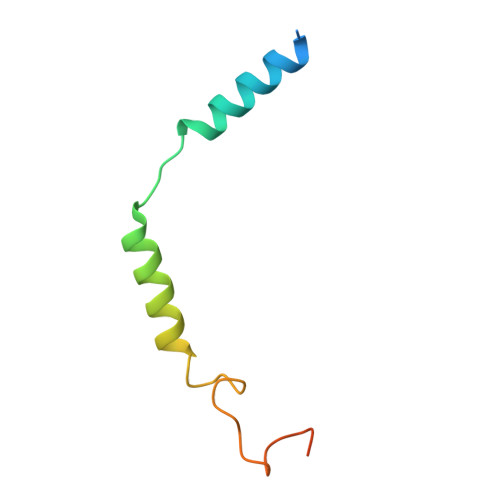
Neuropeptide SFB [auth L]12Homo sapiensMutation(s): 1 
Membrane Entity: Yes 
UniProt & NIH Common Fund Data Resources
Find proteins for O15130 (Homo sapiens)
Explore O15130 
Go to UniProtKB:  O15130
GTEx:  ENSG00000139574 
Entity Groups  
Sequence Clusters30% Identity50% Identity70% Identity90% Identity95% Identity100% Identity
UniProt GroupO15130
Sequence Annotations
Expand
  • Reference Sequence
Find similar proteins by:  (by identity cutoff)  |  3D Structure
Entity ID: 3
MoleculeChains Sequence LengthOrganismDetailsImage
Guanine nucleotide-binding protein G(i) subunit alpha-1C [auth A]354Homo sapiensMutation(s): 0 
Gene Names: GNAI1
EC: 3.6.5
Membrane Entity: Yes 
UniProt & NIH Common Fund Data Resources
Find proteins for P63096 (Homo sapiens)
Explore P63096 
Go to UniProtKB:  P63096
PHAROS:  P63096
GTEx:  ENSG00000127955 
Entity Groups  
Sequence Clusters30% Identity50% Identity70% Identity90% Identity95% Identity100% Identity
UniProt GroupP63096
Sequence Annotations
Expand
  • Reference Sequence
Find similar proteins by:  (by identity cutoff)  |  3D Structure
Entity ID: 4
MoleculeChains Sequence LengthOrganismDetailsImage
Guanine nucleotide-binding protein G(I)/G(S)/G(T) subunit beta-1D [auth B]345Homo sapiensMutation(s): 0 
Gene Names: GNB1
UniProt & NIH Common Fund Data Resources
Find proteins for P62873 (Homo sapiens)
Explore P62873 
Go to UniProtKB:  P62873
PHAROS:  P62873
GTEx:  ENSG00000078369 
Entity Groups  
Sequence Clusters30% Identity50% Identity70% Identity90% Identity95% Identity100% Identity
UniProt GroupP62873
Sequence Annotations
Expand
  • Reference Sequence
Find similar proteins by:  (by identity cutoff)  |  3D Structure
Entity ID: 5
MoleculeChains Sequence LengthOrganismDetailsImage
Guanine nucleotide-binding protein G(I)/G(S)/G(O) subunit gamma-2E [auth G]71Homo sapiensMutation(s): 0 
Gene Names: GNG2
Membrane Entity: Yes 
UniProt & NIH Common Fund Data Resources
Find proteins for P59768 (Homo sapiens)
Explore P59768 
Go to UniProtKB:  P59768
PHAROS:  P59768
GTEx:  ENSG00000186469 
Entity Groups  
Sequence Clusters30% Identity50% Identity70% Identity90% Identity95% Identity100% Identity
UniProt GroupP59768
Sequence Annotations
Expand
  • Reference Sequence
Find similar proteins by:  (by identity cutoff)  |  3D Structure
Entity ID: 6
MoleculeChains Sequence LengthOrganismDetailsImage
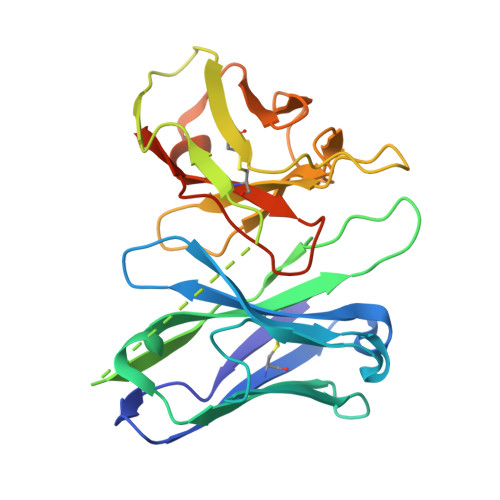
single-chain antibody Fv fragment (scFv16)F [auth S]259Mus musculusMutation(s): 0 
Entity Groups  
Sequence Clusters30% Identity50% Identity70% Identity90% Identity95% Identity100% Identity
Sequence Annotations
Expand
  • Reference Sequence
Experimental Data & Validation

Experimental Data

  • Method: ELECTRON MICROSCOPY
  • Resolution: 3.21 Å
  • Aggregation State: PARTICLE 
  • Reconstruction Method: SINGLE PARTICLE 
EM Software:
TaskSoftware PackageVersion
MODEL REFINEMENTPHENIX

Structure Validation

View Full Validation Report


Entry History & Funding Information

Deposition Data


Funding OrganizationLocationGrant Number
National Research Foundation (NRF, Korea)Korea, Republic Of--

Revision History  (Full details and data files)

  • Version 1.0: 2025-04-09
    Type: Initial release
  • Version 1.1: 2025-05-28
    Changes: Data collection, Database references
  • Version 1.2: 2025-06-18
    Changes: Data collection